

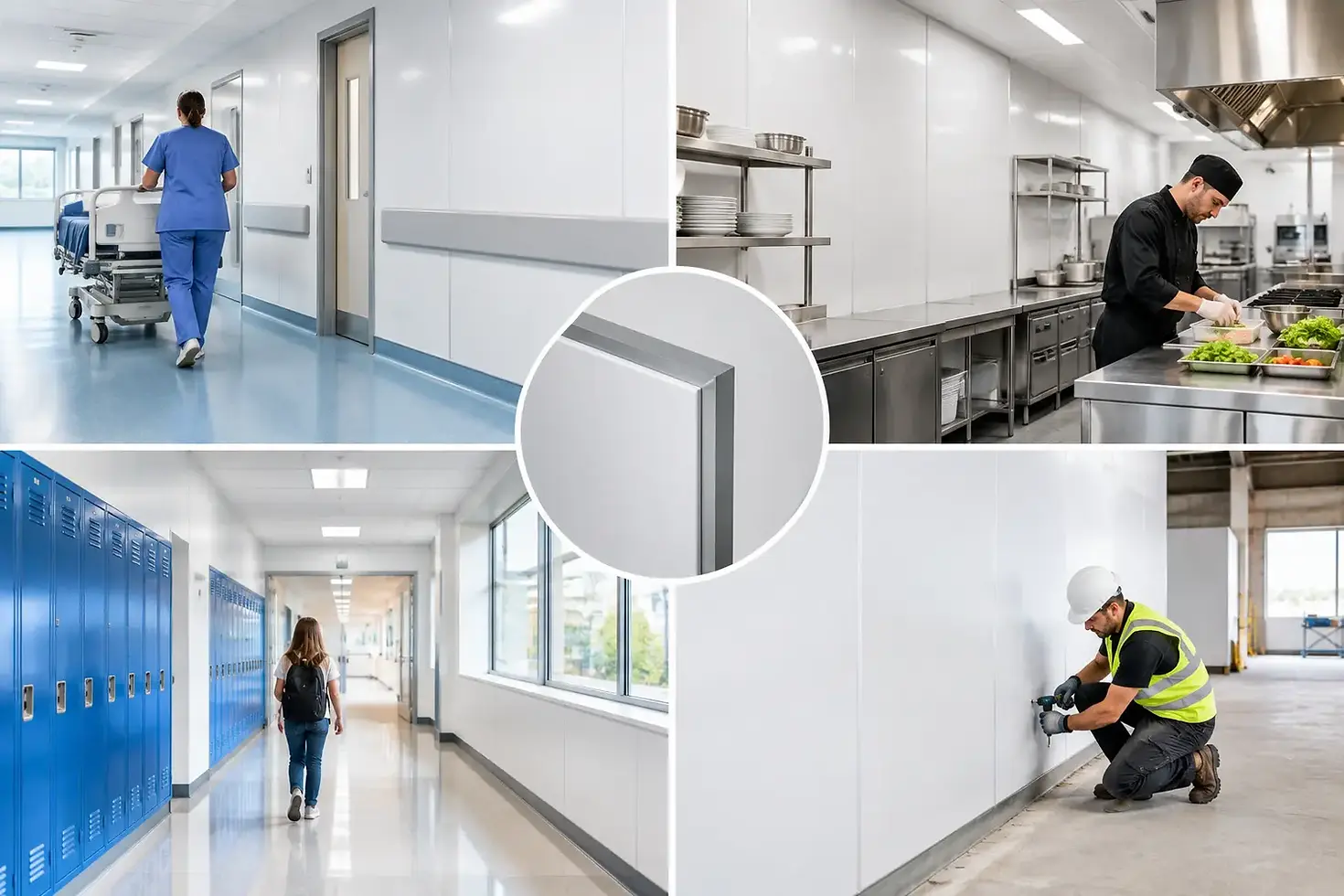
Impact Resistant Panels for Hard-Working Walls
A scuffed wall behind a trolley route, a chipped surface in a busy kitchen, or repeated knocks around a service corridor can quickly turn a clean room into a costly maintenance job. Impact resistant panels provide a practical protective finish where painted plasterboard, tiles and other conventional wall coverings are likely to suffer damage.
For commercial premises, they help maintain a tidy, professional environment without constant patching and repainting. For homes, they offer an easy-clean alternative in utility rooms, kitchens, bathrooms and high-traffic areas. The right panel system protects the wall beneath while giving you a smooth, hygienic surface that is straightforward to maintain.
Why wall impact protection matters
Walls take more punishment than most finishes are designed for. Deliveries, cleaning equipment, bins, trolleys, chairs and everyday footfall all create contact points. In a commercial kitchen, care setting, shop, school or communal area, small marks can soon become cracks, chips and exposed edges.
Once a wall finish is damaged, cleaning becomes harder. Moisture can reach the substrate, dirt can collect in broken paintwork or grout lines, and repairs can interrupt normal use of the space. This is particularly unhelpful in hygiene-sensitive environments, where walls need to look clean and be easy to wipe down at all times.
A panelled wall creates a protective layer over the existing surface. PVC hygienic cladding is waterproof, non-porous and grout-free, so there are fewer places for moisture, mould and bacteria to take hold. Its smooth face is also far easier to clean than uneven, painted or tiled walls.
Where impact resistant panels make the biggest difference
Impact protection is not only for factories or loading bays. It is a sensible choice anywhere the wall is regularly touched, knocked or exposed to moisture. The required level of protection depends on what happens in the room, not simply how busy it appears.
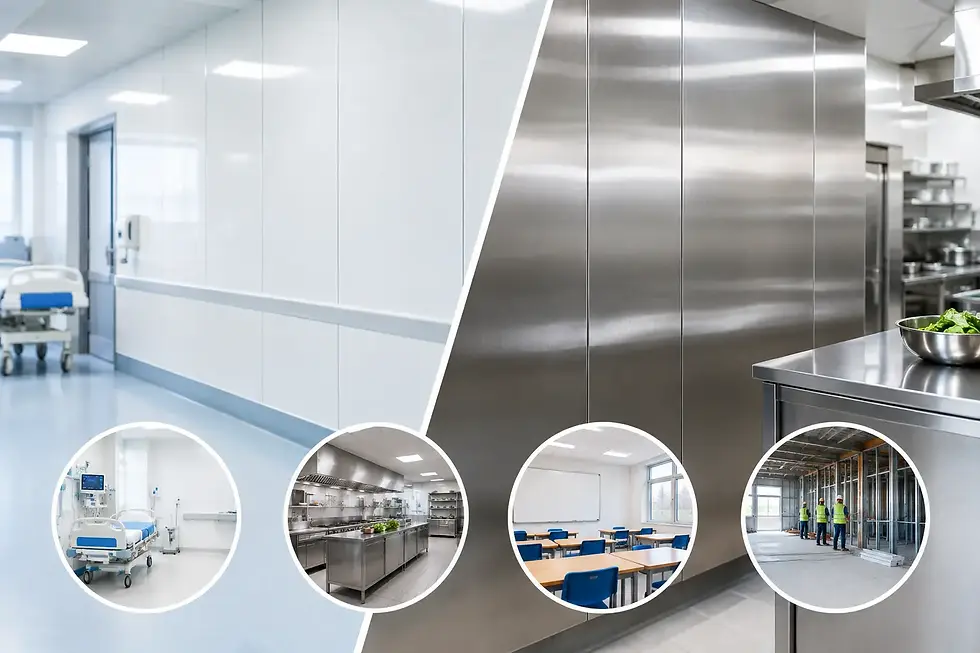
They are especially useful in commercial kitchens, food preparation rooms, washrooms, changing areas, corridors, utility spaces, clinical settings, schools, care homes and retail back-of-house areas. In domestic projects, consider panels around kitchen work zones, in bathrooms, behind appliances, on stairwell walls or in a utility room where boots, bikes and laundry baskets can mark painted finishes.
The height of the protection matters too. A low-level panel may be enough where chair backs or cleaning equipment cause occasional scuffs. Full-height cladding is usually the better option where hygiene, washability and moisture resistance are just as important as impact protection. It gives the whole wall a consistent finish and removes the need to join two different surfaces at a vulnerable point.
What makes a panel suitable for demanding areas
Impact resistance is not a single feature that can be judged by appearance alone. A panel needs the right material, thickness, backing surface and fitting method to perform well over time. A thin decorative wall covering may improve the look of a room, but it will not necessarily cope with regular hard contact.
Premium PVC hygienic wall cladding is a strong option for demanding interiors because it combines a durable finish with practical hygiene benefits. It does not rely on grout, is resistant to stains and moisture, and can be fitted over many sound existing wall surfaces. White, pastel and gloss finishes also make it easier to match the room to your required standard of cleanliness and presentation.
For food, healthcare and other regulated environments, check the specification as carefully as the finish. Depending on the product selected, useful properties can include food-contact approval, UV stability and a Class 1 fire rating. These details should be confirmed against the needs of the individual project, particularly where a building specification or insurer has set a defined requirement.
It is also worth being realistic about the type of impact involved. PVC cladding is well suited to daily knocks, scuffs and busy working conditions. It is not a substitute for a purpose-designed heavy-duty crash rail or industrial protection system where pallet trucks, forklifts or machinery are likely to strike the wall. In those areas, combine hygienic wall cladding with dedicated physical protection at the points most at risk.
Choosing impact resistant panels for your project
Start by looking at the wall itself. The best panel cannot compensate for a loose, damp or unstable substrate. Existing tiles, blockwork, plasterboard and painted walls can often be clad, provided the surface is clean, sound and suitably prepared. If there is ongoing damp, crumbling plaster or movement in the wall, address that first.
Next, consider how the room will be used. A private bathroom has different demands from a commercial washroom, and a light-use staff kitchen is not the same as a high-output food preparation area. Think about cleaning routines, contact with water, temperature changes, trolley traffic and the likelihood of accidental knocks.
A complete system is more reliable than fitting sheets alone. Matching trims protect exposed edges and create neat joins, while suitable adhesives and sealants help keep the installation secure and hygienic. Internal and external corners, end caps and joint trims all have a job to do. They create a finished appearance, but they also reduce gaps where water and dirt could collect.
Colour should be chosen with maintenance in mind. White panels create a bright, clinical appearance and make cleanliness easy to monitor. Lighter pastel shades can soften staff areas, bathrooms or residential rooms without losing the easy-clean benefit. Gloss finishes reflect more light and can make smaller spaces feel brighter, although they may show smears more readily in high-touch areas if cleaning is not kept up.
Installation details that protect long-term performance
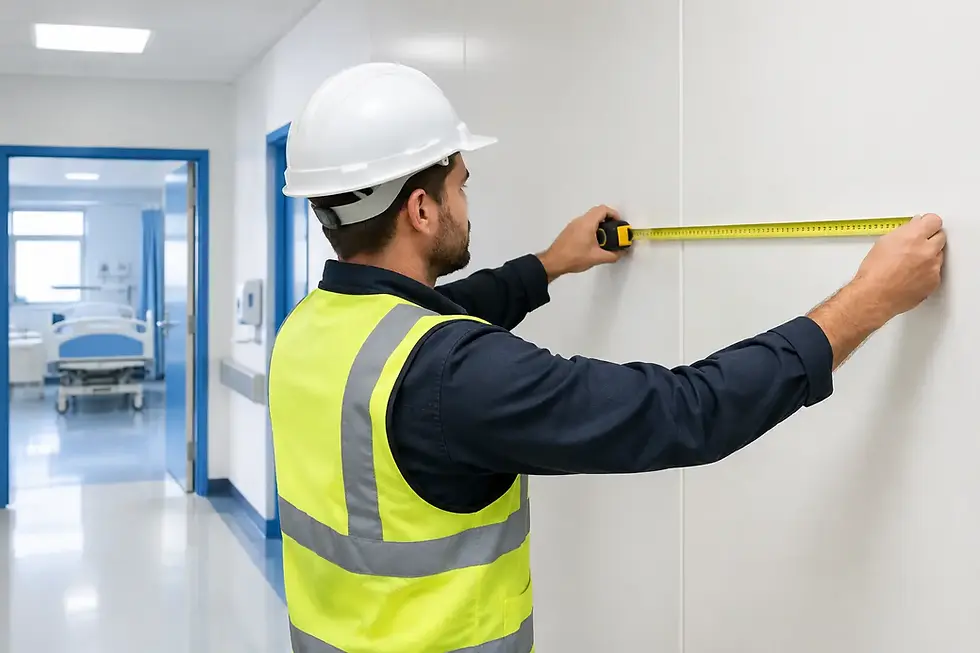
Good preparation and careful fitting make a major difference to the life of wall panels. Measure the room accurately before ordering, allowing for cut-outs around sockets, pipework, windows and doors. Ordering the appropriate trims, adhesive and sealant at the same time avoids delays once fitting has started.
Panels should be installed on a clean, dry and sound surface using the recommended adhesive. Apply adhesive evenly and press the sheet firmly into position so it has consistent support behind it. Unsupported areas can flex when knocked, which reduces the protection the panel can provide and may affect the finish over time.
Take particular care around joints, corners and service penetrations. These are the places most likely to be exposed to water or cleaning products. A properly sealed joint helps preserve the waterproof surface and gives the room a more professional result. In wet areas, do not treat sealant as an optional final touch - it is part of the wall protection system.
If the installation is large, has complex detailing or must meet a strict site specification, using an experienced installer can be worthwhile. For straightforward domestic refurbishments, many competent DIYers and tradespeople can fit PVC sheets successfully with the right preparation and products.
Easier cleaning, fewer ongoing repairs
The day-to-day value of impact-resistant cladding is often felt after installation. Instead of repainting scuffs or scrubbing stained grout, routine cleaning usually involves wiping the smooth surface with suitable non-abrasive cleaning products. That saves time for facilities teams and helps householders keep busy rooms looking presentable.
Avoid harsh abrasive pads or cleaners that could dull the surface. Regular cleaning is better than allowing grease, soap residue or dirt to build up, especially around corners and seals. Check trims and sealant periodically too, particularly in wet rooms or areas subject to frequent washdown.
For contractors and project buyers, choosing stocked panels, trims and fitting products from one specialist supplier also simplifies purchasing. Hygienic Sheets offers a complete cladding system, helping you source the core materials together rather than holding up the job while matching components arrive separately.
A wall finish should do more than cover a surface. When knocks, moisture and hygiene are all part of daily use, choose panels that are matched to the room, fitted as a complete system and supported by proper preparation. The result is a cleaner-looking space that is easier to maintain when the working day gets busy.

Comments