

A Practical Guide to Hygienic Wall Trims
Wall cladding only performs properly when the edges, joins and corners are finished correctly. That is where a good guide to hygienic wall trims becomes useful. The trim is not a small finishing extra - it is what helps create a cleanable surface, protects exposed edges and gives the whole installation a more professional, longer-lasting result.
In hygiene-sensitive spaces, weak finishing points tend to become cleaning problems. Open edges can trap dirt, poorly sealed corners can hold moisture, and rough transitions can make regular washdowns harder than they need to be. Whether you are fitting out a commercial kitchen, a washroom, a food prep area, a clinic room or a domestic bathroom, the right trim choice helps the wall system do its job.
Why hygienic wall trims matter
PVC wall cladding is popular because it gives you a smooth, grout-free, easy-clean surface. But sheets on their own do not solve every detail. You still need to deal with internal corners, external corners, panel joints, exposed ends and changes around doors, windows and fixtures.
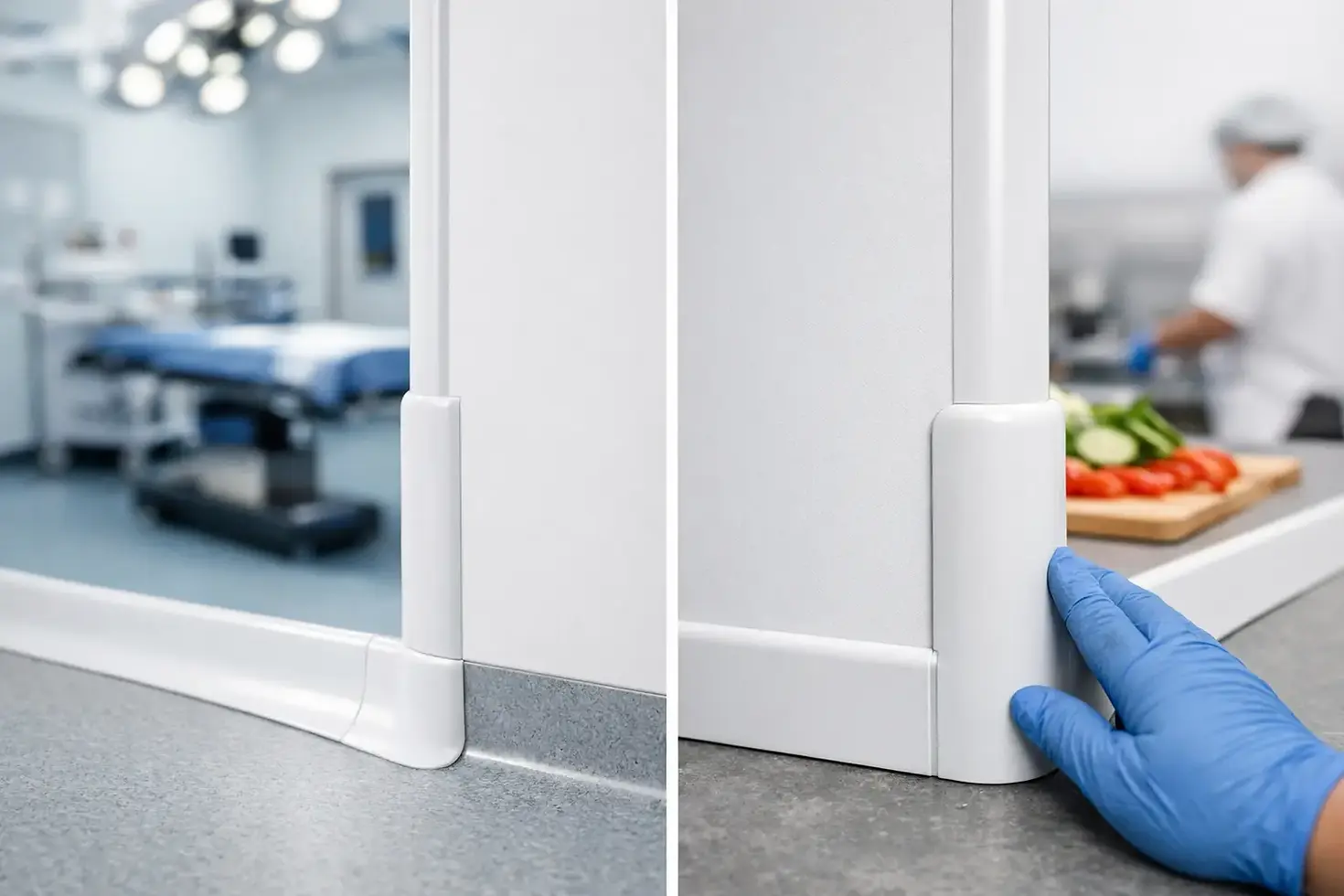
Hygienic wall trims are designed to close off those vulnerable points neatly. They improve washability, reduce the risk of moisture getting behind the panels and protect the cladding from knocks and wear. In busy commercial settings, that extra protection matters. Trolleys, cleaning equipment and everyday traffic can quickly damage unfinished edges.
There is also a visual benefit. A properly trimmed installation looks deliberate and complete. That matters in customer-facing spaces, but it also matters in plant rooms, prep areas and staff facilities where durability and cleanliness come first. A tidy finish usually reflects a better installation standard overall.
Guide to hygienic wall trims: the main types
The right trim depends on the part of the room you are finishing. In most projects, you will need a combination rather than one trim throughout.
Internal corner trims
Internal corner trims are used where two wall surfaces meet on the inside corner of a room. These help create a clean, consistent junction that is easier to wipe down than a sharp unfinished join. In wet areas, they also support better sealing and help reduce the chance of water ingress behind the sheets.
For bathrooms, commercial kitchens and wash areas, internal corners are one of the first details to get right. If the joint is awkward or uneven, it tends to show quickly and can become a maintenance issue.
External corner trims
External corner trims protect outward-facing corners from impact while keeping the finish neat. This is especially useful in corridors, service areas, food production spaces and other places where corners are likely to be knocked.
If the space is low traffic, appearance may be the main reason to use them. In commercial environments, though, protection is often the bigger factor. Replacing damaged corners later is far more disruptive than fitting the correct trim from the start.
Joint trims
Joint trims are used where two panels meet on a flat run. They help keep the panel connection neat and can make fitting more forgiving where long wall lengths require multiple boards. They also help maintain a consistent finish across larger areas.
This is one of those areas where product choice depends on the job. Some installers prefer a more minimal appearance, while others prioritise straightforward fitting and a clear panel transition. If speed on site matters, the right joint trim can save time and reduce snagging.
End caps and finishing trims
End caps or end trims are used where the cladding run stops, such as around door frames, window reveals or part-height wall areas. These trims cover exposed panel edges and create a cleaner stopping point.
Without them, the edge can look unfinished and remain more vulnerable to moisture, knocks and cleaning damage. In domestic projects, this often makes the difference between a room looking professionally completed or simply boarded over.
Choosing the right trim for the room
Not every room needs the same approach. A commercial kitchen will usually need a full hygiene-focused system with strong attention to waterproofing, cleanability and durability. A utility room or downstairs loo may be more forgiving, but it still benefits from proper edge protection and easy-clean joints.
If the area is exposed to regular water, steam or aggressive cleaning, trim selection should support sealing and moisture resistance first. In dry but high-traffic spaces, impact protection may matter more. Where appearance is a priority, such as salons, retail back-of-house areas or modern domestic bathrooms, matching the trim profile and finish to the panel design becomes more important.
This is why complete system buying makes sense. Sheets, trims, adhesives and sealants need to work together. Mixing products without checking compatibility can lead to a weaker fit or a less consistent finish.
What to look for in hygienic wall trims
A good trim should do more than fill a gap. It should support hygiene, protect the installation and make fitting simpler rather than more complicated.
PVC trims are a practical choice because they are lightweight, easy to handle, water resistant and suitable for easy-clean wall systems. In hygiene-critical environments, buyers often look for materials that complement the performance of the wall cladding itself. That means surfaces that are easy to wipe clean, durable under daily use and suitable for wet areas.
It is also worth checking the quality of the finish. Cheap trims can discolour, crack or fit poorly, which affects both appearance and performance. In a professional installation, those details are noticed. Reliable stock availability matters too, especially if you are managing a larger fit-out and cannot afford delays while waiting for matching accessories.
Fitting considerations that affect the result
Even the right trim can underperform if the fitting is rushed. Walls should be sound, clean and reasonably level before installation begins. If the substrate is poor, trims can end up compensating for problems they were never meant to solve.
Accurate measuring matters around corners, openings and transitions. A few millimetres out can leave visible gaps or awkward joins, particularly in smaller rooms where every line is more noticeable. Clean cuts, the correct adhesive and careful sealing all contribute to the final finish.
Installers also need to think ahead about sequencing. It is usually easier to plan trims, panel joins and edge details before fixing the first sheet than to solve them as you go. On larger projects, that saves time. On domestic jobs, it often prevents waste.
Common mistakes to avoid
One of the most common mistakes is treating trims as optional. Panels may still go on the wall, but the installation is less protected and often harder to maintain. Another frequent issue is choosing trims based only on price. Low-cost accessories can become false economy if they crack, stain or fail to seal properly.
Poor matching between trim type and location is another problem. For example, using a finishing trim where impact protection is really needed can leave corners exposed. Skipping sealant in wet zones is also risky, even when the trim itself appears to fit tightly.
There is also a tendency to underestimate how visible trims are. Because they frame the panels, they draw the eye. If the lines are uneven or the profile looks out of place, the whole room can feel less polished.
Where hygienic wall trims add the most value
In food preparation areas, trims help support washdown-friendly surfaces and reduce dirt traps. In healthcare and care settings, they contribute to a finish that is easier to sanitise and maintain. In schools, public washrooms and staff areas, they help protect cladding from heavy use.
At home, the value is slightly different but no less real. In bathrooms, trims help manage moisture and tidy up transitions around shower areas, ceilings and boxing-in. In kitchens and utility rooms, they create a more durable alternative to tiled edges and grout lines. For many homeowners, that means less maintenance and a cleaner look over time.
For trade buyers, trims are also part of delivering a complete job. Clients notice neat corners, clean terminations and well-finished edges. A proper trim system can help avoid call-backs and keep the finished standard consistent across multiple rooms.
Buying as a system, not as separate parts
The best results usually come from treating wall cladding as a complete system. That means choosing sheets, trims, adhesives and sealants together, with the room type and installation method in mind. It is a simpler route for installers and a safer one for clients who need a finish that stands up to regular cleaning and daily wear.
For project-led buyers, this also makes ordering easier. When stock is available in one place and the trim options match the cladding range, there is less guesswork and less risk of delays. That matters on fast-moving refurbishments and planned maintenance work alike.
Hygienic Sheets is built around that system approach, which is often the difference between a job that merely looks acceptable on day one and one that still performs well months or years later.
If you are planning a cladding installation, give the trims the same attention as the panels. They are not the finishing touch after the real decision has been made - they are part of what makes the wall easy to clean, durable to use and ready for the demands of the space.


Comments