


Hygienic Panels Versus Stainless Steel Compared
A commercial kitchen wall does not fail because it looks slightly dated. It fails when joints trap grease, a surface is difficult to sanitise, or moisture gets behind the finish and creates an expensive maintenance issue. When comparing hygienic panels versus stainless steel, the right choice comes down to the room, the level of impact and heat exposure, the installation programme, and the finish you need to maintain over time.
Both materials are widely used in hygiene-sensitive spaces. Stainless steel has a long-standing place around cooking equipment and heavy-use areas, while PVC hygienic wall panels offer a practical, grout-free solution for walls across food preparation rooms, washrooms, healthcare settings, retail back-of-house areas and domestic renovations. The differences are worth understanding before specifying either one.
Hygienic Panels Versus Stainless Steel: The Main Difference
Stainless steel is a metal wall finish valued for its strength, heat resistance and professional appearance. It is commonly fitted as splashback protection behind cookers, ranges, grills and sinks, particularly where hot pans, steam and regular impact are expected.
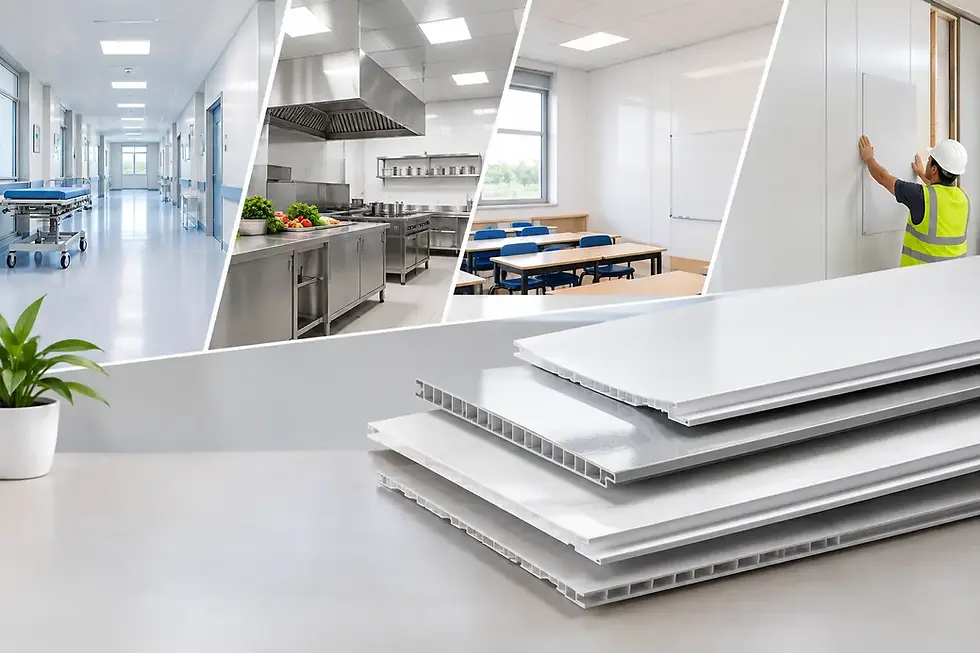
Hygienic wall panels are usually made from premium PVC and designed to create a smooth, non-porous internal wall surface. Installed with matching trims, adhesive and sealant, they cover existing walls quickly and remove the grout lines associated with tiles. Their main strengths are easy cleaning, waterproof performance, broad colour choice and straightforward fitting over suitable substrates.
Neither material is automatically better in every setting. Stainless steel is the more appropriate choice close to direct high heat or where regular heavy knocks are unavoidable. Hygienic PVC panels are often the more efficient and cost-effective choice for the wider wall areas surrounding those high-risk zones.
Cleaning and Hygiene Performance
For facilities managers and installers, cleaning time matters as much as appearance. Both stainless steel and PVC hygienic panels provide a smooth surface that can be wiped down regularly. The detail is in the joints and the day-to-day finish.
PVC wall cladding is fitted in large sheets, so there are far fewer joins than with tiled walls. Correctly sealed panel joints, edges and corners help prevent water and dirt from reaching the substrate. There is no grout to discolour, crack or support mould growth, making panels particularly useful in washrooms, changing areas, utility rooms and food preparation spaces.
Stainless steel is also non-porous, but it can show fingerprints, water marks and streaks more readily, especially on polished finishes. Scratches can become visible over time and, while they do not necessarily affect hygiene, they can make a wall look tired in a customer-facing area. Brushed stainless steel can reduce the appearance of marks, but it still needs regular cleaning to keep its intended finish.
For routine hygiene control, a well-installed PVC cladding system is easy to maintain. Many premium panels are resistant to stains, mould and bacteria, and selected products are suitable for food-contact environments. Always check the specification of the chosen sheet for the setting and cleaning regime involved.
Installation Speed and Disruption
Installation is one of the clearest differences between hygienic panels and stainless steel. PVC sheets are lightweight, easy to cut on site and can be fitted directly over many sound, dry and level surfaces. This can avoid the disruption of removing old tiles or making extensive wall repairs before finishing.
For a bathroom refurbishment, staff washroom upgrade or small catering fit-out, this can save valuable time. Panels can cover large areas in a single piece, allowing trades to create a clean, finished surface without waiting for grout to cure. Matching internal corners, external corners, joining trims and edge trims give the installation a neat, sealed result.
Stainless steel generally requires more careful measuring, fabrication and handling. Sheets can be sharp at the edges and are less forgiving when walls are uneven. Larger installations may need specialist cutting, folded edges or purpose-made sections around equipment. The finished result can be excellent, but it is often slower and more labour-intensive to achieve.
This does not mean stainless steel should be ruled out. In a commercial kitchen, it can make sense to use it directly behind cooking lines, then use hygienic PVC panels on surrounding walls, storage areas, corridors and wash stations. This combined approach puts each material where it performs best.
Durability, Heat and Impact Resistance
Stainless steel is the stronger material where direct heat and hard impact are the priority. It is suited to areas behind commercial cookers, fryers and other appliances that generate sustained high temperatures. It will also cope better with repeated contact from heavy equipment, trolleys or metal utensils.
PVC hygienic panels are durable for their intended use, waterproof and resistant to everyday knocks, cleaning and moisture. They are an effective wall finish for busy environments, but they should not be installed where they will be exposed to direct flames, excessive heat or conditions beyond their stated temperature limits. Good specification is not about choosing the toughest material everywhere. It is about choosing a suitable material for each part of the room.
In many wet areas, the greater risk is not heat or impact but water ingress and poor cleaning access. Here, sealed PVC panels can offer a more practical long-term solution than painted plasterboard, porous tiles or damaged wall coatings.
Appearance and Design Flexibility
Stainless steel gives a clean, commercial look that works naturally in professional kitchens, laboratories and food production spaces. For some projects, that industrial appearance is exactly right. For others, particularly salons, care settings, washrooms, retail interiors and homes, it can feel cold or overly utilitarian.
Hygienic panels provide more flexibility. White remains a popular choice because it creates a bright, clean appearance and makes dirt easier to spot. Pastel shades and gloss finishes can also help coordinate walls with flooring, fixtures or brand colours without sacrificing a wipe-clean surface.
This is particularly useful in domestic bathrooms and kitchens, where buyers often want practical wall protection without turning the room into a commercial space. A gloss PVC finish can deliver a crisp, contemporary result while removing the cleaning burden of tile grout.
Cost: Look Beyond the Sheet Price
Comparing material prices alone can be misleading. Stainless steel may have a higher initial cost, particularly where sheets need folding, custom cutting or specialist installation. It can also add labour time, which matters on a project with a tight opening date.
Hygienic panels are often more cost-effective to buy and faster to fit. The complete system matters here: panels, trims, adhesive and sealant should be selected together so that corners, joins and edges are finished correctly. A cheaper panel without compatible installation products can create problems later.
Maintenance costs should also be part of the decision. PVC cladding does not need repainting and has no grout to replace or deep-clean. Stainless steel is long-lasting, but visible scratching and denting may lead to replacement in areas where appearance is a priority.
Where Each Material Works Best
PVC hygienic panels are a strong fit for commercial kitchens away from direct cooking heat, washrooms, shower areas, changing rooms, clinics, laboratories, food storage areas, utility rooms and domestic kitchens and bathrooms. Their waterproof, low-maintenance surface is especially valuable where walls are washed down regularly or exposed to humidity.
Stainless steel is best reserved for cooker splashbacks, cooking lines, areas immediately around heat-producing equipment, and locations exposed to frequent hard impact. It is also a sensible choice where a client or regulator has a specific stainless steel requirement.
For larger sites, specify by zone rather than treating the whole building as one environment. A kitchen may need stainless steel behind the range, hygienic panels around preparation and wash-up areas, and a different finish in public-facing spaces. This avoids overspending on stainless steel where its extra heat resistance is not needed.
Getting the Installation Right
The wall behind either finish must be sound, dry and suitable for the chosen fixing method. Hygienic panels should be installed with the correct adhesive, trims and sanitary sealant, with careful attention around penetrations, corners and wall-to-floor junctions. Poorly sealed edges can undermine an otherwise high-performing wall system.
Measure the room before ordering, including returns, reveals, service points and waste allowances. Ordering the full system at the same time helps keep colours and profiles consistent, and reduces delays once fitting has started. Hygienic Sheets supplies panels alongside the trims, adhesives and accessories needed to complete the job properly.
If your project needs fast coverage, a clean finish and simple maintenance across large wall areas, PVC hygienic panels are usually the practical choice. Where direct heat and heavy impact are concentrated in a small zone, stainless steel can provide the added protection required. Specify each surface for the work it actually has to do, and the finished space will be easier to clean, quicker to hand over and simpler to maintain.


Comments