

What Is Hygienic Cladding and Who Needs It?
- tim7892
- Feb 20
- 10 min read
Updated: Feb 23
Who Requires Hygienic Cladding and Why It Matters
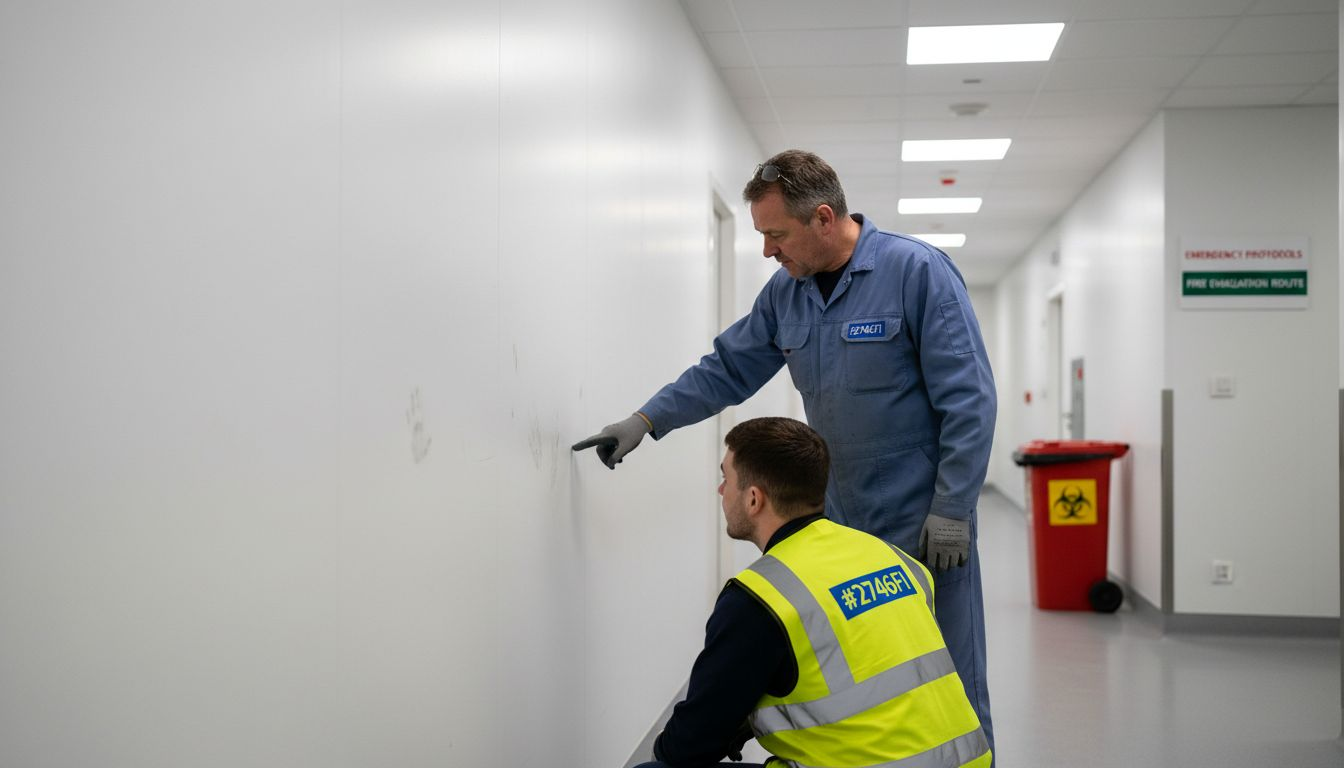
Every British healthcare facility faces ongoing pressure to maintain rigorous standards for cleanliness and infection control. Selecting the right wall finishes is more than a matter of appearance, as outdated materials and poor installation can leave hidden gaps where bacteria thrive and compliance failures arise. Hygienic cladding offers a seamless, non-porous surface that stands up to moisture, ensures thorough cleaning, and helps facility managers confidently meet NHS and Care Quality Commission requirements.
Table of Contents
Defining Hygienic Cladding And Key Principles
Main Types And Where They’re Used
Essential Features And Standards For Installation
Legal Compliance In UK Healthcare Environments
Costs, Common Pitfalls, And Alternative Solutions
Key Takeaways
Point | Details |
Hygienic Cladding Benefits | Provides a seamless, non-porous surface that is moisture-resistant, aiding in infection prevention and cleanliness. |
Material Selection | PVC is preferred for high-risk areas due to its durability and chemical resistance, while acrylic is suitable for client-facing spaces due to its aesthetic appeal. |
Installation Quality | Proper installation is crucial; flawless joint sealing and substrate preparation are essential to ensure longevity and compliance. |
Maintenance Protocols | Establish regular cleaning and inspection routines to mitigate risks and uphold hygiene standards in high-traffic environments. |
Defining Hygienic Cladding and Key Principles
Hygienic cladding is a specialist wall and ceiling covering designed for environments where cleanliness cannot be compromised. It creates a seamless, non-porous surface that resists moisture and prevents harmful microorganisms from colonising surfaces. This makes it ideal for healthcare facilities, food preparation areas, and other regulated spaces.
Unlike standard wall finishes, hygienic cladding offers properties that standard materials simply cannot match. You get protection against moisture, durability that lasts years, and surfaces that can be thoroughly cleaned without degradation.
What Makes It “Hygienic”?
The defining characteristic is the non-porous structure. Traditional painted drywall absorbs moisture and creates microscopic gaps where bacteria and fungi thrive. Hygienic cladding eliminates these breeding grounds entirely.
Key protection mechanisms include:
Moisture resistance – Prevents water penetration and dampness that causes mould growth
Seamless joints – Eliminates gaps where microorganisms can hide
Chemical durability – Withstands regular cleaning with hospital-grade disinfectants
Non-absorbent finish – Liquids bead and wipe away rather than soak in
Hygienic cladding’s non-porous design directly reduces cross-contamination risks in high-risk environments.
Core Principles Behind the Design
Facility managers should understand the three fundamental principles that guide hygienic cladding specifications.
Principle 1: Prevention over remediation. Rather than trying to clean infected surfaces, hygienic cladding prevents contamination from establishing itself. This saves time, reduces chemical use, and keeps your environment safer.
Principle 2: Durability through design. These surfaces endure thousands of cleaning cycles. The material resists scratching, staining, and degradation from harsh disinfectants that would damage standard finishes.
Principle 3: Ease of maintenance. You can clean hygienic cladding quickly and thoroughly. No special techniques needed – standard hospital cleaning protocols work effectively.
When assessing your facility’s needs, consider whether your current walls meet these three standards. Most traditional finishes fail at least one, creating compliance gaps.
Pro tip: Check your current walls for any soft spots, discolouration, or rough patches – these indicate moisture damage that hygienic cladding would prevent entirely.
Main Types and Where They’re Used
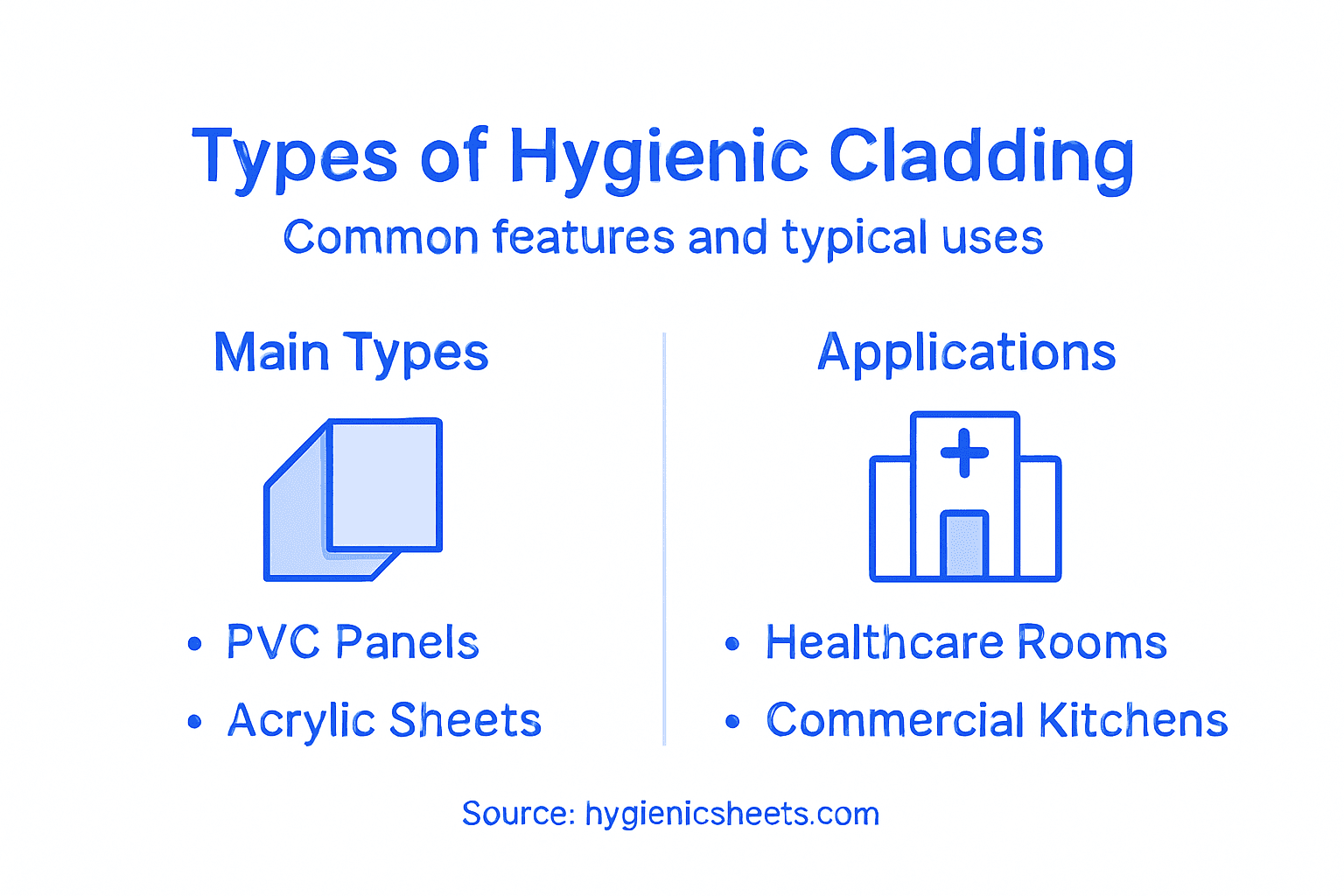
Hygienic cladding materials vary significantly based on your facility’s specific demands. The two dominant types are PVC cladding and acrylic panels, each offering distinct advantages for different environments.
PVC Cladding: The Workhorse Material
PVC is the most widely used hygienic cladding material across the UK healthcare sector. It delivers exceptional moisture resistance and withstands aggressive cleaning chemicals without degrading.
PVC excels in:
Healthcare facilities with constant moisture exposure (operating theatres, patient wash areas)
Food preparation spaces requiring frequent high-pressure washing
Pharmaceutical manufacturing where chemical resistance is non-negotiable
Budget-conscious projects needing long-term durability
PVC materials tailored for specific industries ensure you select the right specification for your sector’s unique hygiene demands.
Acrylic Cladding: Premium Aesthetics
Acrylic panels offer superior visual appearance and light transmission properties. They’re ideal when you need hygienic performance alongside a modern, clean aesthetic.
Choose acrylic for:
Public-facing healthcare areas (reception, waiting rooms)
Educational facilities where aesthetics matter
Hospitality environments requiring both hygiene and design appeal
Spaces where natural light transmission is beneficial
Where Each Type Gets Used
Your choice depends on sector-specific requirements and risk profiles. Healthcare facilities typically use PVC in clinical zones and acrylic in patient-facing areas.
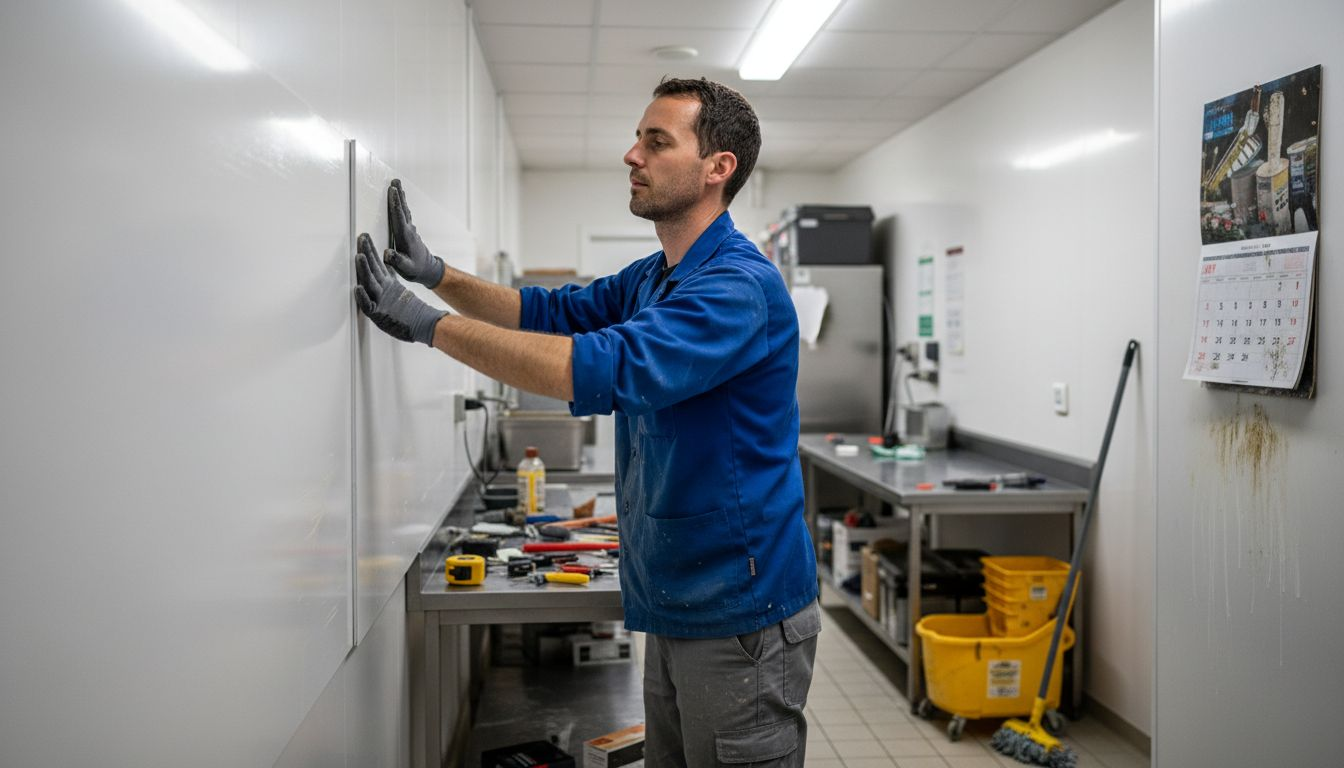
Food and beverage operations almost exclusively specify PVC due to the harsh cleaning demands and regulatory requirements. Pharmaceuticals favour PVC for its chemical durability.
Hospitality venues balance both materials—kitchens demand PVC whilst dining areas benefit from acrylic’s aesthetic appeal.
Here’s how PVC and acrylic hygienic cladding options compare for various facility needs:
Criteria | PVC Cladding | Acrylic Cladding |
Moisture resistance | Excellent in wet areas | Good for dry locations |
Visual appeal | Functional and plain | Premium, modern aesthetics |
Cleaning durability | Withstands harsh chemicals | Resists standard cleaning |
Typical applications | Clinical, kitchen, pharma | Waiting rooms, dining, lobby |
Budget suitability | Cost-effective, robust | Higher cost, design focus |
Material selection directly impacts both compliance achievement and long-term maintenance costs in your facility.
Making the Right Selection
Consider these factors before deciding:
Moisture levels – Higher exposure favours PVC
Chemical exposure – Harsh disinfectants require PVC’s superior resistance
Visual requirements – Acrylic suits public-facing spaces
Budget constraints – PVC typically offers better value
Regulatory standards – Your sector’s specific guidelines may mandate one type
Most facility managers find that a mixed approach works best. PVC in high-risk clinical and food preparation areas, acrylic where patients and visitors spend time.
Use this quick reference to match cladding type to sector requirements:
Sector | Preferred Material | Key Compliance Factor |
Healthcare clinical zones | PVC | Infection prevention |
Hospitality dining areas | Acrylic | Clean appearance |
Food processing facilities | PVC | Strict cleaning regulations |
Educational environments | Acrylic | Design and hygiene balance |
Pharmaceutical plants | PVC | Chemical resistance |
Pro tip: Contact suppliers with your facility’s specific cleaning protocols and chemical schedules before selecting—they’ll recommend the material that handles your actual usage patterns, not theoretical scenarios.
Essential Features and Standards for Installation
Hygienic cladding isn’t just about choosing the right material—installation quality determines whether your investment delivers the compliance and durability you need. Poor installation undermines even the best-quality panels.
Facility managers must understand the non-negotiable features that separate compliant installations from substandard work.
Seamless Joint Installation
Seams are where hygienic cladding installations fail. Water infiltrates, bacteria colonise, and your hygiene standards collapse. Proper installation requires perfectly sealed joints that eliminate these vulnerabilities.
Quality installations feature:
Perfectly aligned panels with consistent gaps (typically 2-3mm)
Specialist sealants that match the cladding material and resist degradation
Heat-welded joints in PVC installations for superior water-tight performance
No visible gaps when inspected under standard facility lighting
Many facility managers discover defective jointing only after moisture damage appears. By then, remedial work costs significantly more than getting it right initially.
Surface Finish Requirements
The finish quality directly impacts cleanability and durability. Rough or uneven surfaces trap dirt and are difficult to sanitise effectively.
Acceptable finishes include:
Smooth, continuous surfaces without pitting or texture defects
Even colour distribution with no visible staining or discolouration
No sharp edges or burrs that could harbour bacteria or injure staff
Consistent gloss or matte appearance across all panels
Support Structure and Substrate Preparation
Installation quality depends entirely on what sits beneath the cladding. Damp, unstable, or contaminated substrates will fail regardless of panel quality.
Proper preparation involves:
Moisture testing of existing walls (readings must be below specified thresholds)
Removal of any existing contamination or biological growth
Installation of appropriate fixing systems (adhesive, mechanical fixings, or combination)
Verification that substrate is sound, flat, and suitable for cladding attachment
Installation standards directly determine whether your hygienic cladding performs for 15+ years or requires replacement within 5 years.
Compliance and Certification
Your installation contractor must provide certification documentation proving compliance with relevant standards. Healthcare facilities typically require evidence of:
Proper material specifications matching your sector’s requirements
Installation method conforming to manufacturer guidelines
Quality assurance inspections at key stages
Warranty coverage backed by reputable suppliers
Insist on detailed installation records rather than vague assurances. Documentation protects both your facility and the contractor.
Pro tip: Request the installer’s quality checklist and witness critical installation stages (substrate preparation, first panel placement, joint sealing) rather than accepting the finished result sight unseen.
Legal Compliance in UK Healthcare Environments
UK healthcare facilities operate under a complex framework of regulations requiring hygienic wall cladding to meet specific standards. Non-compliance isn’t just a quality issue—it exposes your organisation to regulatory action, patient safety risks, and reputational damage.
Facility managers must understand the mandatory legal requirements that govern cladding installations in healthcare settings.
NHS Guidelines and Standards Framework
The NHS requires all healthcare environments to implement infection prevention and control measures. Hygienic wall cladding forms a critical part of this obligation.
Key regulatory elements include:
NHS guidance documents specifying environmental standards for clinical and non-clinical spaces
British Standards compliance (BS EN 12056 for drainage systems; related standards for surface materials)
Health and Social Care Act 2008 regulations requiring prevention of healthcare-associated infections
Care Quality Commission (CQC) inspections assessing environmental cleanliness and safety
Your cladding installation must demonstrate seamlessness, moisture resistance, and cleanability as core compliance requirements.
Infection Prevention and Control Protocols
Healthcare-associated infections (HCAIs) represent a serious patient safety and liability issue. Environmental controls directly reduce transmission risks.
Your cladding specification must support:
Elimination of surfaces that harbour microorganisms
Easy decontamination using approved cleaning chemicals
No material degradation from frequent disinfection
Moisture prevention that eliminates mould and bacterial growth
Failure in any area creates infection control breaches that regulators identify during inspections.
Material and Installation Certification
You cannot simply purchase cladding and have it installed. Your supplier must provide documentation proving materials meet relevant standards.
Required certifications include:
Material safety data sheets confirming chemical resistance properties
Installation method approval from the cladding manufacturer
Quality assurance records showing compliance testing during installation
Warranty documentation backed by accredited suppliers
Regulators expect documented evidence of compliance, not assumptions that materials are suitable.
Regulatory Inspection and Audit Requirements
The CQC conducts unannounced inspections assessing environmental standards including wall and ceiling surfaces. Poor cladding conditions receive specific scrutiny.
Inspectors assess:
Surface cleanliness and absence of visible contamination
Structural integrity and absence of damage or deterioration
Appropriateness for the clinical environment
Evidence of proper maintenance protocols
Documentation failures during inspections create compliance findings regardless of actual cladding quality.
Liability and Duty of Care
Facility managers bear responsibility for environmental safety. Installing inadequate cladding or failing to maintain it properly creates liability exposure if patient harm occurs.
Proactive compliance protects your organisation by demonstrating:
Due diligence in material selection
Adherence to regulatory guidance
Documented maintenance protocols
Professional installation standards
Pro tip: Maintain a compliance folder containing all material specifications, installation records, CQC correspondence, and maintenance schedules—this documentation protects your facility during inspections and demonstrates your commitment to regulatory standards.
Costs, Common Pitfalls, and Alternative Solutions
Hygienic cladding requires significant upfront investment, but the long-term financial picture often favours this choice. Understanding true costs versus alternatives helps facility managers make informed decisions that protect both budgets and compliance standards.
Initial and Lifecycle Costs
Hygienic cladding costs vary considerably depending on material type, installation complexity, and project scale. PVC typically costs less than acrylic but both represent substantial capital expenditure.
However, lifecycle costs tell a different story. Quality hygienic cladding requires minimal maintenance compared to traditional finishes.
Cost advantages include:
Reduced cleaning time – Non-porous surfaces clean in minutes versus hours
Lower chemical costs – Standard disinfectants work effectively without surface damage
Extended lifespan – 15+ years versus 5–7 years for painted drywall
Reduced remedial work – Moisture damage never occurs, eliminating expensive repairs
Cost-effectiveness emerges through reduced maintenance and durability rather than initial installation savings.
Common Installation Pitfalls
Poor installation undermines even premium cladding materials. Facility managers must understand what separates quality work from costly failures.
Common mistakes include:
Inadequate substrate preparation – Damp or uneven walls cause panel failure within years
Gaps and poor jointing – Water infiltration and bacterial colonisation follow immediately
Inappropriate material selection – Using general-purpose cladding in high-humidity areas
Rushing installation – Skipping proper curing times for adhesives and sealants
Material selection must suit specific site conditions and humidity levels to prevent premature failure.
Maintenance Neglect
Even quality installations fail without proper maintenance protocols. Facility managers must establish cleaning schedules and staff training.
Maintenance essentials:
Daily surface cleaning with approved disinfectants
Weekly inspection for visible damage or contamination
Monthly detailed assessments of joints and seams
Annual professional reviews documenting conditions
Documented maintenance prevents costly failures and demonstrates compliance during regulatory inspections.
Alternative Solutions and Their Limitations
Ceramic tiles and antimicrobial paints seem attractive due to lower upfront costs. Both fall short compared to modern hygienic cladding.
Ceramic tiles create:
Grout lines harbouring bacteria despite antimicrobial treatment
Fragility requiring costly repairs from impact damage
Noise and slip hazards unsuitable for clinical environments
Labour-intensive installation and maintenance
Antimicrobial paints offer limited protection, degrading quickly under frequent cleaning and moisture exposure. Stainless steel panels deliver durability but at premium prices without the seamless protection of quality hygienic cladding.
When Budget Constraints Are Real
Phased installation addresses budget limitations whilst maintaining compliance. Install cladding in high-risk areas first (operating theatres, patient wash areas), then expand as budgets allow.
Phased approaches prevent false economy decisions that compromise patient safety.
Pro tip: Obtain detailed cost breakdowns from three suppliers including materials, labour, and post-installation maintenance estimates—comparing total lifecycle costs rather than installation prices alone reveals genuine financial advantages and prevents budget surprises during year two.
Discover Reliable Hygienic Cladding Solutions for Your Facility
Maintaining impeccable hygiene while ensuring long-term durability remains a major challenge for healthcare, food preparation, and commercial environments. As highlighted in our deep dive into What Is Hygienic Cladding and Who Needs It?, the need for seamless, moisture-resistant wall and ceiling coverings cannot be overstated. Avoid costly issues like moisture damage, contamination risks, and regulatory non-compliance with solutions designed specifically to meet your operational demands.
Explore our extensive range of premium PVC cladding, trims, adhesives, and profiles at https://hygienicsheets.com. Benefit from easy installation, fast UK-wide delivery, and ISO-certified quality tailored for stringent hygiene environments. Take control of your facility’s safety today by choosing materials that prevent cross-contamination and endure rigorous cleaning protocols. Visit our collection now to secure your compliant, cost-effective hygienic cladding solution.
Frequently Asked Questions
What is hygienic cladding?
Hygienic cladding is a specialist wall and ceiling covering designed for environments where cleanliness is crucial. It features a seamless, non-porous surface that resists moisture and harmful microorganisms, making it ideal for healthcare facilities, food preparation areas, and other regulated spaces.
What are the key benefits of hygienic cladding?
The main benefits of hygienic cladding include moisture resistance, seamless joints that prevent bacterial growth, durability against harsh cleaning chemicals, and ease of maintenance, allowing for quick and thorough cleaning without degrading the material.
Who needs hygienic cladding?
Hygienic cladding is essential for various sectors including healthcare facilities, food preparation areas, pharmaceutical industries, and any environment where sanitation is critical. Its properties help comply with strict hygiene standards while protecting against contaminants.
How does PVC cladding differ from acrylic cladding?
PVC cladding is ideal for high-risk areas due to its exceptional moisture resistance and durability against aggressive cleaning chemicals, while acrylic cladding offers superior aesthetics and light transmission, making it suitable for public-facing spaces. Both materials serve specific needs based on hygiene and design requirements.
Recommended


Excellent breakdown on joint sealing and substrate preparation — the principle that gaps are where hygiene failures begin applies equally to pest control. Rodents exploit the same micro-gaps around pipe penetrations, wall voids, and poorly sealed junctions that hygienic cladding is designed to eliminate. For anyone managing food preparation or commercial kitchen environments, click here to see how structural rodent exclusion works — because unsealed wall cavities behind cladding create ideal nesting conditions that no surface finish can address once an infestation is established. Addressing entry points before installation, not after, follows the same prevention-over-remediation logic the article advocates for moisture control.