

Ceiling Cladding and Hygiene – What Facility Managers Must Know
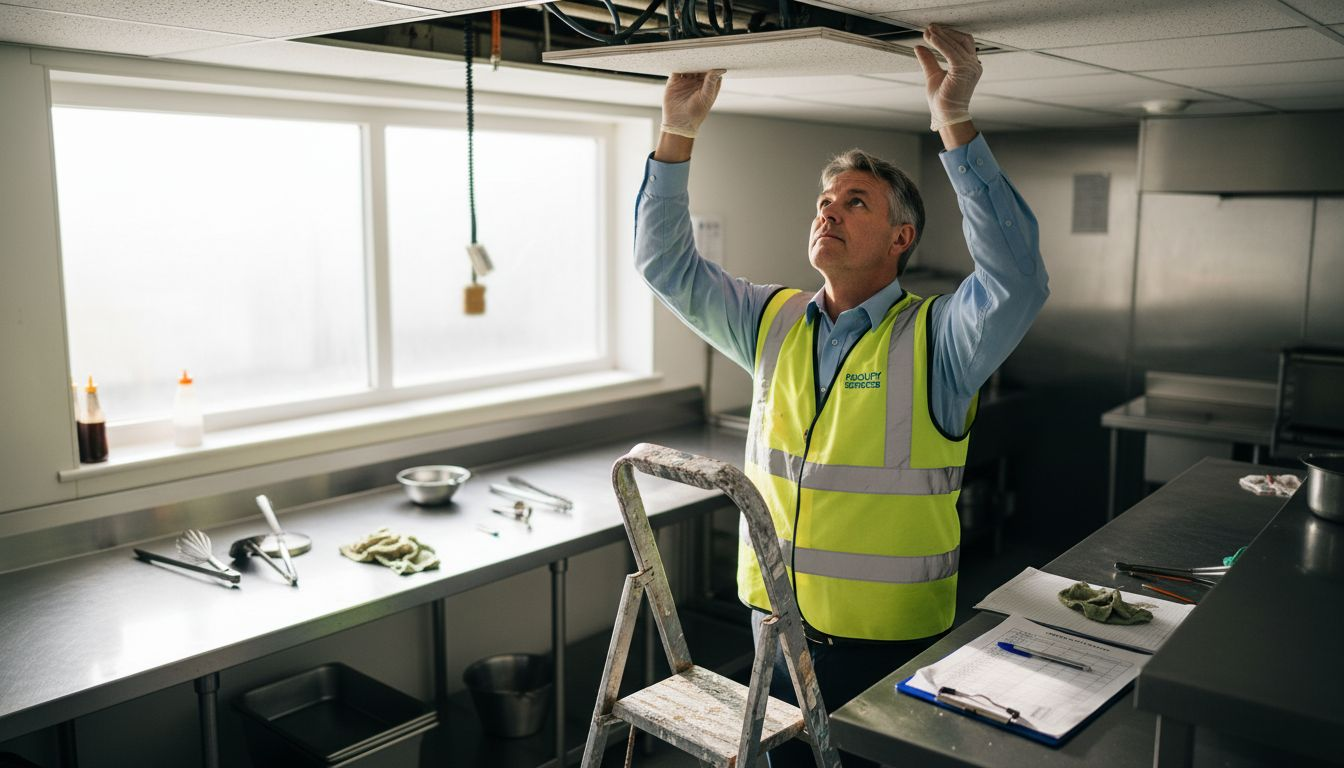
Improving Hygiene with Ceiling Cladding: A Guide for Facility Managers
Ceilings may be overlooked in daily inspections, yet they play a pivotal role in controlling infection risk throughout British healthcare and foodservice facilities. Compliance depends on how well these vast surfaces resist microbial contamination and support rigorous cleaning routines. Effective ceiling cladding, with smooth, cleanable surfaces as highlighted by UNICEF and CDC guidance, offers the hygiene barrier your operation needs to meet strict standards and safeguard patients, staff, and food safety.
Table of Contents
The Role of Ceiling Cladding in Hygiene
Key Types and Material Variations Explained
Main Hygiene Benefits and Real-World Applications
Installation, Maintenance, and Compliance Factors
Common Pitfalls and Hygiene Risks To Avoid
Key Takeaways
Point | Details |
Importance of Ceiling Cladding | Ceiling cladding plays a critical role in maintaining hygiene and preventing infection in healthcare and foodservice environments. Proper materials and installation are essential for compliance and safety. |
Material Selection Matters | PVC cladding is the preferred choice for its non-porous, waterproof properties that minimise bacterial growth and make cleaning easier. Alternatives like stainless steel and composite materials also have their benefits but come with trade-offs. |
Regular Maintenance is Key | Establishing a routine inspection and cleaning protocol for ceilings helps catch issues before they escalate, ensuring continued compliance and safety. Proper documentation of maintenance actions is vital for regulatory inspections. |
Avoid Common Pitfalls | Facilities should focus on professional installation, suitable material choice, and diligent maintenance to prevent contamination risks and costly remediation in the future. Cutting corners on ceiling cladding can lead to significant health and safety issues. |
The Role of Ceiling Cladding in Hygiene
Ceiling surfaces directly influence whether your facility maintains safe, compliant hygiene standards. Many facility managers overlook ceilings because they’re “out of sight,” but they’re far from out of mind when it comes to infection control and contamination risks.
Your ceiling is one of the largest horizontal surfaces in any room. Dust, bacteria, and moisture accumulate there constantly. When ceilings aren’t properly constructed, these contaminants can shed downward onto patient beds, food preparation areas, or medical equipment—exactly where you don’t want them.
Why Ceiling Materials Matter for Hygiene
Smooth, cleanable surfaces prevent pathogen harbouring. Traditional suspended ceilings with porous tiles trap moisture and microbes, becoming breeding grounds for bacteria and fungi. This compromises environmental infection control protocols that modern healthcare facilities must maintain.
Proper ceiling cladding systems eliminate gaps and joints where contamination hides. Unlike open frameworks, sealed cladding surfaces allow thorough cleaning without leaving protected pockets for pathogens.
Key Benefits for Healthcare and Foodservice
Ceiling cladding supports critical facility goals:
Prevents moisture accumulation that feeds bacterial and fungal growth
Reduces particle shedding during cleaning and regular operations
Enables effective disinfection without damaging the surface
Maintains structural integrity in wet environments like kitchens and bathrooms
Simplifies maintenance routines by eliminating hard-to-clean ceiling materials
When implementing hygienic building components including ceilings, you’re directly supporting infection prevention and control practices that WHO guidance emphasises.
PVC Cladding: The Hygienic Standard
PVC ceiling cladding delivers what porous materials cannot: waterproofing and non-absorbent protection. In healthcare settings where steam sterilisation and frequent washdowns occur, PVC resists moisture penetration that degrades standard materials.
The non-porous surface means bacteria cannot embed themselves into the material. This dramatically simplifies cleaning protocols and reduces the risk of cross-contamination between cleaning cycles.
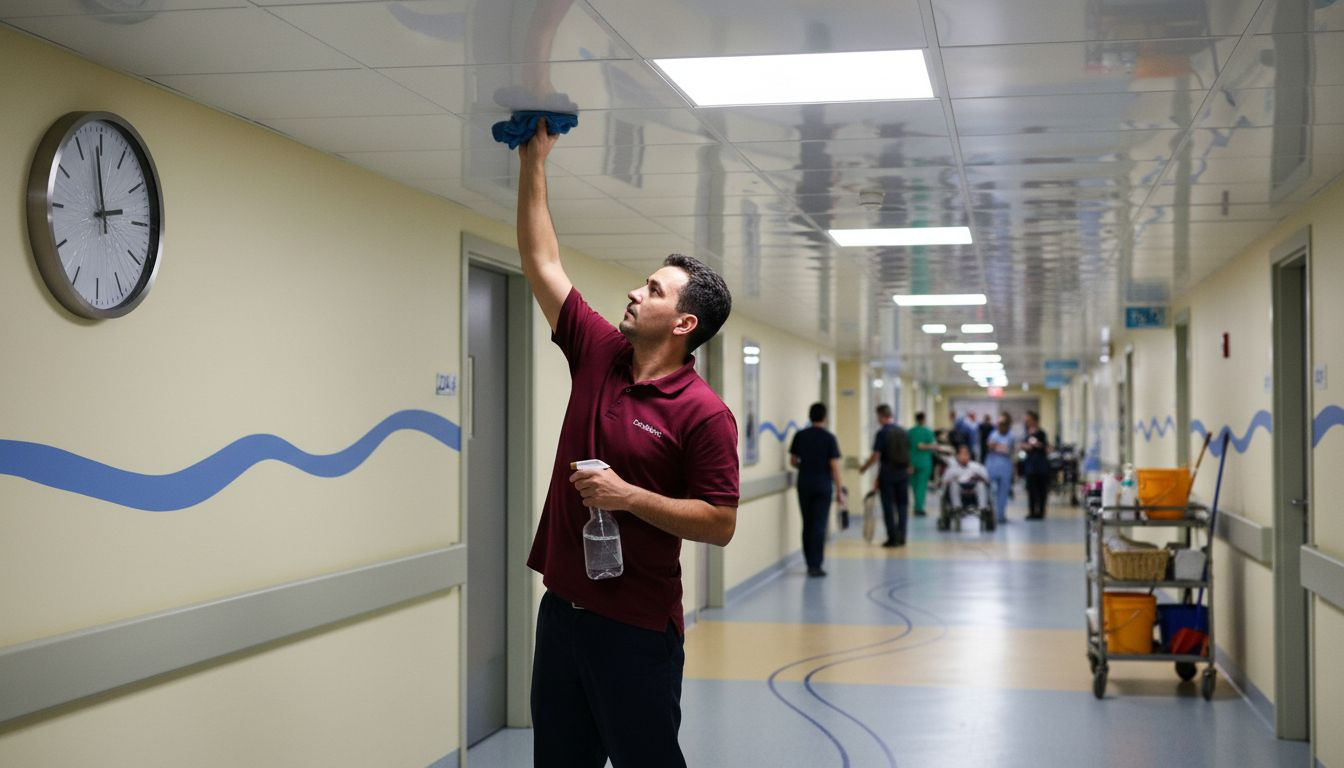
Real-World Application
Your facility’s ceiling directly affects compliance outcomes. Inspectors specifically evaluate ceiling condition when assessing hygiene standards. A facility with visibly compromised or stained ceilings immediately signals control issues—even if problems exist elsewhere.
More importantly, staff confidence increases when ceilings look clean and pristine. This psychological factor supports stronger hygiene culture throughout the team.
Ceiling cladding is not decorative—it’s a functional hygiene barrier that actively protects your patients, food, and operations from airborne contamination sources.
Pro tip: Audit your current ceiling condition monthly by checking for discolouration, water stains, or surface deterioration. Early detection prevents contamination events and keeps your facility ahead of compliance inspections.
Key Types and Material Variations Explained
Not all ceiling cladding materials perform equally in hygiene-critical environments. Your choice of material directly affects cleaning ease, durability, and your ability to maintain compliance standards.
Different cladding materials offer varying durability and hygiene properties), influencing which option suits your specific facility needs. Understanding these distinctions helps you make informed decisions that protect both your operation and your budget.
PVC Cladding: The Hygiene Leader
PVC (polyvinyl chloride) dominates hygiene-critical spaces for good reason. It’s non-porous, waterproof, and resists bacterial colonisation unlike traditional materials. PVC panels don’t absorb moisture, preventing the mould and mildew problems common in kitchens and bathrooms.
The surface wipes clean in seconds without harbouring pathogens in microscopic pores. PVC also withstands aggressive cleaning chemicals and steam, making it ideal for high-contamination areas.
Metal Cladding Options
Stainless steel and aluminium provide alternative hygiene solutions. Stainless steel excels in commercial kitchens where food safety regulations demand non-corrosive, easily sanitised surfaces.
Metal cladding resists moisture and won’t support microbial growth. However, it costs significantly more than PVC and requires specialist installation. Metal also conducts heat differently, affecting room temperature control.
Composite and Treated Materials
Hygienic cladding materials use vinyl, metal, or treated composites to support strict cleaning regimes. Composite panels combine durability with moderate cost, though they don’t always match PVC’s performance in wet environments.
Some composites contain antimicrobial coatings that inhibit bacterial growth. These add cost but provide extra protection in high-risk areas like operating theatres or food preparation zones.
Material Comparison at a Glance
Material | Moisture Resistance | Cleaning Ease | Cost | Durability |
PVC | Excellent | Very Easy | Moderate | 15-20 years |
Stainless Steel | Excellent | Easy | High | 25+ years |
Aluminium | Good | Moderate | High | 20+ years |
Composites | Good | Moderate | Moderate | 10-15 years |
Making Your Selection
Your choice depends on three factors:
Environment type: Wet kitchens need maximum moisture protection; healthcare facilities prioritise non-porous surfaces
Budget constraints: PVC offers best value; stainless steel costs more but lasts longer
Cleaning intensity: Aggressive washdowns favour PVC and stainless steel over composites
PVC ceiling cladding remains the standard choice for most UK healthcare and foodservice facilities because it delivers hygiene performance at accessible cost.
Pro tip: Request material samples and test them in your actual environment before committing to full installation. Temperature, humidity, and your specific cleaning products may affect performance differently than laboratory conditions.
Main Hygiene Benefits and Real-World Applications
Ceiling cladding delivers measurable hygiene improvements across healthcare and foodservice operations. The benefits extend beyond cleanliness into compliance, safety, and operational efficiency that your team will notice immediately.
When you upgrade to proper ceiling cladding, you’re addressing one of the most overlooked contamination vectors in your facility. The transformation affects everything from infection rates to staff confidence.
Direct Hygiene Advantages
Contamination prevention stands at the top of benefits. Smooth, durable materials allow easy cleaning and disinfection, reducing healthcare-associated infections in hospital settings. Pathogens can’t hide in sealed, non-porous surfaces.
Moisture resistance prevents mould colonisation that compromises air quality. Bacteria cannot embed themselves in PVC surfaces, meaning they wash away completely during standard cleaning cycles.
Real-World Applications by Sector
Different facilities benefit in distinct ways:
Hospital wards: Reduced infection transmission between patients and staff
Operating theatres: Maintains sterile environments critical for surgical outcomes
Commercial kitchens: Smooth, nonabsorbent finishes minimise microbial contamination in food preparation areas
Patient bathrooms: Prevents moisture-driven bacterial and fungal growth
Diagnostic laboratories: Protects sensitive samples from airborne contamination
Your facility type determines which benefits matter most, but contamination control applies universally.
Here is a comparison of ceiling cladding impacts across different facility types:
Facility Type | Main Hygiene Challenge | Priority Cladding Feature |
Hospital Ward | Infection transmission risk | Seamless, easily disinfected |
Operating Theatre | Sterile environment required | Non-porous, steam resistant |
Commercial Kitchen | Microbial food contamination | Waterproof, chemical resistant |
Patient Bathroom | Fungal and moisture growth | Mould proof, water repellent |
Diagnostic Lab | Sample contamination | Airtight, minimal dust retention |
Operational Efficiency Gains
Beyond hygiene, ceiling cladding simplifies maintenance significantly. Your cleaning staff spend less time on stubborn stains and damaged areas. Aggressive disinfectants work more effectively on non-porous surfaces.
Staff morale improves when ceilings look visibly clean. This psychological factor strengthens overall hygiene culture throughout your operation. When the environment looks maintained, teams maintain it better.
Compliance and Inspection Outcomes
Regulatory inspectors evaluate ceiling condition as a primary hygiene indicator. Visible ceiling deterioration immediately raises concerns about facility controls, regardless of actual infection rates.
Proper ceiling cladding removes inspection anxiety. Facilities consistently pass audits with flying colours when ceilings meet current standards. This translates to uninterrupted operations and regulatory confidence.
Ceiling cladding transforms your facility from compliant to exemplary, affecting infection rates, staff efficiency, and inspection outcomes simultaneously.
Pro tip: Document your ceiling condition before installation with photographs, then again at three and twelve months post-installation. This evidence demonstrates your commitment to hygiene standards during regulatory audits and supports budget requests for additional upgrades.
Installation, Maintenance, and Compliance Factors
Proper installation and ongoing maintenance determine whether your ceiling cladding delivers lasting hygiene benefits. Poor installation creates gaps and weak points where contamination accumulates, undermining your entire investment.
Compliance isn’t optional in UK healthcare and foodservice environments. Your ceiling cladding must meet regulatory standards from day one, and regular maintenance keeps it compliant throughout its lifespan.
Installation Standards and Requirements
Correct installation impacts ceiling hygiene by preventing gaps or damage where contaminants might accumulate. Professional installers follow building codes and safety standards that ensure structural integrity and hygiene performance.
Rushed installation creates invisible problems. Unsealed joints, improper fastening, and misaligned panels allow moisture penetration and bacterial harbouring. Invest in certified installers familiar with hygienic cladding systems—the cost difference is minimal compared to remediation.
Key Installation Checklist
Ensure your installer addresses these critical points:
All joints sealed completely with hygienic sealant
Panels installed level and without gaps exceeding 2mm
Proper ventilation behind cladding to prevent moisture trapping
Fastening systems rated for your specific environment
Electrical and fixture penetrations sealed against contamination ingress
Document installation with photographs and certification. This protects you during regulatory audits and warranty claims.
Maintenance Protocols for Long-Term Performance
Regular inspection catches problems before they spread. Maintenance and compliance recommendations include regular inspections and cleaning protocols to maintain cladding integrity in healthcare and food facilities.
Establish a monthly visual inspection routine. Look for discolouration, visible moisture, seal degradation, and physical damage. Address issues immediately before they compromise hygiene.
Cleaning and Disinfection Best Practices
Your cleaning approach affects cladding longevity. PVC cladding tolerates aggressive disinfectants, but incorrect technique damages seals and joints.
Implement these practices:
Use pH-neutral cleaners unless infection control protocols specify otherwise
Avoid abrasive scrubbing on sealed joints
Dry surfaces thoroughly after wet cleaning to prevent moisture trapping
Schedule deep disinfection quarterly beyond routine cleaning
Regulatory Compliance Considerations
UK healthcare facilities must comply with Health Building Note standards. Foodservice operations follow Environmental Health regulations. Both require documentation of ceiling condition and maintenance activities.
Maintain detailed records showing cleaning dates, disinfectants used, and any repairs. This documentation proves compliance during inspections and supports claims for regulatory adherence.
Installation quality and maintenance consistency determine whether ceiling cladding protects your facility or becomes a liability.
Pro tip: Create a maintenance schedule integrated into your facility management system, assigning specific staff responsibility for monthly ceiling inspections. Include photographic evidence in your compliance records—visual proof demonstrates your commitment to hygiene standards during regulatory audits.
Common Pitfalls and Hygiene Risks To Avoid
Many facility managers discover too late that cost-cutting on ceiling cladding creates expensive problems. The risks aren’t just about compliance—they directly threaten patient safety and food security.
Understanding common mistakes helps you avoid them entirely. Your ceiling is too important to learn through trial and error.
Material Selection Mistakes
Choosing the wrong material is your biggest risk. Improper material selection creates fire risks and hygiene problems from material degradation and microbial growth in damaged cladding. Never prioritise cost over hygiene performance.
Porous materials like traditional ceiling tiles trap moisture and harbour bacteria, fungi, and viruses. Once contaminated, they’re impossible to fully disinfect. The cost of remediation far exceeds initial material savings.
Installation and Access Problems
Poor installation creates hidden contamination zones. Gaps between panels, unsealed joints, and incomplete fastening allow pathogens to accumulate where cleaning cannot reach.
Your installer must ensure every joint is accessible for inspection and cleaning. Spaces behind or between panels trap moisture, becoming incubators for microbial growth that compromises your entire hygiene effort.
Critical Pitfalls to Avoid
Protect your facility by preventing these common failures:
Using combustible materials in enclosed spaces or above occupied areas
Skipping professional installation to save money short-term
Inadequate maintenance schedules allowing seal degradation undetected
Wrong cleaning products damaging sealants and creating access points
Poor ventilation design trapping moisture behind cladding
Each failure creates entry points for contamination that multiply over time.
Maintenance Neglect and Degradation
Risks like contamination from porous surfaces, improper cleaning access, and lack of maintenance can harbour pathogens and compromise facility hygiene significantly. Facility managers sometimes treat ceiling maintenance as optional, causing catastrophic failures.
Small problems escalate quickly. A 5mm gap becomes a contamination corridor. A tiny seal crack becomes moisture ingress. Visible mould signals that microbes have already colonised hidden areas.
Compliance Documentation Gaps
Failure to document maintenance creates regulatory exposure. Inspectors expect evidence that you actively maintain your cladding system.
Without records, you cannot prove compliance. Your facility appears neglectful regardless of actual condition. Documentation protects you during audits and supports budget requests for maintenance or upgrades.
This table summarises the most common ceiling cladding pitfalls and their typical consequences:
Common Pitfall | Typical Consequence |
Unsealed joints | Concealed microbial accumulation |
Inadequate maintenance | Undetected hygiene degradation |
Poor ventilation behind panels | Persistent moisture, mould growth |
Installing porous materials | Incomplete cleaning, rapid staining |
Missing compliance records | Regulatory audit failure risk |
Cutting corners on ceiling cladding doesn’t save money—it transfers costs to remediation, regulatory penalties, and potential patient harm.
Pro tip: Conduct a pre-installation survey with your contractor to photograph and document existing ceiling condition, then schedule post-installation documentation at weeks 2, 3 months, and 6 months. This evidence trail proves proper installation and protects against warranty disputes.
Elevate Your Facility’s Hygiene with Trusted Ceiling Cladding Solutions
Maintaining a clean and contamination-free ceiling is not just a regulatory necessity but a vital step in protecting patients, staff, and operational integrity. If your facility struggles with moisture, microbial growth, or damaged ceilings impacting hygiene standards, choosing the right ceiling cladding is crucial. From non-porous surfaces to easy-to-clean PVC materials, the right cladding system prevents microbial harbouring and supports your infection control goals.
Explore the extensive range of high-quality hygienic PVC ceiling cladding and accessories at Hygienic Sheets. With durable, waterproof options tailored for healthcare, food preparation, and commercial environments, you can simplify maintenance, pass inspections with confidence, and foster a stronger hygiene culture in your facility. Act now to secure fast UK-wide delivery and expert support that ensures your cladding installation stands up to the toughest hygiene demands. Visit our main site today to transform your ceilings and safeguard your operation.
Learn more about how PVC cladding and hygienic wall solutions can protect your business by browsing our product range at Hygienic Sheets. Start your upgrade journey here for compliant and easy-to-maintain ceilings.
Frequently Asked Questions
What is ceiling cladding and why is it important for hygiene?
Ceiling cladding refers to the materials used to cover the ceiling, which play a crucial role in maintaining hygiene standards by preventing moisture accumulation and providing a smooth, cleanable surface that reduces microbial growth.
How does PVC ceiling cladding compare to other materials for hygiene?
PVC ceiling cladding is non-porous and waterproof, making it resistant to mould and bacterial colonisation. In contrast, traditional porous materials can trap moisture and germs, making cleaning less effective and increasing the risk of contamination.
What are the common signs that ceiling cladding needs maintenance or replacement?
Look for discolouration, water stains, gaps between panels, or visible damage. These signs indicate moisture ingress or microbial growth, which can jeopardise hygiene standards.
How can I ensure proper installation of ceiling cladding?
Ensure that a professional installer seals all joints completely, installs panels without gaps exceeding 2mm, and uses materials suitable for your specific environment. Proper documentation and inspection of the installation process are also essential to maintaining hygiene integrity.
Recommended
Comments