

Wall Cladding and Hygiene – Transformation in UK Facilities
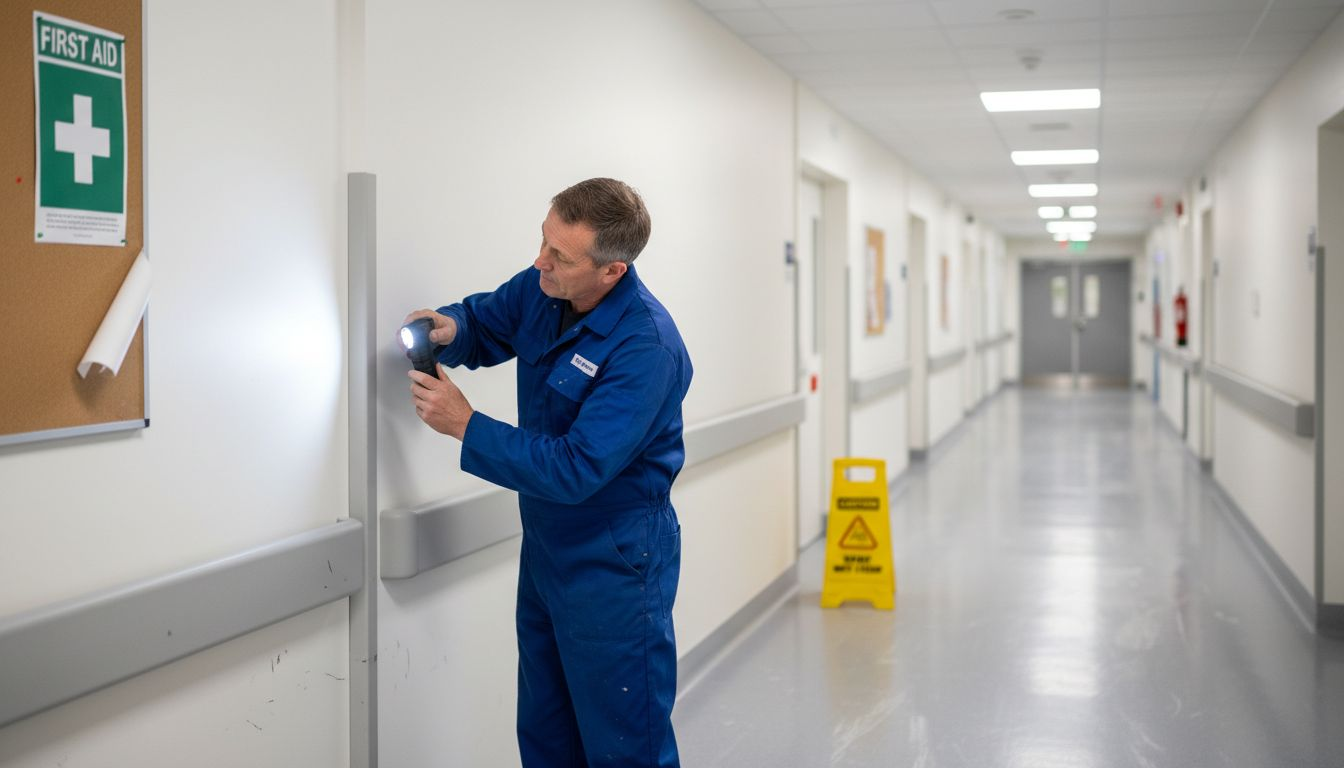
Why Wall Cladding Matters for Hygiene in UK Facilities
Hygiene lapses in hospitals and kitchens can threaten patient and customer safety, especially when outdated wall surfaces trap dirt or allow bacteria to grow. Facility managers across the United Kingdom need surfaces that support stringent hygiene requirements without constant struggle. Choosing durable, easy-to-clean PVC wall cladding helps safeguard your facility by resisting microbial build-up, facilitating effective cleaning, and meeting strict British health and safety regulations—all while standing up to daily wear and tear.
Table of Contents
Defining Wall Cladding In Hygiene-Critical Spaces
Types Of Hygienic Wall Cladding Explained
Key Features Supporting Strict Hygiene Standards
Compliance And Legal Requirements In The UK
Common Pitfalls And How To Avoid Contamination Risks
Key Takeaways
Point | Details |
Hygienic Wall Cladding | Properly selected wall cladding creates an optimal environment that minimises infection risks in hygiene-critical spaces. |
Material Selection is Critical | Choosing the right cladding materials based on specific environmental requirements ensures effective contamination prevention. |
Compliance is Mandatory | Adhering to UK regulations ensures wall cladding meets necessary hygiene and safety standards in sensitive environments. |
Regular Maintenance is Essential | Routine inspections and surface integrity assessments help maintain the cladding’s effectiveness in preventing contamination. |
Defining wall cladding in hygiene-critical spaces
Wall cladding represents a specialised protective surface solution designed to transform environments with stringent hygiene requirements. In medical, food service, and pharmaceutical settings, these innovative panels serve as critical barriers against contamination, moisture intrusion, and bacterial growth.
At its core, wall cladding involves installing protective panels that create a seamless, impenetrable surface across walls. Hygienic wall cladding sheets are engineered specifically to maintain exceptional cleanliness standards by providing:
Smooth, non-porous surfaces preventing microbial accumulation
Easy-to-clean materials resistant to chemical disinfectants
Elimination of joints and crevices where pathogens could multiply
High durability against physical impact and environmental stress
The primary objective of wall cladding in hygiene-critical spaces is creating an environment that minimises infection risks while maintaining aesthetic and functional integrity. Unlike traditional wall finishes, these specialised panels offer comprehensive protection against bacterial colonisation, moisture penetration, and surface degradation.
Pro tip: Always select wall cladding materials specifically rated for your precise environmental requirements, considering factors like temperature range, chemical exposure, and cleaning protocol frequency.
Types of hygienic wall cladding explained
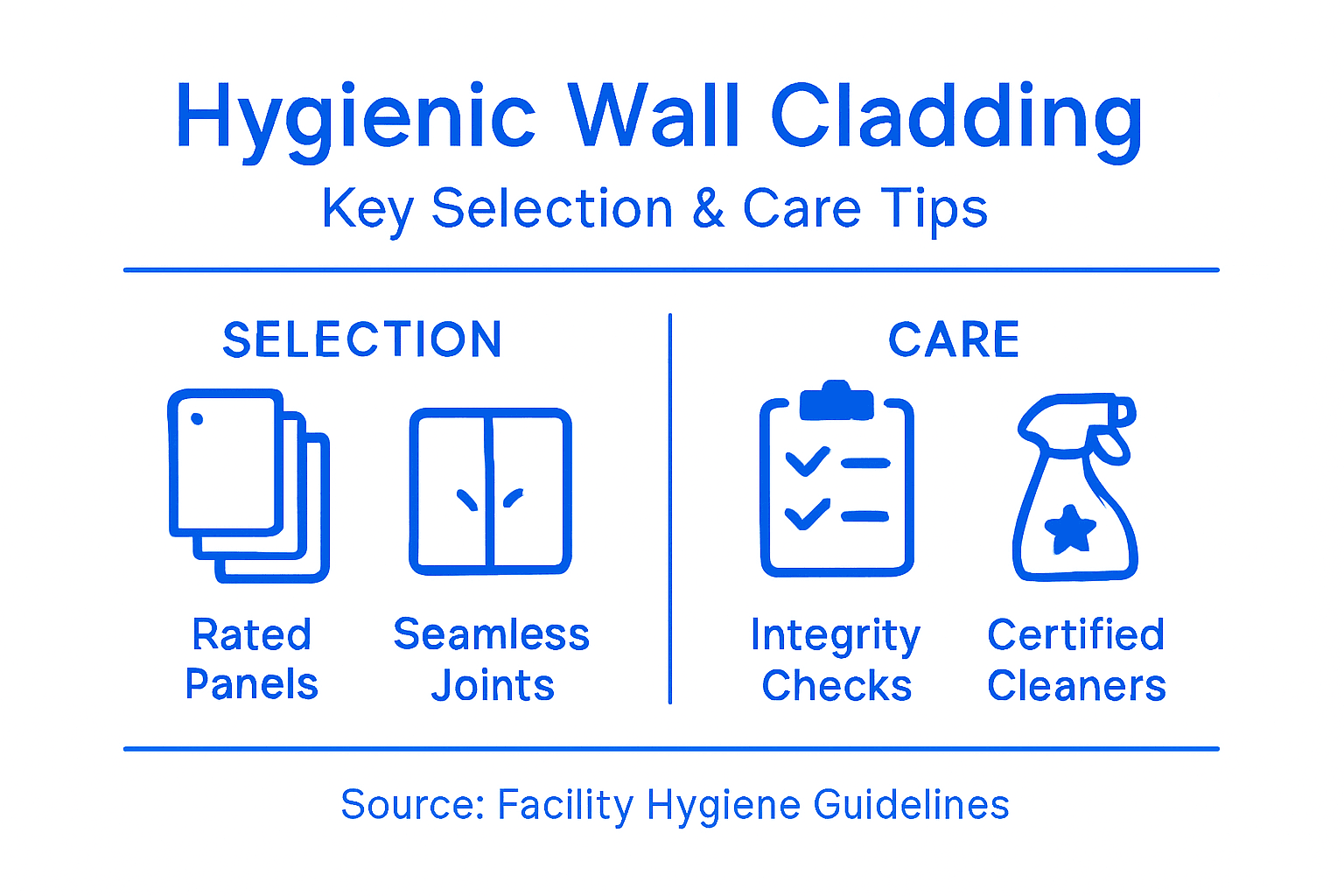
Hygienic wall cladding encompasses a diverse range of specialised materials designed to meet the rigorous cleanliness standards of critical environments. Understanding these types of hygienic wall panels allows facility managers to select the most appropriate solution for their specific requirements.
The primary categories of hygienic wall cladding include:
PVC Wall Panels: Lightweight, non-porous synthetic panels offering exceptional moisture resistance
Stainless Steel Cladding: Robust metal panels ideal for high-temperature and chemically aggressive environments
Fibreglass Reinforced Plastic (FRP): Composite materials providing superior durability and chemical resistance
Ceramic Wall Panels: High-end solution offering extreme temperature stability and impeccable hygiene standards
Each material brings unique characteristics to critical environments. PVC panels, for instance, are particularly popular in food processing and healthcare settings due to their seamless installation and straightforward cleaning protocols. Stainless steel variants excel in industrial kitchens and pharmaceutical laboratories where chemical resistance and thermal stability are paramount.
Selecting the appropriate wall cladding material is not just about aesthetics, but about creating a comprehensive infection prevention strategy.
Moreover, modern hygienic wall cladding solutions go beyond basic surface protection. Advanced panels now incorporate antimicrobial technologies, UV resistance, and specialised surface treatments that actively reduce bacterial colonisation and support stringent hygiene management protocols.
Pro tip: Prioritise wall cladding solutions that offer seamless integration, minimal joints, and compatibility with your specific cleaning and disinfection protocols.
Here is a quick comparison of hygienic wall cladding materials commonly used in critical environments:
Material Type | Ideal Environments | Main Strength | Primary Limitation |
PVC Wall Panels | Food processing, clinics | Simple installation | Limited heat resistance |
Stainless Steel Cladding | Laboratories, kitchens | Outstanding durability | Higher initial cost |
Fibreglass Reinforced Plastic | Pharmaceutical, wet areas | Superior chemical resistance | May require specialist fitting |
Ceramic Wall Panels | High-temperature zones | Excellent hygiene stability | Brittle under heavy impact |
Key features supporting strict hygiene standards
Hygienic wall cladding systems are engineered with sophisticated features that go far beyond traditional surface coverings. Hygienic wall cladding sheets represent a critical technological advancement in maintaining stringent cleanliness protocols across sensitive environments.
The key features that distinguish high-performance hygienic wall cladding include:
Antimicrobial Surface Technologies: Advanced treatments that actively reduce bacterial proliferation
Seamless Installation: Minimising joint and crevice areas where contaminants could accumulate
Chemical Resistance: Ability to withstand repeated exposure to aggressive cleaning and disinfection agents
Thermal Stability: Maintaining structural integrity across extreme temperature variations
Scratch and Impact Resistance: Preserving surface integrity during intense cleaning procedures
Surface engineering plays a pivotal role in these advanced wall cladding solutions. The hydrophobic properties ensure that moisture, bacteria, and potential contaminants cannot penetrate or adhere to the surface, creating an environment that actively resists microbial growth.
Effective hygiene management is not just about cleaning, but creating surfaces that fundamentally prevent contamination.
Modern wall cladding technologies incorporate sophisticated antimicrobial treatments such as silver ion technologies. These innovative approaches go beyond traditional passive protection, actively reducing microbial presence and providing an additional layer of defence in high-risk environments like healthcare facilities, food preparation areas, and pharmaceutical laboratories.
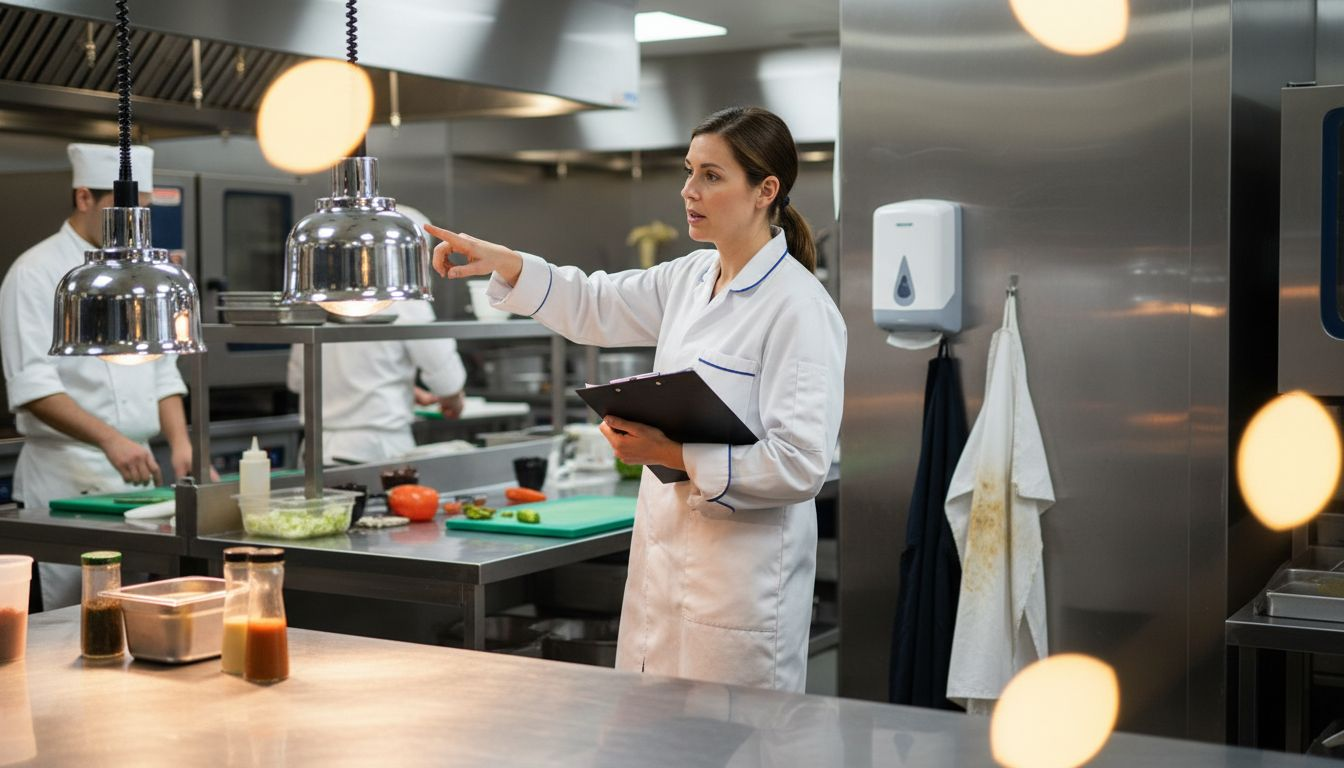
Pro tip: Conduct regular surface integrity assessments to ensure your wall cladding maintains its hygienic performance and remains free from microscopic damage that could compromise its protective capabilities.
Compliance and legal requirements in the UK
National regulations surrounding wall cladding in sensitive environments represent a complex landscape of stringent legal requirements. Hygienic wall cladding compliance demands meticulous attention to multiple regulatory frameworks that protect public health and safety.
Key compliance requirements for wall cladding in the United Kingdom include:
Fire Safety Standards: Meeting BS EN 13501-1 classification for fire resistance
Health and Safety Regulations: Adhering to HSE guidelines for surface materials
Infection Control Guidelines: Following Department of Health Building Notes
Material Certification: Demonstrating resistance to cleaning agents and microbial growth
Environmental Performance: Ensuring sustainable and non-toxic material composition
Regulatory compliance extends beyond mere documentation. Facilities must provide comprehensive evidence that their wall cladding solutions meet precise technical specifications designed to minimise infection transmission risks and maintain exceptional hygiene standards.
Compliance is not a checkbox exercise, but a continuous commitment to maintaining the highest standards of environmental safety.
Specialised sectors like healthcare, food preparation, and pharmaceutical manufacturing face particularly rigorous scrutiny. Wall cladding materials must undergo extensive testing to validate their performance against stringent British Standards, ensuring they can withstand repeated cleaning protocols, maintain structural integrity, and prevent bacterial colonisation.
Pro tip: Maintain a comprehensive documentation portfolio that tracks material certifications, performance testing results, and ongoing compliance assessments for your wall cladding installations.
Below is an overview of regulatory requirements and their practical impact for UK wall cladding compliance:
Compliance Area | Requirement Example | Facility Impact |
Fire Safety | BS EN 13501-1 classification | Reduces fire spread risks |
Infection Control | Department of Health guidelines | Minimises contamination |
Material Certification | Chemical resistance documentation | Supports thorough cleaning |
Environmental Standards | Non-toxic, sustainable materials | Ensures workplace wellbeing |
Common pitfalls and how to avoid contamination risks
Maintaining hygienic environments requires a proactive approach to identifying and mitigating potential contamination risks. Hygiene-critical wall cladding strategies demand meticulous attention to detail and comprehensive risk management.
Common contamination pitfalls in wall cladding installations include:
Porous Surface Materials: Allowing bacterial penetration and growth
Improper Installation: Creating gaps and crevices that harbour microorganisms
Inadequate Cleaning Protocols: Using inappropriate disinfection methods
Material Vulnerability: Selecting cladding susceptible to chemical or physical damage
Irregular Maintenance: Neglecting routine surface integrity assessments
Surface integrity represents the critical foundation of contamination prevention. Facilities must implement rigorous selection criteria that prioritise materials with smooth, non-porous surfaces capable of withstanding aggressive cleaning regimes while maintaining structural resilience.
Contamination prevention is not about perfection, but consistent, systematic risk management.
Specialised environments like healthcare and food production require particularly sophisticated contamination control strategies. This involves selecting wall cladding materials that not only resist microbial growth but actively prevent bacterial colonisation through advanced surface technologies and seamless installation techniques.
Pro tip: Develop a comprehensive surface inspection protocol that includes regular microscopic assessments and documentation of wall cladding condition to identify potential contamination risks early.
Elevate Hygiene Standards with Expert Wall Cladding Solutions
Ensuring strict contamination control in environments like healthcare facilities and commercial kitchens starts with choosing the right wall cladding. The article highlights common challenges such as microbial growth, porous materials, and compliance with UK regulations. At Hygienic Sheets, we understand these pain points and offer a broad range of durable, moisture-resistant, and easy-to-clean PVC wall cladding solutions designed specifically to transform hygiene-critical spaces.
Discover how our seamless installations and chemical resistant products help you maintain impeccable hygiene standards while enhancing durability and appearance. Whether you manage a small clinic or a large food production area, our fast nationwide delivery, competitive pricing, and expert customer support make us your trusted UK partner. Explore our full selection today at Hygienic PVC Wall Cladding and take the first step towards a safer, contamination-free environment.
Frequently Asked Questions
What is wall cladding used for in hygiene-critical spaces?
Wall cladding is used to create protective surfaces in environments with strict hygiene requirements, such as medical, food service, and pharmaceutical settings. It acts as a barrier against contamination, moisture, and bacterial growth.
What are the different types of hygienic wall cladding materials?
The main types of hygienic wall cladding include PVC wall panels, stainless steel cladding, fibreglass reinforced plastic (FRP), and ceramic wall panels. Each material offers unique properties suitable for various environments and applications.
How does antimicrobial technology benefit wall cladding?
Antimicrobial technology actively reduces bacterial proliferation on surfaces, enhancing hygiene management in critical environments. This provides an additional layer of protection against microbial growth, crucial for healthcare and food preparation areas.
What are common pitfalls to avoid when installing wall cladding?
Common pitfalls include using porous surface materials, improper installation that creates gaps, inadequate cleaning protocols, selecting vulnerable materials, and irregular maintenance. Avoiding these issues helps maintain a hygienic environment and prevents contamination.
Recommended
Comments