

Ceiling Cladding: Enhancing Hygiene in Healthcare
Updated: Feb 17
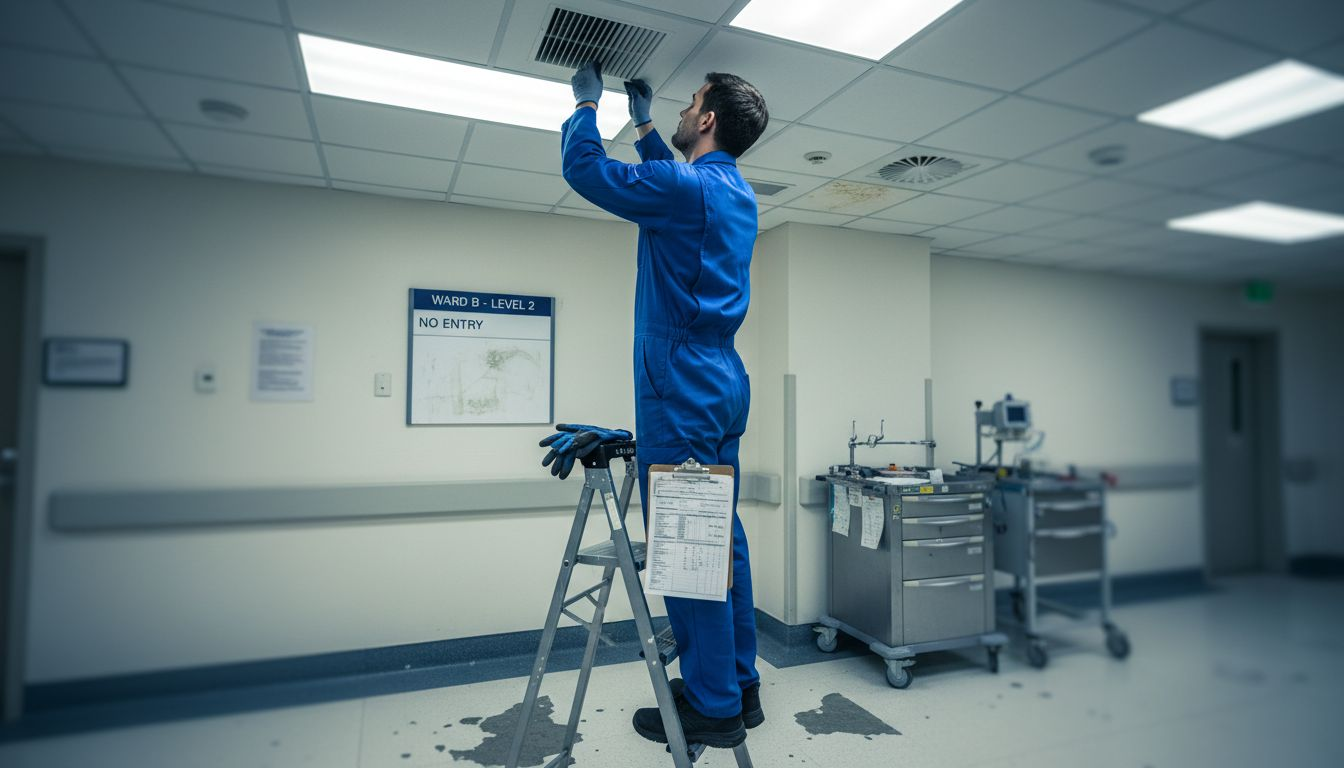
Why Ceiling Cladding Is Essential for Healthcare Hygiene Compliance
Finding reliable ceiling cladding in British healthcare settings often means navigating conflicting advice and persistent myths about performance. Facility managers face daily pressure to select materials that improve hygiene and prevent moisture problems, ensuring patient safety and regulatory compliance. This guide explains the true role of ceiling cladding, highlighting key misconceptions and helping you weigh hygienic, moisture-resistant solutions for safer environments. You will discover how solutions differ and which features align with best practices for modern healthcare facilities.
Table of Contents
Ceiling Cladding Defined And Common Myths
Types Of Ceiling Cladding For Healthcare
Essential Features And How It Works
Hygiene, Mould Prevention And Compliance Requirements
Comparison To Traditional Ceiling Finishes
Key Takeaways
Point | Details |
Ceiling Cladding Importance | Ceiling cladding is essential in healthcare settings for enhancing hygiene, durability, and infection control, rather than being merely decorative. |
Material Selection | Appropriate selection of cladding materials significantly impacts safety, especially regarding fire resistance and moisture management. |
Understanding Compliance | Adhering to moisture management and maintenance protocols is vital for mould prevention and maintaining hygiene standards. |
Comparison Essentials | Modern ceiling cladding outperforms traditional finishes in microbial resistance, cleaning efficiency, and overall durability, making it a critical element in infection control strategies. |
Ceiling Cladding Defined and Common Myths
Ceiling cladding represents a specialised construction technique designed to provide healthcare environments with enhanced protection, hygiene, and durability. At its core, cladding involves applying a protective layer over existing surfaces, creating a barrier that serves multiple critical functions beyond simple aesthetic improvements.
In healthcare settings, ceiling cladding goes far beyond traditional covering methods. Cladding in construction) fundamentally acts as a protective skin, offering crucial benefits such as:
Thermal insulation
Weather resistance
Moisture control
Enhanced hygienic properties
Improved infection prevention capabilities
Contrary to popular misconceptions, ceiling cladding is not merely a decorative element but a sophisticated engineering solution designed to address complex environmental challenges in medical facilities. Many healthcare professionals mistakenly believe that all cladding materials provide identical performance, which can lead to critical misunderstandings about safety and functionality.
One prevalent myth suggests that cladding is automatically waterproof. In reality, its primary function is directing moisture away from structural elements and preventing potential infiltration. Healthcare facility managers must understand that cladding materials and design can significantly impact safety, particularly regarding fire resistance and overall building integrity.
Key Misconceptions About Ceiling Cladding:
All cladding materials have identical performance characteristics
Cladding is purely aesthetic
Waterproofing is guaranteed with any cladding solution
Fire risks are uniform across different cladding types
Understanding these nuances is crucial for making informed decisions about healthcare facility infrastructure. Selecting appropriate ceiling cladding requires careful consideration of material properties, environmental conditions, and specific institutional requirements.
Pro tip: Always consult specialised healthcare construction experts who understand the intricate requirements of medical facility design before selecting ceiling cladding solutions.
Types of Ceiling Cladding for Healthcare
Healthcare environments demand sophisticated ceiling cladding solutions that go beyond traditional architectural considerations. Ceiling construction types encompass a range of materials specifically engineered to meet the rigorous demands of medical facilities, with each option presenting unique advantages and challenges.
Primary Ceiling Cladding Types in Healthcare:
Mineral Fiber Ceilings
Excellent acoustic control
Relatively easy maintenance
Cost-effective solution
Metal Ceiling Tiles
High durability
Superior cleaning capabilities
Exceptional hygienic performance
Gypsum Plasterboard Ceilings
Smooth aesthetic finish
Inherent fire resistance
Requires meticulous maintenance
The selection of appropriate ceiling cladding involves careful evaluation of multiple critical factors. Ceiling maintenance considerations reveal that healthcare facilities must prioritise materials offering optimal hygiene, moisture resistance, and ease of cleaning.
Each cladding type presents distinct characteristics tailored to specific healthcare environment requirements. Metal panels, for instance, provide exceptional microbial resistance and can withstand intensive cleaning protocols. Acoustic tiles offer sound absorption critical in sensitive medical zones, while gypsum boards deliver a seamless, professional appearance with added fire safety benefits.
Key selection criteria for healthcare ceiling cladding include:
Infection control capabilities
Moisture resistance
Acoustic performance
Fire safety ratings
Ease of maintenance
Durability under frequent cleaning
Cost-effectiveness
Understanding these nuanced requirements ensures healthcare facility managers can make informed decisions that balance practical functionality with stringent hygiene standards.
To better illustrate how ceiling cladding solutions differ, here is a concise comparison of the main types used in healthcare environments:
Cladding Type | Hygiene Benefit | Maintenance Difficulty | Suitability for High-Clean Areas |
Mineral Fibre Ceilings | Reduces noise, limits dust | Simple, infrequent | Suitable for waiting rooms |
Metal Ceiling Tiles | High antimicrobial resistance | Easy, withstands chemicals | Ideal for operating theatres |
Gypsum Plasterboard | Fire safe, smooth appearance | Requires exacting procedures | Useful for administrative spaces |
Pro tip: Consult specialised healthcare design professionals who can provide tailored recommendations based on your specific facility’s unique environmental and regulatory requirements.
Essential Features and How it Works
Ceiling cladding in healthcare settings represents a sophisticated engineering solution designed to create robust, hygienic environments. Infection control standards demand innovative materials that actively combat pathogen transmission and maintain stringent cleanliness protocols.
Key Functional Features:
Microbial resistance
Seamless surface design
Chemical disinfectant compatibility
Minimal moisture retention
Smooth, non-porous texture
Rapid drying capabilities
The intricate design of healthcare ceiling cladding involves multiple protective mechanisms. Ceiling system performance emphasises preventing dirt accumulation, resisting microbial growth, and enabling efficient cleaning processes.
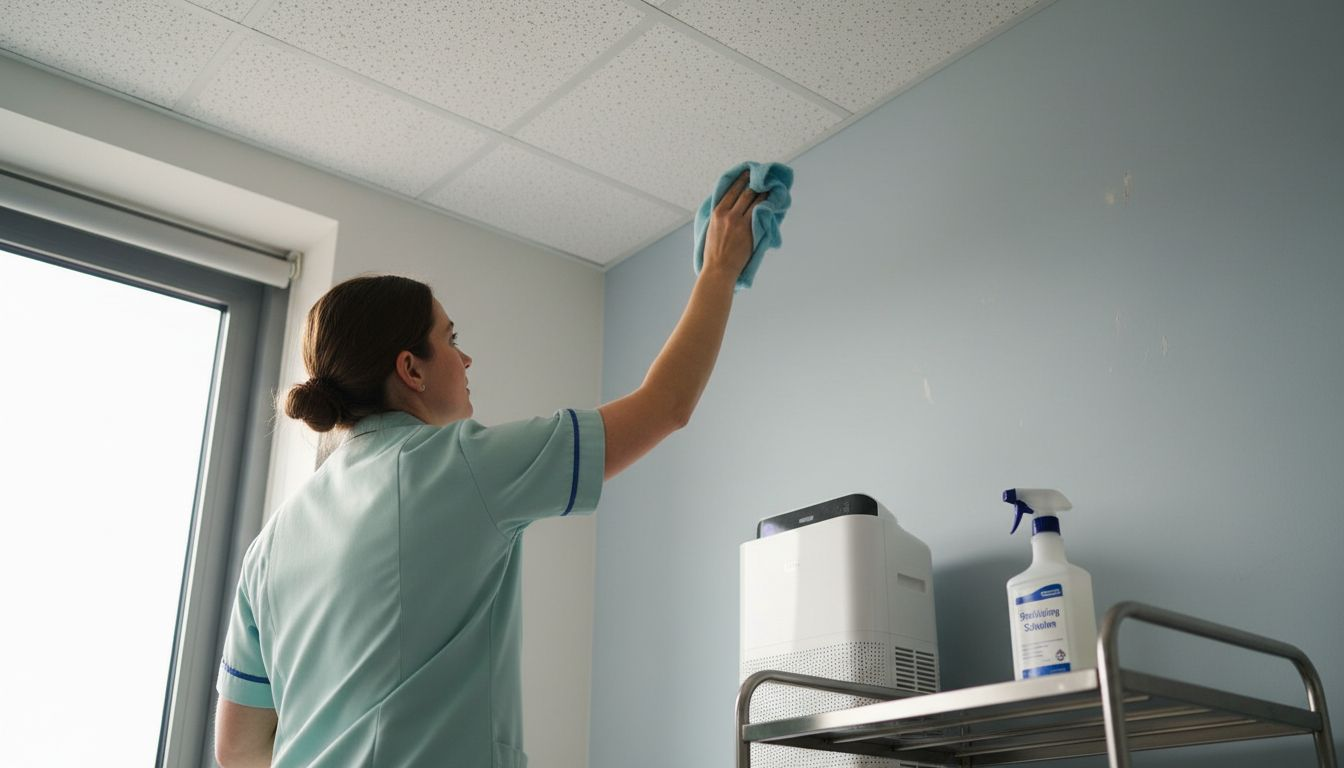
Healthcare ceiling cladding functions through a complex interplay of material science and architectural engineering. Its primary objective is creating surfaces that actively resist contamination while providing structural integrity. The materials are engineered with microscopic surface treatments that repel moisture, prevent bacterial adhesion, and withstand repeated intensive cleaning protocols.
Mechanism of Hygienic Protection:
Prevents moisture accumulation
Blocks bacterial colonisation
Enables thorough disinfection
Resists chemical cleaning agents
Maintains structural performance
Advanced ceiling cladding systems incorporate innovative technologies that transform passive architectural elements into active infection control mechanisms. By creating surfaces that inherently resist microbial growth and enable rapid, comprehensive cleaning, these systems play a critical role in reducing healthcare-associated infection risks.
Pro tip: Regularly inspect ceiling cladding surfaces for microscopic damage that could compromise their hygienic properties, and replace panels at the first sign of wear or degradation.
Hygiene, Mould Prevention and Compliance Requirements
Healthcare environments demand stringent standards for surface hygiene, with ceiling cladding playing a critical role in preventing microbial contamination. Mould prevention guidelines emphasise the fundamental importance of moisture control and proactive maintenance strategies in healthcare settings.
Critical Compliance Requirements:
Strict moisture management
Regular surface inspection
Non-porous material selection
Comprehensive cleaning protocols
Rapid remediation procedures
Documented maintenance records
The fundamental mechanism of mould prevention relies on creating environmental conditions that actively discourage microbial growth. This involves selecting ceiling cladding materials with inherent resistance to moisture absorption, featuring smooth, non-porous surfaces that prevent bacterial and fungal colonisation.
Healthcare facilities must implement comprehensive compliance frameworks that address multiple dimensions of hygiene control. These frameworks involve selecting appropriate materials, establishing rigorous cleaning protocols, maintaining optimal environmental conditions, and conducting regular professional assessments to identify potential contamination risks.
Mould Prevention Strategic Approaches:
Implement humidity control systems
Use antimicrobial surface treatments
Conduct periodic professional assessments
Maintain precise cleaning documentation
Train staff in hygiene maintenance protocols
Invest in high-performance cladding materials
Successful mould prevention requires a holistic approach that combines advanced material technologies, systematic maintenance procedures, and continuous professional monitoring. Healthcare facility managers must view ceiling cladding not merely as an architectural element but as an active component in their infection control strategy.
Pro tip: Develop a comprehensive monitoring checklist that includes monthly visual inspections and quarterly professional assessments of ceiling cladding surfaces to ensure ongoing hygiene compliance.
Comparison to Traditional Ceiling Finishes
Healthcare facilities have traditionally relied on conventional ceiling finishes that often compromise infection control standards. Infection control protocols reveal significant limitations in traditional materials compared to modern ceiling cladding solutions designed for clinical environments.
Key Performance Differences:
Traditional Finishes
Porous surface structures
High moisture absorption
Challenging to thoroughly clean
Limited microbial resistance
Advanced Ceiling Cladding
Smooth, non-porous surfaces
Minimal moisture retention
Easy comprehensive cleaning
Enhanced antimicrobial properties
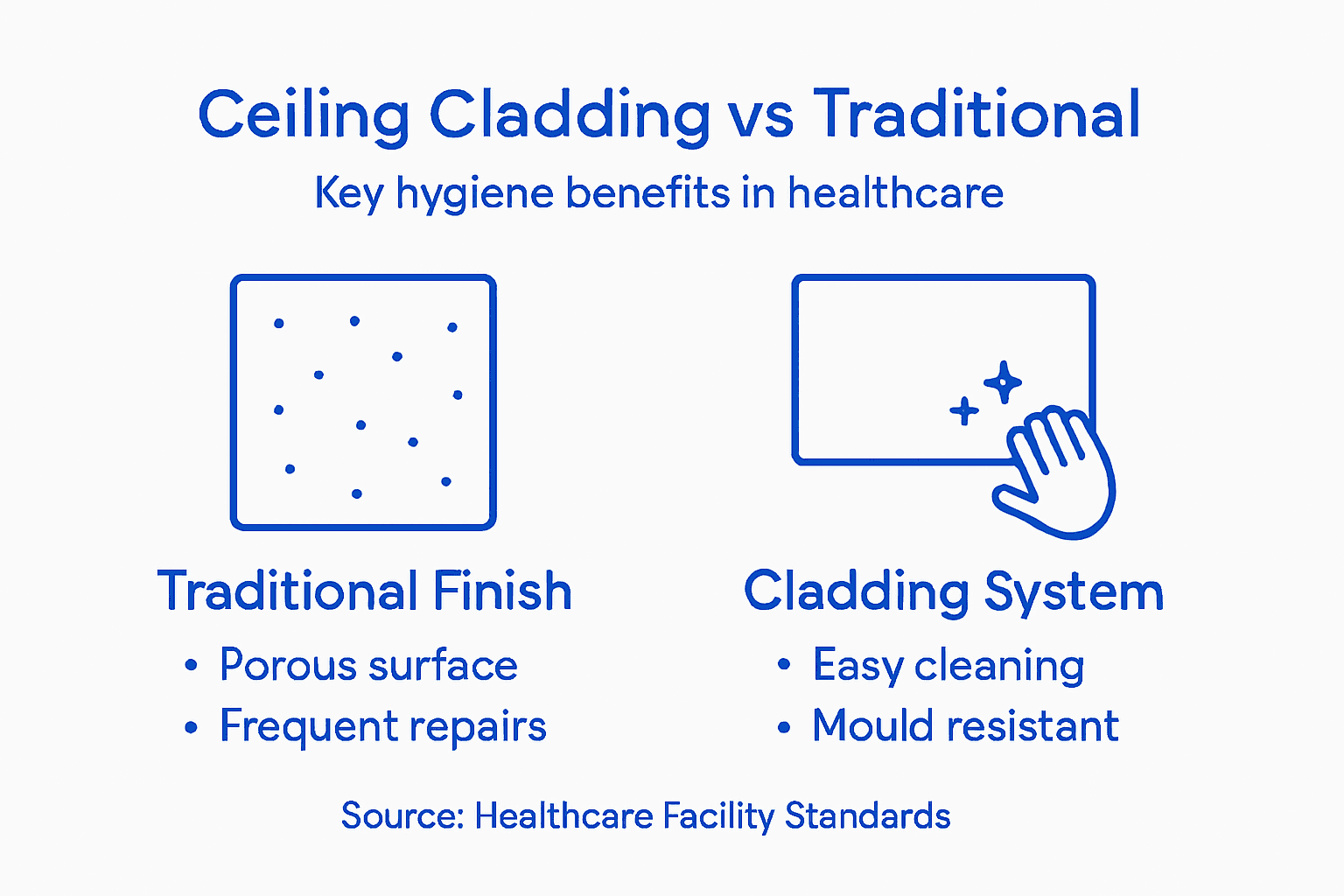
Traditional ceiling materials like standard gypsum boards and painted surfaces create multiple challenges for healthcare hygiene management. These conventional finishes typically feature microscopic surface irregularities that harbour bacteria, fungi, and other pathogens, making comprehensive sanitisation extremely difficult.
The fundamental difference lies in material engineering. Modern ceiling cladding systems are purposefully designed with advanced polymers and treatments that create inhospitable environments for microbial growth. Unlike traditional finishes, these innovative solutions provide a seamless, non-porous surface that actively resists contamination and supports rigorous cleaning protocols.
Comparative Performance Metrics:
Microbial colonisation resistance
Cleaning efficiency
Moisture control capabilities
Long-term durability
Cost-effectiveness over lifecycle
Infection prevention potential
Healthcare facility managers must recognise that ceiling finishes are no longer merely aesthetic choices but critical components in comprehensive infection control strategies. The transition from traditional materials to specialised cladding represents a proactive approach to environmental hygiene.
The following table summarises performance differences between traditional finishes and modern ceiling cladding in infection control:
Attribute | Traditional Finishes | Modern Ceiling Cladding |
Cleaning Efficiency | Time-consuming, often patchy | Fast and comprehensive |
Microbial Resistance | Low, bacteria can persist | High, actively resists growth |
Durability | Prone to moisture damage | Survives constant cleaning |
Cost Over Lifecycle | Frequent repairs needed | Lower due to longevity |
Pro tip: Conduct a comprehensive cost-benefit analysis comparing traditional ceiling finishes with modern cladding solutions, considering long-term maintenance, replacement costs, and potential infection control savings.
Elevate Healthcare Hygiene with Expert Ceiling Cladding Solutions
Maintaining impeccable hygiene and moisture resistance in healthcare environments is essential to prevent infections and ensure patient safety. As the article highlights, selecting the right ceiling cladding involves understanding key factors such as microbial resistance, moisture control and ease of maintenance. If you are facing challenges with conventional ceiling finishes that compromise infection control, it is time to explore advanced cladding options tailored for demanding medical facilities.
Discover a comprehensive range of high-quality hygienic PVC wall and ceiling cladding at Hygienic Sheets. Our durable, waterproof cladding products are designed to meet strict healthcare standards, offering smooth non-porous surfaces that resist mould and bacteria while supporting rigorous cleaning protocols. Whether you manage a small clinic or a large hospital, we provide fast nationwide delivery and expert guidance to ensure your facility meets compliance and hygiene requirements. Take the next step towards safer, cleaner healthcare spaces by visiting our site and exploring how our ceiling cladding solutions can enhance your infection control strategy today.
Frequently Asked Questions
What is ceiling cladding?
Ceiling cladding is a specialised construction technique used in healthcare environments to provide enhanced protection, hygiene, and durability by applying a protective layer over existing surfaces.
How does ceiling cladding improve hygiene in healthcare settings?
Ceiling cladding features non-porous surfaces that actively resist microbial growth, prevents moisture retention, and enables efficient cleaning, which collectively help in reducing healthcare-associated infections.
What types of ceiling cladding are best for infection control?
Some of the best types for infection control include metal ceiling tiles, which offer high antimicrobial resistance, and mineral fibre ceilings, which provide good acoustic control and are easy to maintain.
How does ceiling cladding compare to traditional ceiling finishes?
Unlike traditional finishes, which often have porous structures and high moisture absorption, modern ceiling cladding consists of smooth, non-porous surfaces that minimise moisture retention and enhance cleaning efficiency, thus improving infection control capabilities.
Recommended
Comments