

Commercial Kitchen Wall Panel Guide for Hygienic Fit-Outs

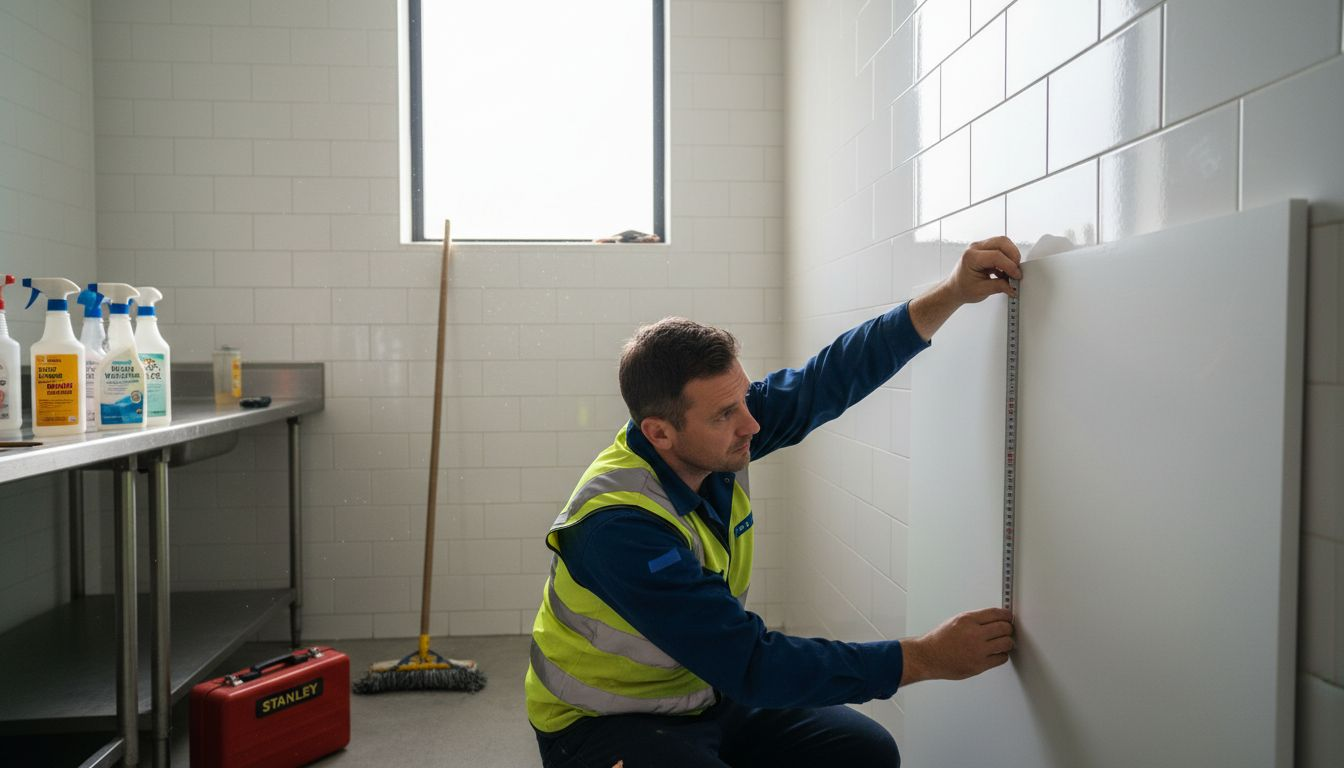
Finding hygienic wall panels that meet strict regulatory demands is a real challenge for anyone responsible for commercial food service spaces. Facility managers and kitchen designers across the United Kingdom need solutions that combine durability, seamless cleanliness, and compliance with health department codes. This guide provides clear, actionable steps for choosing and installing hygienic wall cladding that withstands intense cleaning, heavy traffic, and ever-changing kitchen conditions.
Table of Contents
Quick Summary
Key Point | Explanation |
1. Assess site requirements thoroughly | A detailed site evaluation is essential to identify specific needs and compliance standards before installation begins. |
2. Choose hygienic wall panels wisely | Selecting panels with high moisture resistance and durability is vital to ensure hygiene and longevity in a commercial kitchen. |
3. Prepare walls before installation | Proper wall preparation ensures a stable, smooth surface, critical for the successful mounting of hygienic wall panels. |
4. Ensure secure fixing and sealing | Precise panel fixing and proper sealing are crucial to prevent moisture ingress and maintain a hygienic environment. |
5. Conduct a comprehensive final inspection | A detailed inspection of the installed panels ensures compliance with hygiene standards and identifies any potential issues. |
Step 1: Assess site requirements and specifications
Before installing commercial kitchen wall panels, you’ll need to conduct a thorough site assessment that evaluates the precise environmental conditions and regulatory demands. This critical first step ensures your wall cladding will perform flawlessly and meet all necessary compliance standards.
Your initial assessment should focus on several key parameters, including determining functional requirements for your specific kitchen environment. This means carefully examining factors such as:
Moisture exposure levels in the workspace
Anticipated traffic intensity
Chemical cleaning regimens
Temperature and heat variations
Potential grease accumulation
Health department regulations mandate that commercial kitchen walls must be smooth, non-porous, and capable of withstanding rigorous cleaning protocols. Health and building codes specify precise requirements regarding fire ratings, material resistance, and hygienic performance. Professional installers will verify local and national standards to guarantee full regulatory compliance.
Once you’ve gathered comprehensive site data, you’ll be prepared to select wall panels that match your kitchen’s unique operational needs. This meticulous approach prevents future complications and ensures a robust, long-lasting installation.
Expert tip: Always request a professional site survey to capture nuanced environmental details that might not be immediately apparent during initial assessment.
Step 2: Select suitable hygienic wall panels and accessories
Selecting the right wall panels for your commercial kitchen is more than just an aesthetic choice - it’s a critical decision that impacts hygiene, safety, and long-term operational efficiency. Your selection must balance performance requirements with practical considerations to ensure a robust and compliant solution.
When choosing wall panels, you’ll want to focus on several key characteristics that define high-quality hygienic cladding. Hygienic wall solutions should demonstrate:
High moisture resistance
Chemical cleaning durability
Seamless installation capabilities
Fire-retardant properties
Temperature and impact tolerance
Easy-to-clean surface textures
Your panel selection should account for specific environmental challenges in your commercial kitchen. This means evaluating factors like steam exposure, temperature fluctuations, potential mechanical impacts, and the intensity of cleaning regimens. Professional-grade wall panels must withstand frequent sanitisation without degrading or developing microbial habitation zones.
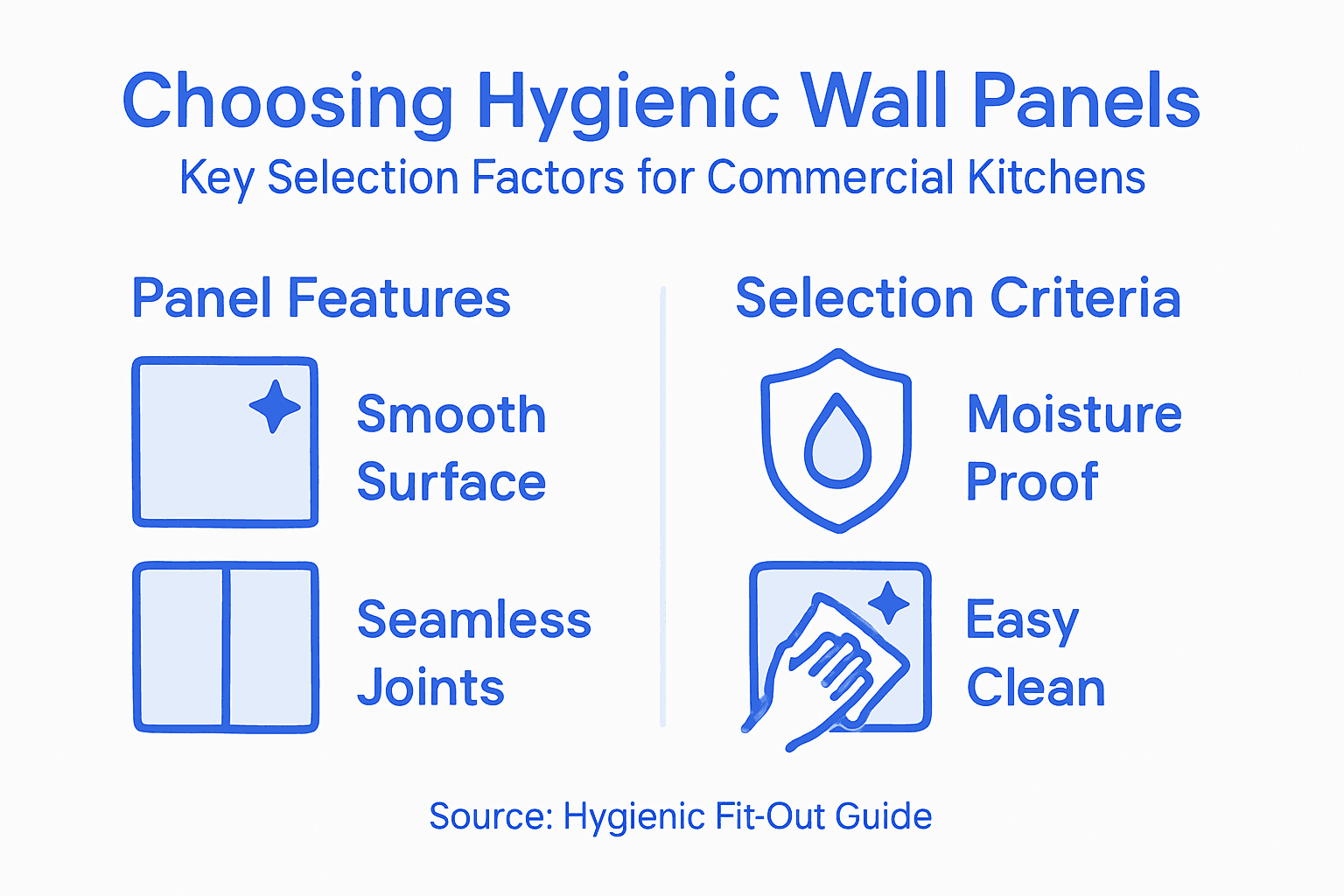
Here is a summary of how panel features influence commercial kitchen performance:
Panel Feature | Impact on Hygiene | Effect on Longevity |
High moisture resistance | Reduces mould formation | Prevents panel warping |
Chemical cleaning durability | Ensures surface integrity | Withstands harsh cleansers |
Seamless installation | Minimises bacteria traps | Increases system lifespan |
Fire-retardant properties | Protects workspace safety | Reduces replacement needs |
Choosing the right wall panel is fundamentally about protecting your workspace’s hygiene and operational integrity.
Consider complementary accessories that enhance your wall panel system’s performance, such as specialised corner trims, sealants, and joining profiles that create completely sealed environments. These additional components are crucial for preventing moisture ingress and maintaining a sterile workspace.
Expert tip: Request material samples and independent performance certifications before making your final panel selection to verify actual performance characteristics.
Step 3: Prepare walls and install mounting profiles
Successfully installing hygienic wall panels begins with meticulous wall preparation - a critical phase that determines the entire installation’s quality and longevity. Your goal is to create a perfectly smooth, stable surface that will support your new wall cladding system with maximum performance and durability.
Before beginning installation, you’ll need to complete several essential preparatory tasks. Hygienic wall installation requires a systematic approach that includes:
Thoroughly cleaning existing wall surfaces
Repairing any structural imperfections
Removing old paint or existing wall coverings
Checking wall flatness and structural integrity
Ensuring proper moisture barrier protection
Measuring and marking precise mounting locations
The mounting profile installation represents a crucial technical stage where precision becomes paramount. These aluminium or stainless steel profiles create the foundational framework that will support your wall panels, ensuring they remain perfectly aligned and securely positioned.
Proper mounting profile installation is the structural backbone of your entire hygienic wall system.
Careful attention must be paid to creating level, evenly spaced mounting points that accommodate potential thermal expansion and provide robust support. Professional installers typically use laser levels and specialised mounting brackets to achieve millimetre-perfect alignment.
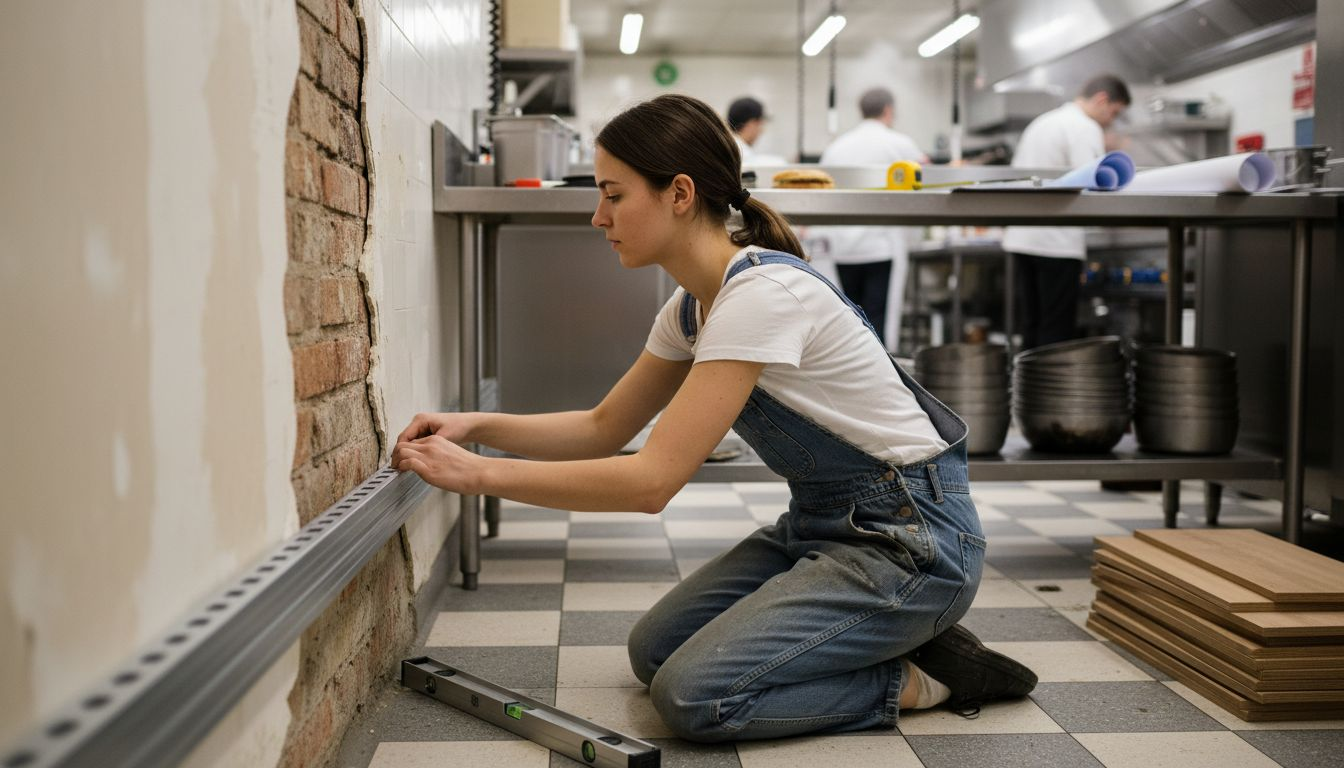
Expert tip: Invest in high-quality mounting profile fixings and take extra time during initial alignment to prevent future installation complications.
Step 4: Fix wall panels securely and seal joints
Installing wall panels requires precision and careful technique to create a completely sealed, hygienic environment that meets stringent commercial kitchen standards. Your ultimate goal is to achieve a seamless surface that prevents moisture ingress and eliminates potential bacterial harbourage points.
Hygienic wall cladding techniques demand meticulous attention to panel fixing and joint sealing. Key considerations include:
Selecting appropriate fixing mechanisms
Using food-safe sealant compounds
Ensuring complete surface contact
Eliminating potential gap formations
Maintaining panel alignment
Preventing thermal expansion stress points
Professional installation involves using specialised fasteners that create minimal penetration while providing robust support. Stainless steel or corrosion-resistant fixings are essential, positioned strategically to distribute panel weight evenly and prevent future warping or movement.
A perfectly sealed wall panel installation is your first defence against contamination and hygiene breaches.
Joint sealing represents the most critical phase of installation. Non-porous, chemical-resistant sealants specifically designed for food preparation environments will create a continuous, impermeable barrier that withstands aggressive cleaning protocols and temperature variations.
Expert tip: Apply sealant in a continuous, unbroken bead and use professional-grade smoothing tools to eliminate potential air pockets or irregular surfaces.
Step 5: Inspect installation for compliance and hygiene
Final inspection represents the ultimate quality assurance stage where your meticulously installed wall panels are thoroughly evaluated against strict regulatory and performance standards. This crucial process transforms your technical installation into a certified hygienic environment ready for commercial food service operations.
Hygienic wall system verification requires comprehensive assessment across multiple critical dimensions:
Checking joint seal integrity
Verifying surface smoothness
Measuring panel alignment precision
Testing moisture resistance
Examining chemical cleaning durability
Confirming no visible imperfections
Professional inspections involve both visual examination and technical measurements. You’ll need to scrutinise every centimetre of the installed wall cladding, looking for potential microscopic irregularities that could compromise hygiene standards. This means checking for:
Uniform panel positioning
Absence of surface gaps
Seamless joint connections
Consistent sealant application
Rigorous inspection is the final defence against potential contamination risks in your commercial kitchen environment.
Documentation becomes critical during this phase. Photograph and record all inspection findings, ensuring you have comprehensive evidence of the installation’s compliance with health and safety regulations.
The following table outlines key inspection checkpoints and their importance:
Inspection Checkpoint | Purpose | Common Failure Consequence |
Joint seal integrity | Prevents moisture ingress | Risk of microbial contamination |
Surface smoothness | Enables easy cleaning | Cleaning inefficiency |
Panel alignment precision | Avoids gaps and warping | Food debris accumulation |
Chemical resistance | Maintains surface under sanitisers | Early panel degradation |
Expert tip: Use professional-grade measurement tools and maintain a detailed checklist to ensure no aspect of the inspection is overlooked.
Elevate Your Commercial Kitchen with Expert Hygienic Wall Solutions
Ensuring your commercial kitchen meets demanding hygiene standards requires more than just surface knowledge. This guide underscores the importance of selecting high moisture resistant, chemical durable, and fire-retardant wall panels while emphasising flawless installation and meticulous joint sealing. Avoid costly reworks and contamination risks by choosing solutions designed specifically for environments that endure intense cleaning and operational challenges.
At HygienicSheets, we understand your goals for a seamless, durable, and hygienic fit-out. Our extensive range of hygienic PVC wall cladding, trims, and accessories are crafted to withstand heavy-duty commercial kitchen conditions, supporting your need for rapid installation and lasting protection. Experience the reliability of fully compliant materials with quick nationwide delivery for projects of all sizes.
Take control of your kitchen hygiene today. Explore our premium selection and benefit from expert advice tailored to your installation needs. Visit HygienicSheets to start building a safer, cleaner kitchen environment now.
Frequently Asked Questions
What should I assess before installing commercial kitchen wall panels?
You should evaluate moisture exposure levels, traffic intensity, cleaning regimens, temperature variations, and potential grease accumulation. Conduct a thorough site assessment to ensure you select the correct wall panels that meet your kitchen’s unique operational needs.
How do I choose hygienic wall panels for my commercial kitchen?
Select wall panels with high moisture resistance, chemical cleaning durability, and seamless installation capabilities. Prioritise panels that can withstand temperature fluctuations and are easy to clean, to maintain a hygienic environment.
What steps should I take to prepare walls for mounting hygienic wall panels?
Thoroughly clean existing wall surfaces, repair any imperfections, and ensure proper moisture barrier protection. Measure and mark precise mounting locations to set the foundation for a successful installation.
How can I ensure my wall panels are properly installed and sealed?
Fix wall panels securely using appropriate fastening mechanisms and non-porous, food-safe sealants to create a continuous barrier. Maintain panel alignment and eliminate gaps to prevent moisture ingress and minimise bacterial harbourage points.
What do I need to inspect after installing wall panels in a commercial kitchen?
Inspect for joint seal integrity, surface smoothness, and panel alignment precision. Document your findings and ensure that there are no visible imperfections that could compromise hygiene and compliance with health regulations.
Recommended


Comments