

Types of hygienic wall finishes: choosing the best for 2026
- tim7892
- Mar 14
- 10 min read
Updated: Mar 16

Choosing the Best Hygienic Wall Finishes for 2026
Facility managers often assume all wall finishes labelled hygienic deliver equal cleanliness standards, yet homogeneous PVC wall finishes offer superior hygiene due to their non-porous surface, preventing microbial growth far more effectively than traditional materials. This misconception costs facilities thousands in remediation and compliance failures annually. Understanding the distinct properties of each finish type, from moisture resistance to installation requirements, empowers you to select solutions that genuinely protect occupants whilst meeting stringent regulatory demands. This guide examines the core hygienic wall finish options available in 2026, comparing their performance, durability, and suitability for healthcare, food service, and hospitality environments.
Table of Contents
Key takeaways
Point | Details |
Non-porous finishes prevent contamination | Homogeneous PVC and similar materials block microbial growth by eliminating surface pores where bacteria hide. |
Installation quality determines hygiene | Poor joints, adhesive application, or surface imperfections create contamination risks regardless of material choice. |
Environment dictates finish selection | Healthcare demands different properties than food service, requiring tailored material specifications for optimal performance. |
Lifecycle costs outweigh initial price | Durable finishes reduce maintenance, replacement, and compliance costs over time despite higher upfront investment. |
Regular inspection maintains standards | Scheduled surface assessments identify emerging issues before they compromise hygiene or require extensive remediation. |
Understanding hygienic wall finishes: core types explained
Hygienic wall finishes serve as the primary barrier against contamination in environments where cleanliness directly impacts health outcomes and regulatory compliance. Unlike decorative finishes, these materials must actively resist moisture penetration, prevent microbial colonisation, and withstand rigorous cleaning protocols without degrading.
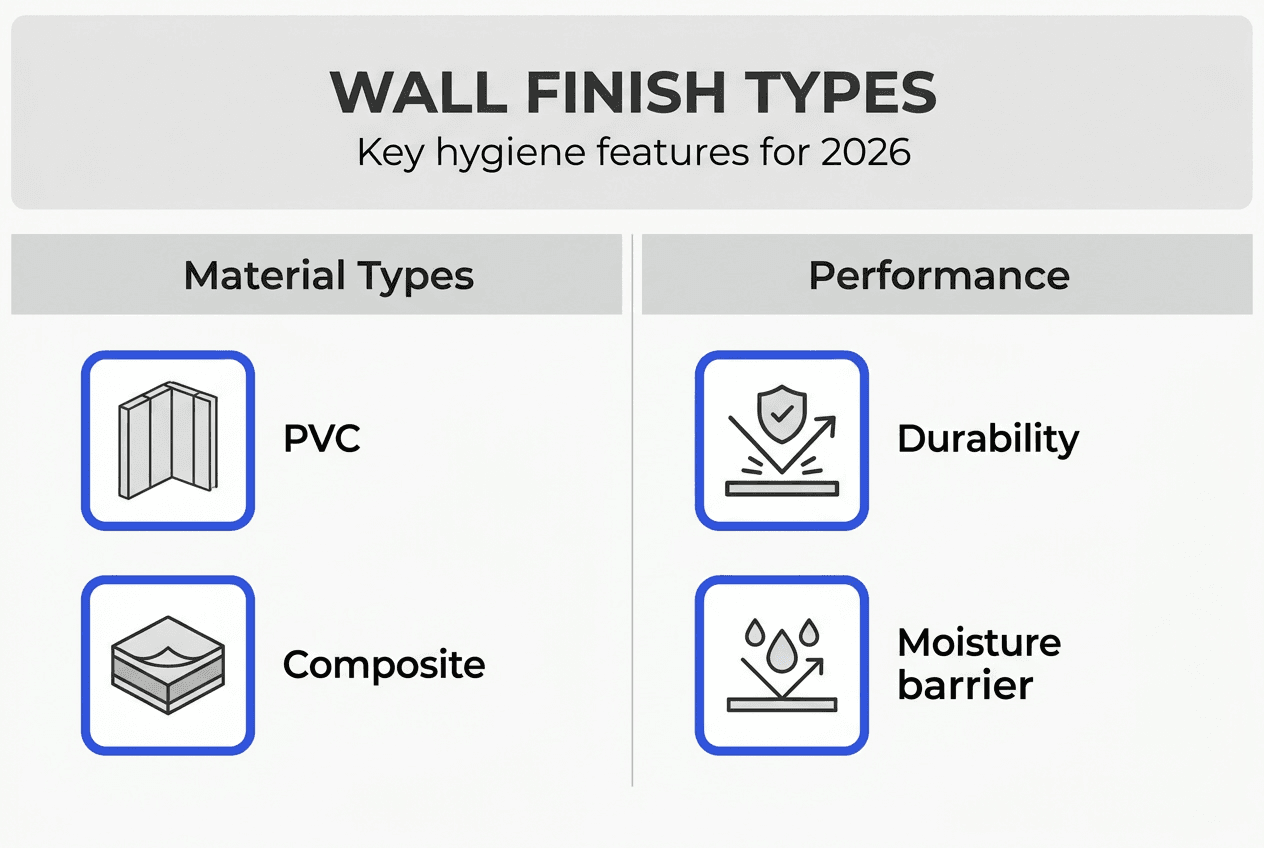
Homogeneous PVC stands as the gold standard for hygiene-critical applications. This material features uniform composition throughout its thickness, eliminating the layered structure that can delaminate under moisture exposure. The non-porous surface denies bacteria and fungi the microscopic crevices they require for growth. Healthcare facilities and commercial kitchens favour homogeneous PVC because it tolerates aggressive disinfectants, high-pressure washing, and temperature fluctuations without compromising its protective properties.
Vinyl wall coverings represent a mid-range option offering reasonable hygiene performance at lower cost. These finishes typically consist of a printed vinyl layer bonded to a backing material. Whilst they resist moisture better than paint or traditional wallpaper, the seams and backing can harbour contaminants if installation quality falters. Food preparation areas with moderate hygiene requirements often deploy vinyl successfully, though healthcare settings generally require more robust solutions.
Composite panels combine materials to balance performance and affordability. Common configurations include fibreglass-reinforced plastic (FRP) panels or PVC sheets with specialised coatings. These finishes excel in areas requiring impact resistance alongside hygiene, such as hospital corridors or hotel service areas. However, the joints between panels demand meticulous sealing to prevent moisture ingress and bacterial accumulation.
Ceramic tiles offer exceptional durability and heat resistance, making them suitable for commercial kitchens and sterilisation rooms. The tiles themselves resist contamination effectively, but grout lines present significant hygiene challenges. Even epoxy grout remains porous compared to homogeneous PVC, requiring frequent deep cleaning and eventual replacement as grout degrades.
Pro Tip: When evaluating types of hygienic wall cladding, request surface porosity specifications and cleaning protocol compatibility data rather than relying on marketing claims about hygiene performance.
Each finish type serves specific environments best:
Homogeneous PVC: Operating theatres, intensive care units, pharmaceutical manufacturing, commercial kitchens
Vinyl coverings: Patient rooms, hotel bathrooms, light food preparation areas
Composite panels: Hospital corridors, veterinary facilities, industrial kitchens
Ceramic tiles: Dishwashing areas, autoclave rooms, high-heat environments
The distinction between truly non-porous materials and those merely resistant to moisture determines long-term hygiene outcomes. Surface water contact angle measurements reveal how effectively finishes repel liquids, whilst bacterial adhesion testing quantifies contamination risk under real-world conditions.
Installation and inspection: ensuring hygienic wall finishes perform
Even premium hygienic finishes fail when installation errors create contamination pathways. The junction between material quality and application expertise determines whether walls protect or endanger facility occupants. Common installation pitfalls include inadequate surface preparation, improper adhesive selection, poorly sealed joints, and failure to accommodate thermal expansion.
Surface preparation begins with substrate assessment. Walls must be smooth, dry, and structurally sound before finish application. Moisture meters should confirm substrate moisture content below 4% to prevent trapped humidity from degrading adhesive bonds. Any existing contamination, including mould spores or bacterial colonies, requires remediation before new finishes cover the problem rather than solving it.
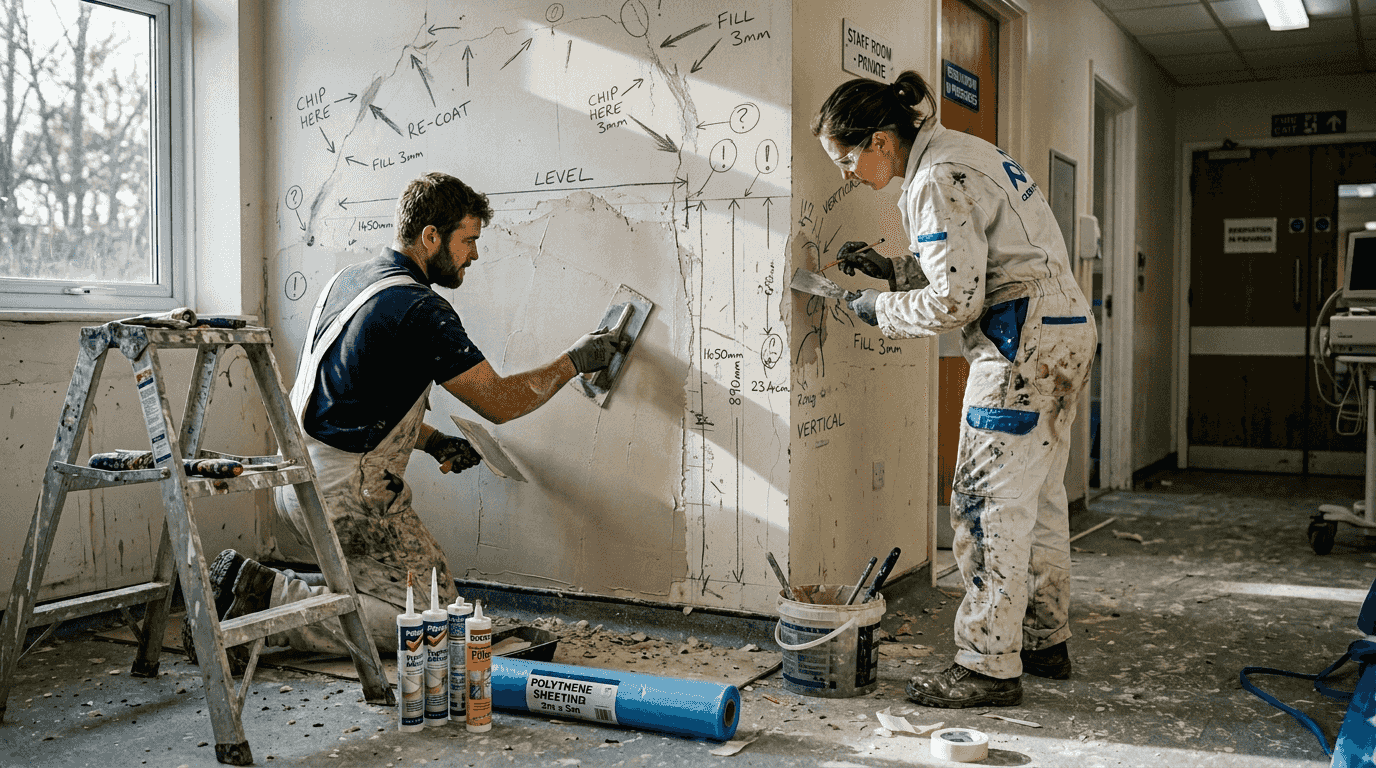
Adhesive selection directly impacts hygiene performance. Water-based adhesives may support microbial growth if moisture penetrates joints, whilst solvent-based options can emit volatile organic compounds inappropriate for healthcare settings. Specialised hygienic adhesives designed for food-safe and medical environments provide the necessary bond strength without creating secondary contamination risks.
Joint treatment separates adequate installations from exceptional ones. Butt joints must align perfectly to avoid lips or gaps where liquids accumulate. Silicone sealants formulated for hygienic applications fill unavoidable gaps whilst resisting mould growth and maintaining flexibility as buildings settle. Corner joints demand particular attention, as these high-stress areas often fail first under cleaning pressure.
Thermal expansion allowances prevent finish buckling or separation as temperatures fluctuate. Homogeneous PVC expands approximately 0.07mm per metre per degree Celsius, requiring expansion gaps at perimeters and between large panels. Failing to accommodate this movement creates stress points where joints separate and hygiene fails.
Inspection protocols verify installation quality before facilities enter service. Visual examination identifies obvious defects, but tactile assessment reveals subtle imperfections invisible to the eye. Running gloved hands across surfaces detects raised edges, adhesive squeeze-out, or texture inconsistencies that compromise cleanability. Contamination can hide in surface imperfections, so this inspection is not optional in food service and healthcare settings.
Key inspection checkpoints include:
Joint alignment and seal integrity at all seams
Adhesive coverage verification through test removal of sample sections
Surface flatness measurement using straightedges
Corner and perimeter seal completeness
Cleaning protocol compatibility testing on installed material
Pro Tip: Require installers to provide photographic documentation of substrate conditions, adhesive application, and completed joints before accepting installation work, creating accountability for choosing wall cladding hygienic standards.
Ongoing inspection schedules maintain hygiene performance throughout finish lifespan. Quarterly assessments identify emerging issues whilst remediation remains simple and inexpensive. Annual deep inspections should include moisture meter readings behind finishes in high-risk areas, seal integrity testing, and surface porosity verification to confirm continued contamination resistance.
“Installation quality determines whether hygienic finishes deliver their promised protection or merely create a false sense of security whilst contamination flourishes behind attractive surfaces.”
Comparing hygienic wall finishes: durability, hygiene, and costs
Informed material selection requires understanding how different finishes perform across multiple criteria relevant to facility operations. The table below compares common hygienic wall finishes on factors that impact total cost of ownership and hygiene outcomes.
Finish Type | Hygiene Level | Moisture Resistance | Durability (Years) | Cost per m² | Maintenance Needs |
Homogeneous PVC | Excellent | Excellent | 20-30 | £45-75 | Low, simple cleaning |
Vinyl Covering | Good | Good | 10-15 | £25-40 | Moderate, seam monitoring |
Composite Panel | Very Good | Very Good | 15-25 | £35-60 | Low to moderate |
Ceramic Tile | Good | Excellent | 25+ | £50-90 | High, grout maintenance |
Epoxy Paint | Fair | Good | 5-10 | £15-25 | High, frequent recoating |
Studies demonstrate significant bacterial load reduction on non-porous homogeneous PVC compared to porous materials, validating the hygiene performance hierarchy shown above. This microbiological advantage translates directly to reduced infection rates in healthcare settings and fewer contamination incidents in food service environments.
Durability measurements reflect expected lifespan under typical use conditions with proper maintenance. Healthcare facilities subject finishes to harsher cleaning regimens than hospitality settings, potentially reducing service life by 20-30%. Impact resistance varies significantly, with composite panels tolerating equipment strikes that would crack ceramic tiles or puncture vinyl coverings.
Cost analysis must consider total ownership expenses rather than installation price alone. Homogeneous PVC’s higher upfront cost distributes across decades of service, whilst epoxy paint’s attractive initial price multiplies through frequent reapplication. Calculate annual cost by dividing total installed price by expected lifespan, then adding maintenance expenses.
Maintenance requirements directly impact operational budgets and hygiene outcomes. Low-maintenance finishes like homogeneous PVC require only routine cleaning with standard disinfectants, whilst ceramic tile demands specialised grout cleaning, periodic sealing, and eventual grout replacement. Labour costs for maintenance often exceed material costs over finish lifespan.
Key considerations for long-term performance include:
Chemical resistance to facility-specific cleaning agents and disinfectants
Impact tolerance in high-traffic or equipment-intensive areas
Repair complexity when damage occurs
Availability of matching materials for future repairs or expansions
Regulatory compliance with evolving hygiene standards
Pro Tip: Request lifecycle cost analyses from suppliers showing total 20-year ownership costs including installation, maintenance, cleaning, and replacement, revealing that premium finishes often cost less than budget options over time.
Common misconceptions about affordable options lead facilities toward false economies. Vinyl coverings appear cost-effective initially but require replacement twice as frequently as homogeneous PVC, doubling disruption costs and lost operational time. Epoxy paint’s low material cost vanishes when labour for surface preparation and multiple coats enters calculations.
Facility-specific needs determine optimal finish selection. Healthcare environments prioritising infection control justify premium materials like homogeneous PVC, whilst hospitality venues balancing hygiene with aesthetics may select composite panels offering design flexibility alongside adequate contamination resistance.
Selecting and applying the right hygienic wall finish for your facility
Methodical assessment of facility requirements ensures finish selection aligns with operational needs, regulatory obligations, and budget constraints. This systematic approach prevents costly mismatches between material properties and environmental demands.
Environment assessment begins with identifying contamination risks specific to each area. Operating theatres demand absolute contamination control, requiring the most robust non-porous finishes available. Patient rooms tolerate slightly less stringent materials provided they resist moisture and support effective cleaning. Administrative areas may accept standard finishes unless they connect directly to clinical spaces.
Compliance requirements vary by jurisdiction and facility type. Healthcare facilities in the UK must meet Care Quality Commission standards for infection prevention, whilst food service operations answer to Food Standards Agency regulations. Non-porous finishes like homogeneous PVC provide critical contamination control meeting these stringent requirements in healthcare and food service environments.
Material selection follows this sequential process:
Document hygiene requirements for each facility area based on regulatory standards and risk assessment
Identify finishes meeting minimum hygiene specifications from compliant suppliers
Evaluate durability requirements based on traffic patterns, equipment use, and cleaning intensity
Compare lifecycle costs across qualifying options using 15-20 year timeframes
Verify installer expertise with chosen materials through references and certifications
Confirm material availability for future repairs and facility expansions
Application guidance ensures proper installation regardless of finish type selected. Surface preparation consumes 40-50% of installation time but determines 80% of long-term performance. Rushing this phase to accelerate project timelines guarantees premature failure and hygiene breaches.
Installation sequence for optimal results:
Assess and remediate substrate conditions, addressing moisture, contamination, and structural issues
Apply appropriate primer or sealer based on substrate type and finish requirements
Install finishes following manufacturer specifications for adhesive type, coverage, and curing time
Seal all joints, corners, and perimeters with hygienic-grade sealants
Conduct thorough inspection before accepting installation work
Implement initial cleaning protocol to remove installation residues
Maintenance routines preserve hygiene performance throughout finish lifespan. Daily cleaning with appropriate disinfectants prevents biofilm formation, whilst weekly deep cleaning addresses areas where contamination accumulates despite routine efforts. Monthly inspections identify emerging seal failures or surface damage requiring prompt remediation.
Critical maintenance practices include:
Using only manufacturer-approved cleaning agents to avoid finish degradation
Inspecting seals and joints during routine cleaning for early failure detection
Addressing damage immediately to prevent moisture ingress behind finishes
Documenting cleaning and inspection activities for compliance verification
Training programmes ensure staff understand proper cleaning techniques and recognise signs of finish failure. Incorrect cleaning methods, such as abrasive scrubbing or incompatible chemicals, damage even premium finishes. Quality control measures verify cleaning effectiveness through ATP testing or microbial sampling, confirming that finishes deliver expected hygiene outcomes.
Explore hygienic wall finishes and accessories
Hygienic Sheets supplies comprehensive wall and ceiling cladding solutions designed specifically for environments demanding exceptional cleanliness standards. Our hygienic wall cladding sheets and trims range includes homogeneous PVC panels, profiles, and finishing components that create seamless, contamination-resistant surfaces. Whether you’re specifying materials for a new healthcare facility or upgrading existing food service areas, our product selection addresses diverse hygiene requirements whilst maintaining competitive pricing.
Installation success depends on proper adhesive and accessories matched to your chosen cladding system. We stock specialised hygienic adhesives, sealants, and fixing components that ensure joints remain watertight and contamination-free throughout the finish lifespan. For comprehensive protection, explore our hygienic ceiling cladding options that coordinate with wall systems to create fully enclosed, easily maintained spaces meeting the most demanding regulatory standards.
Frequently asked questions
What are the main benefits of homogeneous PVC wall finishes?
Homogeneous PVC finishes prevent microbial growth due to non-porous surfaces that deny bacteria the microscopic crevices required for colonisation. These materials tolerate aggressive disinfectants and high-pressure washing without degrading, maintaining hygiene performance for 20-30 years. The uniform composition throughout the material thickness eliminates delamination risks that compromise layered finishes, whilst excellent moisture resistance prevents water penetration that would support microbial activity behind wall surfaces.
How important is surface inspection after installation?
Inspection is not optional as contamination can hide in imperfections invisible during casual observation. Surface irregularities, poorly sealed joints, or adhesive residues create harbourage sites where bacteria multiply despite routine cleaning efforts. Thorough post-installation inspection identifies these defects whilst remediation remains simple, preventing costly contamination incidents and regulatory failures. Healthcare and food service facilities should document inspection findings to demonstrate due diligence in maintaining hygiene standards.
Which hygienic wall finish is best for healthcare facilities in 2026?
Non-porous homogeneous PVC remains the preferred choice for healthcare environments prioritising infection control and long-term durability. This material delivers superior contamination resistance compared to alternatives whilst withstanding the intensive cleaning protocols healthcare facilities require. However, best wall cladding materials for healthcare in 2026 must balance hygiene performance with specific area requirements, budget constraints, and compliance obligations. Operating theatres and intensive care units justify premium materials, whilst administrative areas may accept less stringent options provided they meet minimum regulatory standards.
How do I verify installer expertise with hygienic finishes?
Request detailed references from previous healthcare, food service, or pharmaceutical projects where hygiene performance was critical to facility operations. Qualified installers provide photographic documentation of their work, demonstrate knowledge of substrate preparation requirements, and explain how they address thermal expansion and joint sealing challenges. Verify that installers use manufacturer-approved adhesives and techniques rather than adapting methods from standard construction applications. Consider requiring installers to complete small test sections before committing to full project execution, allowing you to assess quality standards and attention to hygiene-critical details.
What maintenance schedule preserves hygienic wall finish performance?
Daily cleaning with approved disinfectants prevents biofilm formation and maintains surface hygiene between deep cleaning sessions. Weekly intensive cleaning addresses high-risk areas and hard-to-reach surfaces where contamination accumulates despite routine efforts. Monthly inspections examine seals, joints, and surface integrity to identify emerging issues before they compromise hygiene or require extensive remediation. Annual professional assessments should include moisture testing behind finishes, seal integrity verification, and surface porosity checks confirming continued contamination resistance. Document all maintenance activities to demonstrate regulatory compliance and support warranty claims if finish failures occur despite proper care.
Recommended
Comments