

Why install cladding in kitchens: Cut cleaning time 70% in 2026
- tim7892
- Mar 5
- 10 min read
Kitchen Cladding in 2026: Reduce Cleaning Time by 70%
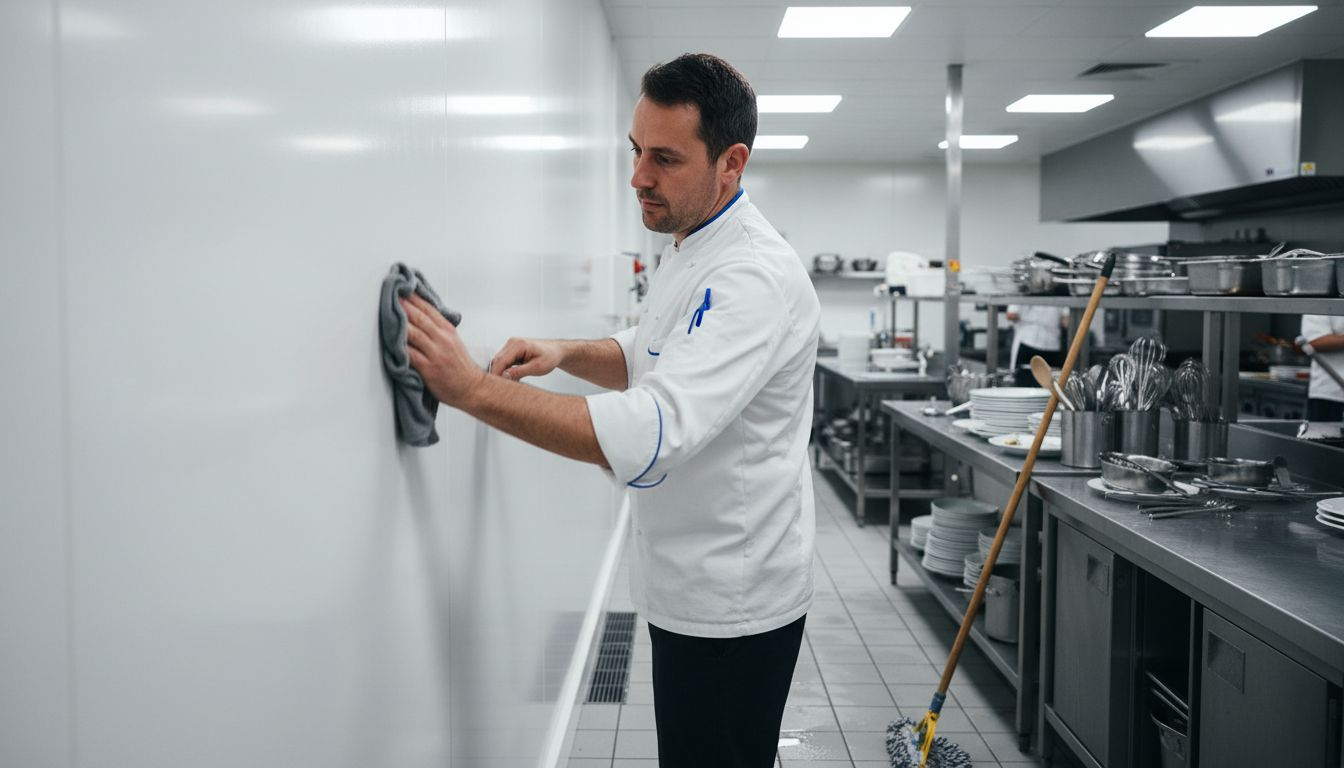
Most facility managers believe tiles create the cleanest kitchen walls. Yet those same grout lines they trust become bacterial breeding grounds, undermining every hygiene effort. Commercial kitchens demand better solutions. Hygienic cladding eliminates these weak points entirely, offering seamless, non-porous surfaces that transform daily cleaning routines whilst meeting strict UK food safety standards.
Table of Contents
Introduction To Hygienic Cladding In Commercial Kitchens
Material Characteristics And Hygiene Benefits
Common Problems With Traditional Wall Surfaces
Regulatory Compliance And Hygiene Standards
Installation And Cost Efficiency
Common Misconceptions About Kitchen Cladding
Conclusion: Enhancing Kitchen Hygiene With Cladding
Discover Hygienic PVC Wall Cladding Solutions For Commercial Kitchens
Key takeaways
Point | Details |
Cleaning efficiency | Hygienic cladding reduces daily cleaning time by up to 70% compared to traditional tiled surfaces. |
Bacterial prevention | Seamless, non-porous surfaces prevent bacterial growth and eliminate contamination risks present in grout lines. |
Fast installation | Retrofit installation over existing walls cuts downtime by up to 50%, minimising kitchen operational disruptions. |
Cost savings | Lifecycle cost savings reach up to 30% due to superior durability and reduced maintenance requirements. |
Regulatory support | Proper cladding installation supports full compliance with UK Food Standards Agency hygiene regulations. |
Introduction to hygienic cladding in commercial kitchens
Commercial kitchens face relentless hygiene challenges. Every surface becomes a potential contamination point where foodborne pathogens thrive if given the slightest opportunity. Wall surfaces play a critical role in maintaining food safety because they constantly encounter splashes, steam, grease, and cleaning chemicals.
Traditional materials fail under these conditions. Painted plaster absorbs moisture, deteriorates rapidly, and creates perfect environments for microbial growth. Tiles seem durable but their grout joints trap dirt and bacteria no matter how vigorously staff scrub them. These limitations force facility managers into endless cleaning cycles that never fully resolve contamination risks.
Hygienic cladding provides the solution. These materials deliver seamless, easy-to-clean, durable surfaces specifically engineered for demanding commercial kitchen environments. Hygienic wall cladding in commercial kitchens prevents the cracks, moisture ingress, and bacterial growth that plague traditional wall systems. The panels resist impact, scratches, steam and cleaning agents better than painted or tiled surfaces, extending longevity whilst maintaining impeccable hygiene standards. This transformation addresses both immediate cleaning concerns and long-term facility management challenges.
Facility managers who understand these material differences can make informed decisions that protect food safety, reduce operational costs, and ensure regulatory compliance. Understanding the impact and durability of hygienic cladding helps explain why forward-thinking operations are making the switch.
Material characteristics and hygiene benefits
PVC hygienic cladding’s material science explains its superior performance. The seamless construction eliminates joints where bacteria traditionally colonise. Waterproof properties prevent moisture penetration that would otherwise compromise wall integrity and create damp conditions favouring microbial growth.
The non-porous surface blocks absorption of moisture, grease, and food particles. Nothing penetrates the material itself. Every contaminant remains on the surface where cleaning protocols can reach it. This fundamental difference transforms hygiene outcomes compared to porous materials that trap contaminants internally.
Surface chemistry matters enormously. Hygienic cladding surfaces have low surface energy preventing contaminants from adhering tightly, enabling easier cleaning. Dirt, grease, and bacteria wipe away with minimal effort. Standard kitchen cleaning agents work effectively without aggressive scrubbing that damages surfaces over time.
Key hygiene advantages include:
Complete waterproofing prevents moisture-related deterioration and mould growth
Impact resistance maintains surface integrity despite daily kitchen operations
Chemical resistance withstands repeated exposure to powerful cleaning agents
Thermal stability handles temperature fluctuations from cooking equipment and cleaning processes
Smooth finish eliminates microscopic surface irregularities where bacteria hide
Durability against steam, impacts, and cleaning chemicals preserves wall integrity throughout the cladding’s service life. Surfaces remain hygienically sound rather than degrading into contamination risks. This consistency matters enormously for maintaining food safety standards year after year.
Cleaning becomes faster and more effective. Staff complete wall cleaning in a fraction of the time previously required for tiled surfaces. Labour savings accumulate daily, reducing operational costs whilst improving hygiene outcomes. Understanding what is hygienic cladding reveals why these material properties of hygienic cladding make such a substantial difference.
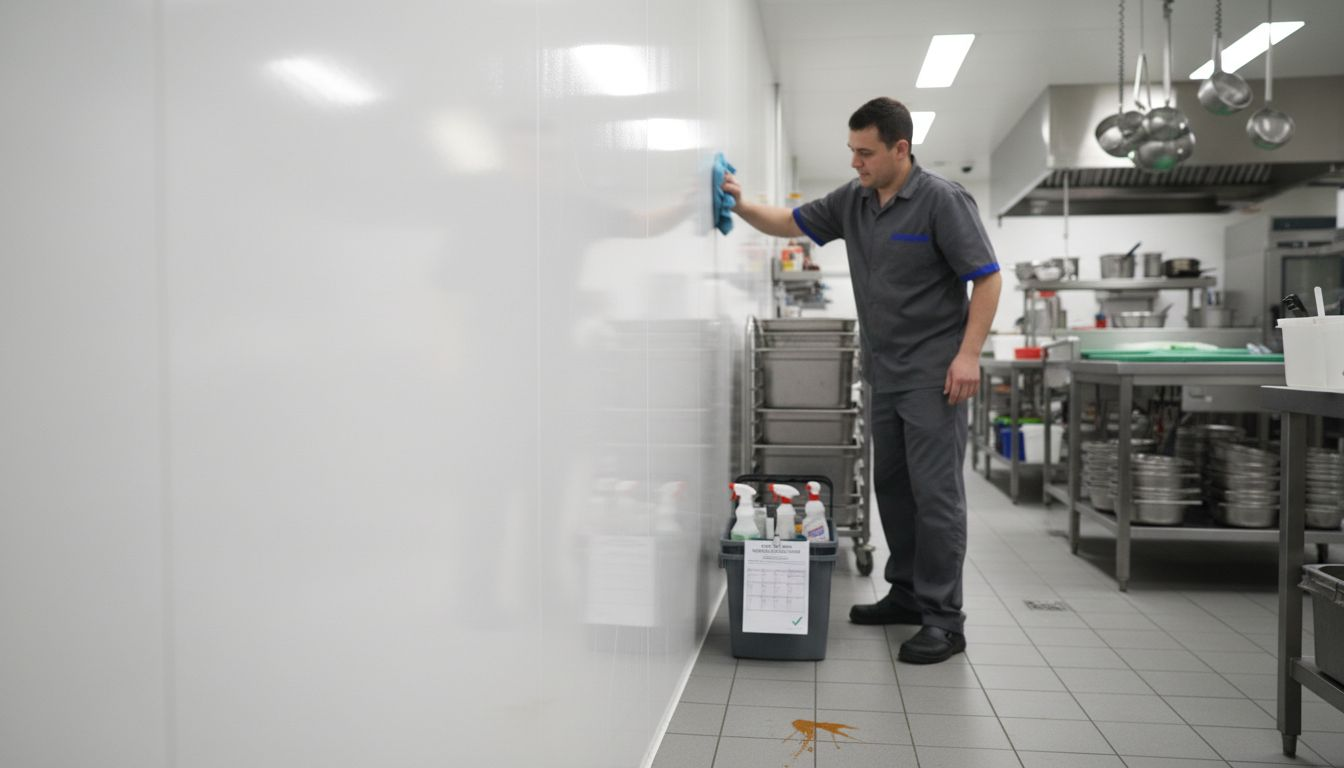
Pro Tip: Schedule deep cleaning sessions monthly rather than weekly because hygienic cladding maintains cleanliness between major cleaning events, freeing staff time for other critical tasks.
Common problems with traditional wall surfaces
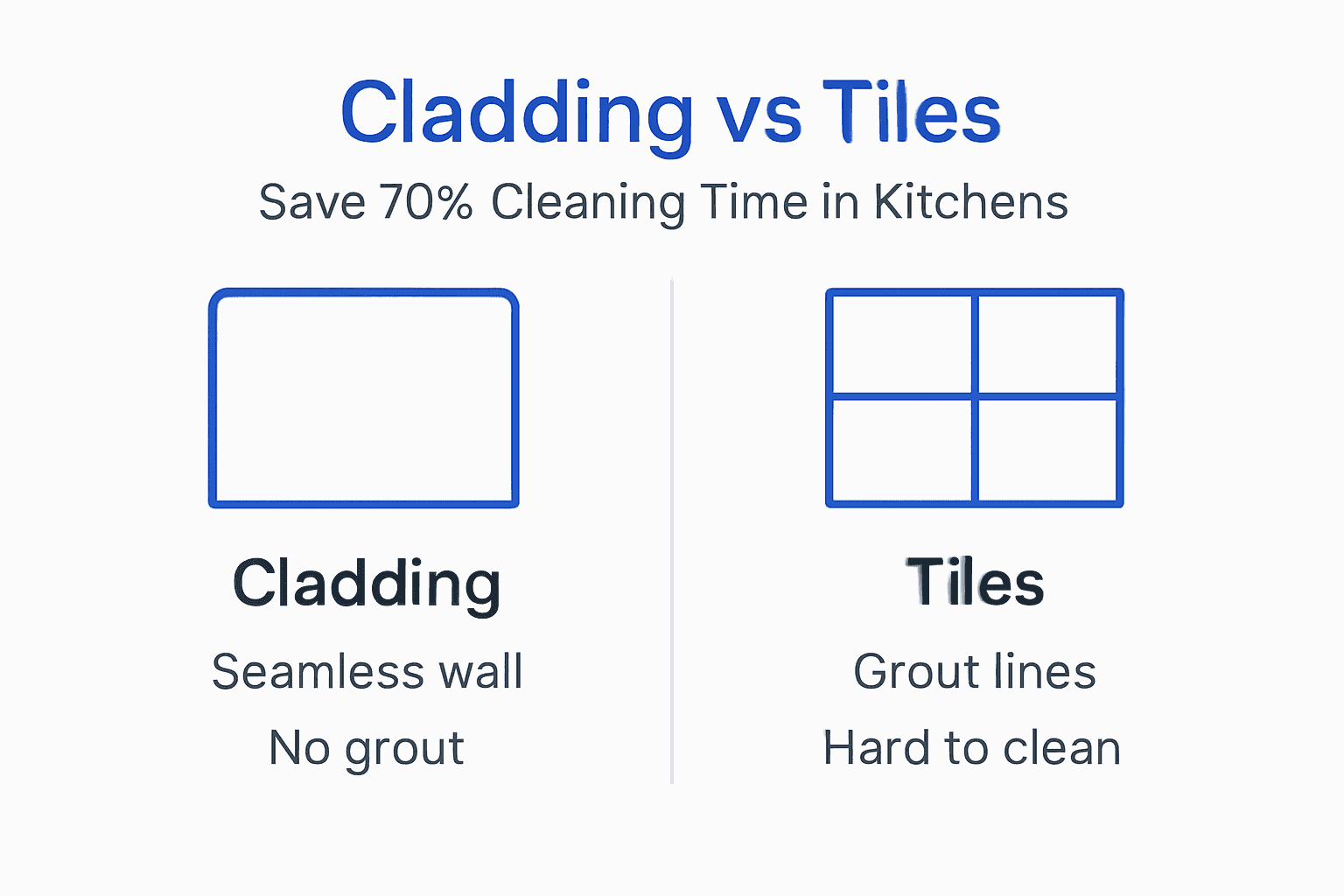
Tiled walls dominate commercial kitchens despite serious hygiene limitations. The grout between tiles creates hundreds of metres of porous joints where contaminants accumulate. Grout lines in tiled walls absorb moisture and become breeding grounds for bacteria, complicating cleaning no matter how diligent staff efforts become.
Cleaning grout requires intensive labour. Staff must scrub each joint individually, using brushes and powerful chemicals that still fail to reach embedded contaminants. This labour-intensive process consumes hours daily yet never achieves the cleanliness levels that seamless surfaces provide effortlessly. Grout discolouration reveals contamination accumulation over time.
Painted plaster performs even worse under kitchen conditions. Moisture penetrates paint layers, causing deterioration, peeling, and surface degradation. The porous plaster beneath absorbs liquids and harbours microbes deep within the wall structure where cleaning cannot reach. Steam from cooking equipment accelerates this deterioration process.
Key problems with traditional surfaces include:
Porous grout traps dirt, grease, and moisture creating permanent contamination reservoirs
Cleaning grout joints demands excessive labour time without achieving full effectiveness
Paint layers crack, peel, and absorb moisture allowing bacterial colonisation
Surface damage from impacts creates additional contamination points requiring repairs
Maintenance costs accumulate through constant repainting, regrouting, and tile replacement
Surface Type | Hygiene Issue | Maintenance Burden | Lifecycle Cost |
Tiles with grout | Bacteria in grout lines | High labour for cleaning | Frequent regrouting |
Painted plaster | Moisture absorption | Regular repainting needed | Paint and labour costs |
Hygienic cladding | Minimal contamination | Quick wipe-down cleaning | Low maintenance |
Cracks and chips in traditional surfaces multiply contamination risks exponentially. Each damaged area becomes a harbour for pathogens that survive standard cleaning protocols. Repair costs mount as facility managers address deterioration through endless maintenance cycles.
These issues with traditional walls explain why problems with tiled kitchen walls drive facility managers towards modern alternatives. The cumulative burden of cleaning labour, maintenance expenses, and persistent hygiene concerns makes traditional surfaces financially and operationally unsustainable.
Regulatory compliance and hygiene standards
UK Food Standards Agency regulations demand that kitchen walls be smooth, durable, and easy to clean. These requirements exist to prevent surface-related contamination from compromising food safety. Facilities that fail to meet these standards face enforcement action, reputational damage, and potential closure during serious violations.
Hygienic cladding provides surfaces that meet or exceed regulatory requirements. The seamless, non-porous construction directly addresses FSA concerns about contamination harbourage. Inspectors recognise these advantages during routine assessments. Kitchens with properly installed cladding compliance benefits consistently receive favourable inspection scores.
Inspections evaluate multiple hygiene factors. Wall condition ranks high on assessment criteria because contaminated surfaces directly threaten food safety. Cladding reduces contamination risk substantially, demonstrating management commitment to exceeding minimum standards rather than merely achieving compliance.
Compliance requirements include:
Smooth, impervious wall surfaces that prevent bacterial accumulation
Durable materials that maintain integrity under kitchen operating conditions
Easy-to-clean surfaces supporting effective sanitation protocols
Moisture-resistant construction preventing dampness and mould growth
Proper installation and maintenance ensuring continued compliance
Correct installation proves essential. Poorly fitted cladding with gaps or inadequate sealing undermines hygiene benefits and creates new contamination points. Professional installation ensures joints are properly sealed and panels meet manufacturer specifications. Regular maintenance checks confirm surfaces remain in compliant condition.
Properly installed hygienic cladding supports compliance with UK food hygiene regulations and positively affects inspections. This advantage extends beyond avoiding penalties. Facilities demonstrate food safety leadership, building customer confidence and protecting brand reputation. Understanding hygiene compliance with wall cladding helps facility managers appreciate broader business benefits.
Reduced foodborne illness risk protects both customers and business operations. Wall contamination contributes to outbreaks that devastate restaurants and catering operations. Infection risk reduction with cladding provides measurable public health benefits alongside regulatory compliance.
Installation and cost efficiency
Installation speed transforms project timelines. Cladding installation can be three to five times faster than tiling and can be installed over existing walls reducing downtime by up to 50%. This efficiency minimises kitchen operational disruptions during renovation projects. Facilities maintain partial operations whilst installation proceeds in phases.
Retrofit capability delivers enormous practical advantages. Cladding installs directly over existing surfaces in most cases, eliminating costly wall demolition. This approach avoids structural work, disposal expenses, and extended closure periods. The existing wall provides stable substrate whilst new cladding creates the hygienic surface layer.
Reduced downtime directly impacts revenue. Every day a commercial kitchen remains closed represents lost income and disappointed customers. Fast installation returns kitchens to operation quickly, protecting business continuity. This speed advantage often justifies cladding selection even before considering lifecycle benefits.
Lifecycle cost analysis reveals substantial savings. Initial cladding costs exceed basic tiling in many cases. However, dramatically reduced maintenance requirements, extended service life, and lower cleaning labour costs create compelling financial returns. Facility managers who evaluate total cost of ownership recognise cladding’s economic superiority.
Installation process typically follows these steps:
Assess existing wall condition and prepare surfaces as needed
Measure and cut cladding panels to precise dimensions
Apply appropriate adhesive or mechanical fixings per manufacturer specifications
Install panels with proper joint sealing and trimming
Complete final inspection ensuring all edges and penetrations are properly sealed
Proper installation ensures performance. Gaps, poor adhesion, or inadequate sealing undermine hygiene benefits and reduce longevity. Professional installers understand these requirements and deliver results that meet both hygiene and durability standards. Learning how to install hygienic cladding properly prevents costly mistakes.
Long-term operational savings include reduced repair costs, minimal replacement needs, and substantially lower cleaning labour. These benefits compound annually throughout the cladding’s service life. Understanding installation speed and retrofit benefits helps facility managers build accurate financial models justifying the investment.
Pro Tip: Schedule installation during planned closure periods or seasonal low-demand periods to further minimise business impact whilst taking advantage of fast installation timelines.
Common misconceptions about kitchen cladding
Myths about hygienic cladding prevent many facility managers from exploring this superior solution. Addressing these misconceptions reveals the genuine advantages that drive industry adoption across commercial kitchens.
Myth one claims tiles are easier to clean. Reality contradicts this belief completely. Grout traps bacteria making tiles far harder to maintain hygienically. Staff spend excessive time scrubbing grout lines that never achieve true cleanliness. Cladding’s seamless surface wipes clean in minutes with standard protocols.
Myth two suggests hygienic cladding suits only new kitchen construction. This misunderstanding ignores cladding’s excellent retrofit capabilities. Cladding is often misunderstood as only for new builds or being more expensive upfront, however retrofit and lifecycle cost savings disprove this. Existing kitchens benefit equally from cladding installation over current wall surfaces.
Myth three focuses on upfront costs, claiming cladding is prohibitively expensive. Initial investment does exceed basic tiling in some scenarios. However, lifecycle analysis reveals cladding’s financial superiority. Reduced maintenance, extended longevity, and lower cleaning labour create savings that far exceed initial cost differences. This total cost of ownership perspective changes the financial equation entirely.
Common misconceptions include:
Believing tiles clean more easily despite grout contamination issues
Assuming cladding works only in new construction rather than retrofit applications
Focusing solely on upfront costs whilst ignoring lifecycle savings
Thinking cladding lacks durability compared to traditional materials
Imagining complex installation requirements that professional installers handle routinely
Understanding these misconceptions helps facility managers make informed decisions. Poor information leads to costly mistakes that perpetuate hygiene problems and waste maintenance budgets. Proper knowledge drives better investments in kitchen hygiene infrastructure.
Durability concerns also prove unfounded. Cladding withstands impacts, chemicals, and thermal stress better than tiles or painted surfaces. The material maintains integrity throughout decades of service rather than deteriorating progressively. This superior performance ensures hygiene standards remain consistently high.
Exploring common cladding misconceptions reveals why industry professionals increasingly recommend cladding for commercial kitchens. Cladding misconceptions debunked through direct experience demonstrates practical advantages that theory alone cannot convey.
Conclusion: enhancing kitchen hygiene with cladding
Hygienic cladding delivers transformational improvements in commercial kitchen hygiene. The seamless, non-porous surfaces provide characteristics essential for food safety that traditional materials simply cannot match. Bacterial growth finds no purchase on properly maintained cladding, reducing contamination risks substantially.
Regulatory compliance becomes straightforward rather than concerning. FSA requirements align perfectly with cladding’s inherent properties. Inspection readiness improves because surfaces genuinely meet and exceed hygiene standards rather than just appearing clean whilst harbouring hidden contaminants.
Installation efficiencies and lifecycle savings deliver measurable operational benefits. Fast installation with minimal downtime protects business continuity. Reduced maintenance and cleaning labour free resources for other priorities whilst maintaining superior hygiene outcomes. These economic advantages justify investment from a purely financial perspective even before considering hygiene improvements.
Replacing traditional walls with cladding provides long-term value. The initial investment returns dividends throughout decades of service through consistent performance, minimal maintenance, and reliable hygiene protection. Facility managers who prioritise cladding protect both public health and operational efficiency.
The evidence supporting hygienic cladding is overwhelming. Material science, regulatory compliance, economic analysis, and practical experience all point towards the same conclusion. Commercial kitchens demand better solutions than traditional materials provide. Cladding answers this need comprehensively.
Discover hygienic PVC wall cladding solutions for commercial kitchens
Your kitchen deserves wall surfaces that match your commitment to food safety. Hygienic Sheets offers high-quality PVC wall cladding designed specifically for commercial kitchen hygiene challenges. Our products deliver the seamless, durable, easy-to-clean surfaces that transform daily operations.
Nationwide supply ensures timely delivery supported by professional guidance. Whether planning new construction or retrofitting existing kitchens, we provide cladding options suited to your specific requirements. Our range includes panels in various colours and finishes alongside all necessary installation accessories.
Expert advice helps you select the right products and understand proper installation techniques. We support facility managers throughout the specification, ordering, and installation process. Explore hygienic PVC wall cladding suppliers offering comprehensive solutions for your commercial kitchen project. Learn about uses of hygienic PVC wall cladding across different kitchen environments. Shop hygienic wall cladding today and request a quote for your facility upgrade.
Frequently asked questions
Why is cladding better than tiles for kitchen hygiene?
Tiles contain grout lines that trap bacteria, moisture, and food particles regardless of cleaning intensity. These porous joints become permanent contamination reservoirs that undermine hygiene efforts. Hygienic cladding provides seamless, non-porous surfaces eliminating these bacterial harbourage points entirely. This fundamental difference results in substantially faster cleaning and dramatically improved food safety outcomes. Kitchen cladding hygiene benefits extend to reduced labour costs and enhanced regulatory compliance.
Can hygienic cladding be installed without shutting down the kitchen?
Yes, cladding can be installed over existing wall surfaces, dramatically reducing downtime by up to 50% compared to traditional renovation approaches. Installation typically does not require complete kitchen closure in most cases. Work can proceed in phases, allowing partial operations to continue whilst renovation progresses. This flexibility protects revenue and maintains customer service during facility upgrades. Professional installation of hygienic wall cladding minimises disruption through careful planning and efficient execution.
What is the expected lifespan of hygienic kitchen cladding?
Hygienic cladding typically lasts 20 to 25 years with proper care and maintenance. This durability substantially exceeds traditional tile or painted plaster walls that require frequent repairs and replacement. The long service life contributes significantly to lifecycle cost advantages whilst maintaining consistent hygiene performance throughout the entire period.
Does installing cladding help with food hygiene inspections?
Yes, hygienic cladding meets or exceeds UK Food Standards Agency requirements for commercial kitchen wall surfaces. Cladding improves inspection results by providing surfaces that meet UK hygiene standards and reduce contamination risk. Inspectors recognise the advantages of seamless, easy-to-clean surfaces during assessments. Facilities with properly installed cladding demonstrate commitment to exceeding minimum standards, positively influencing inspection scores and supporting excellent food safety ratings.
Recommended
Comments