

Waterproof Wall Panels: 50% Less Cleaning, 30% Cost Savings
Updated: Mar 5
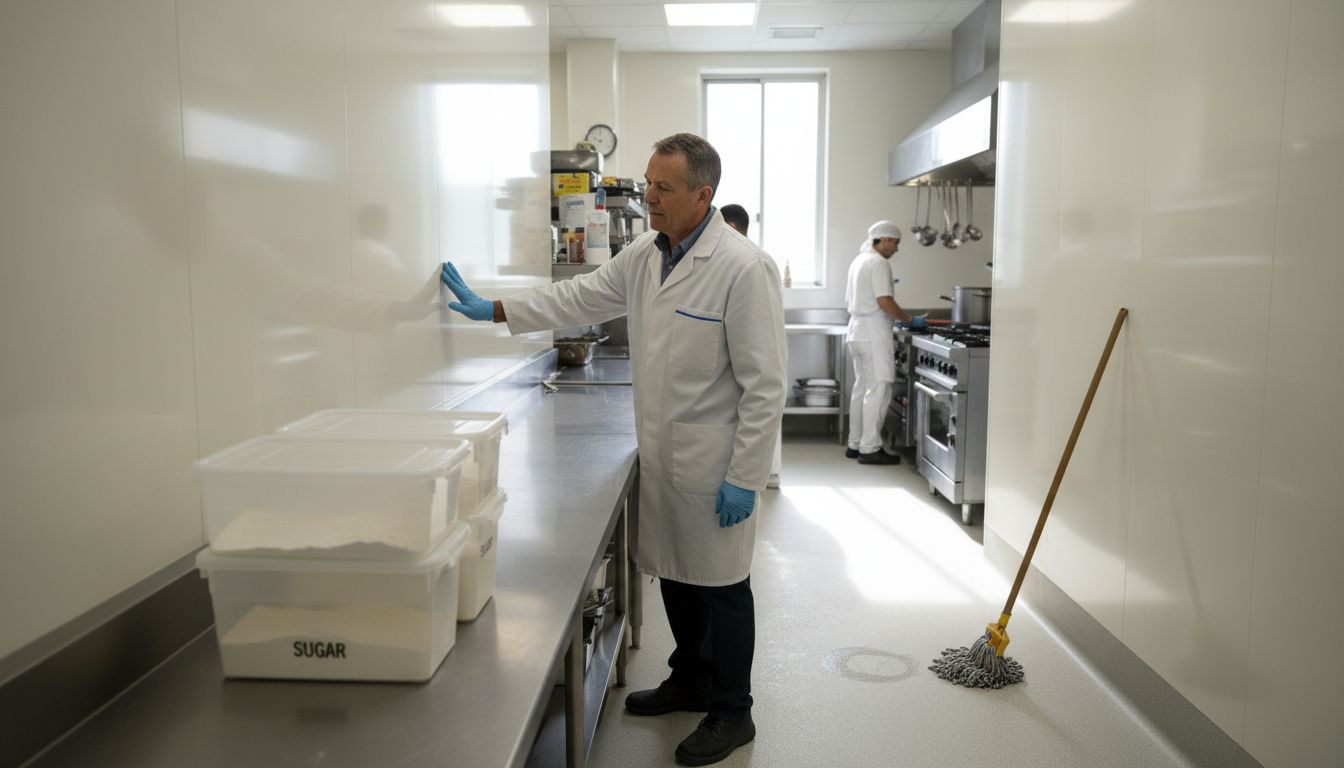
Facility managers overseeing commercial kitchens and healthcare facilities face constant battles with moisture damage, microbial contamination, and escalating maintenance costs. Traditional wall finishes like ceramic tiles and painted surfaces struggle to meet the relentless hygiene demands of these environments. Waterproof wall panels deliver a powerful alternative, cutting cleaning time by half and reducing lifecycle costs by 30% while enhancing hygiene standards across UK facilities.
Table of Contents
How To Choose Waterproof Wall Panels: Key Selection Criteria
Advantage 1: Superior Hygiene And Moisture Resistance
Advantage 2: High Durability And Impact Resistance
Advantage 3: Faster And Easier Installation
Advantage 4: Lower Maintenance And Cleaning Costs
Advantage 5: Cost Effectiveness And Lifecycle Benefits
Advantage 6: Reliable Availability And Supplier Support In The UK
Summary Comparison And Situational Recommendations
Explore High-Quality Waterproof Wall Panels For UK Facilities
Frequently Asked Questions
Key Takeaways
Point | Details |
Cleaning Efficiency | Waterproof wall panels reduce cleaning time by up to 50% compared to traditional finishes. |
Lifecycle Savings | Panels deliver 30% lower lifecycle costs than tiles and painted walls combined. |
Installation Speed | Installation completes 30-40% faster than ceramic tiles, minimizing operational disruption. |
Hygiene Performance | Non-porous surfaces prevent moisture penetration and microbial growth effectively. |
UK Market Support | High supplier satisfaction ensures reliable product availability and delivery nationwide. |
How to Choose Waterproof Wall Panels: Key Selection Criteria
Selecting the right waterproof wall panels requires balancing multiple factors specific to commercial kitchens and healthcare environments. Your decision impacts hygiene compliance, operational costs, and facility downtime for years ahead.
Moisture resistance stands as the foundation of any waterproof panel selection. You need complete impermeability to prevent water penetration behind surfaces where biofilms and mold thrive undetected. Selection must balance hygiene certification, moisture resistance, durability, installation ease, maintenance, and supplier reliability to achieve optimal performance.
Certified hygienic surfaces matter immensely in regulated environments. NHS compliance and equivalent certifications verify that panels meet stringent antimicrobial and cleaning protocol standards. Without proper certification, you risk audit failures and potential health violations.
Durability encompasses both impact resistance and tolerance for aggressive cleaning regimens. Commercial kitchens experience equipment impacts, trolley collisions, and daily steam cleaning. Healthcare corridors endure constant traffic and frequent disinfection cycles. Your panels must withstand these conditions without cracking, warping, or losing surface integrity.
Consider these essential selection criteria for waterproof wall panels:
Verify moisture barrier performance exceeds 0.1% water absorption
Confirm NHS or equivalent hygiene certification for regulated facilities
Check impact resistance ratings above 2500 psi for high-traffic areas
Evaluate installation systems that minimize seams and penetration points
Review maintenance requirements and cleaning chemical compatibility
Assess UK supplier inventory depth and delivery reliability
Installation ease directly affects project timelines and facility disruption. Panels requiring specialized tools or extensive surface preparation increase labour costs and extend downtime. Look for systems designed for quick retrofit applications.
Maintenance demands and lifecycle costs separate short-term bargains from long-term value. Calculate total ownership costs including cleaning labour, chemical consumption, repair frequency, and eventual replacement. Lower upfront prices often disguise higher operational expenses.
Pro tip: Request impact resistance test data and cleaning protocol documentation from suppliers before specifying panels for commercial kitchens, as manufacturer claims vary widely without standardized testing.
Advantage 1: Superior Hygiene and Moisture Resistance
Waterproof wall panels deliver unmatched hygiene performance by eliminating the porous surfaces and grout joints where pathogens flourish. This advantage proves critical in healthcare settings where infection control determines patient outcomes and regulatory compliance.
Complete moisture impermeability prevents water from penetrating surface barriers. Unlike ceramic tiles with grout joints or painted drywall that absorbs moisture, quality panels create continuous waterproof barriers. Waterproof panels have 0% mold proliferation and meet NHS hygiene standards, outperforming porous painted drywall and ceramic tiles across multiple hygiene metrics.
Smooth, non-porous surfaces revolutionize cleaning protocols. You eliminate the scrubbing required to clean grout lines and textured surfaces. Disinfectants contact entire surface areas uniformly, ensuring thorough pathogen elimination. Cleaning staff complete rounds faster while achieving better hygiene outcomes.
Key hygiene benefits of waterproof wall panels include:
Zero moisture absorption prevents biofilm formation behind surfaces
Seamless installation eliminates grout joints where bacteria colonize
Smooth finishes enable single-pass cleaning with standard disinfectants
Chemical resistance accommodates aggressive cleaning agents without degradation
NHS-compliant surfaces meet stringent healthcare hygiene regulations
UK healthcare facilities face rigorous inspection standards. Panels provide documented compliance with infection control protocols, reducing liability and supporting quality ratings. The materials resist common hospital pathogens including MRSA and C. difficile when properly maintained.
Waterproof wall cladding in healthcare settings transforms cleaning efficiency while elevating hygiene standards. Commercial kitchens benefit equally, meeting food safety regulations more easily than with traditional tile installations. The absence of grout lines eliminates primary contamination vectors that plague conventional kitchen walls.
Microbial resistance surpasses ceramic tiles by removing the porous grout that harbors bacteria despite regular cleaning. Studies show grout joints retain pathogens even after proper disinfection procedures. Panels eliminate this fundamental weakness in traditional wall systems.
Advantage 2: High Durability and Impact Resistance
Durability separates waterproof panels from traditional wall finishes when facilities demand long-term performance under punishing conditions. The strength differential becomes apparent within months as ceramic tiles crack and painted surfaces chip under normal commercial use.
Impact resistance defines panel longevity in high-traffic environments. Quality panels achieve impact ratings around 3000 psi, more than double the 1000-1500 psi typical of ceramic tiles. This superior strength prevents damage from equipment collisions, trolley impacts, and door strikes common in commercial kitchens and healthcare corridors.
Panels offer impact resistance over 2x higher than tiles and retain color after repeated steam cleaning, extending lifecycle significantly according to industry testing. The material composition withstands thermal cycling from steam cleaning without warping or delaminating.
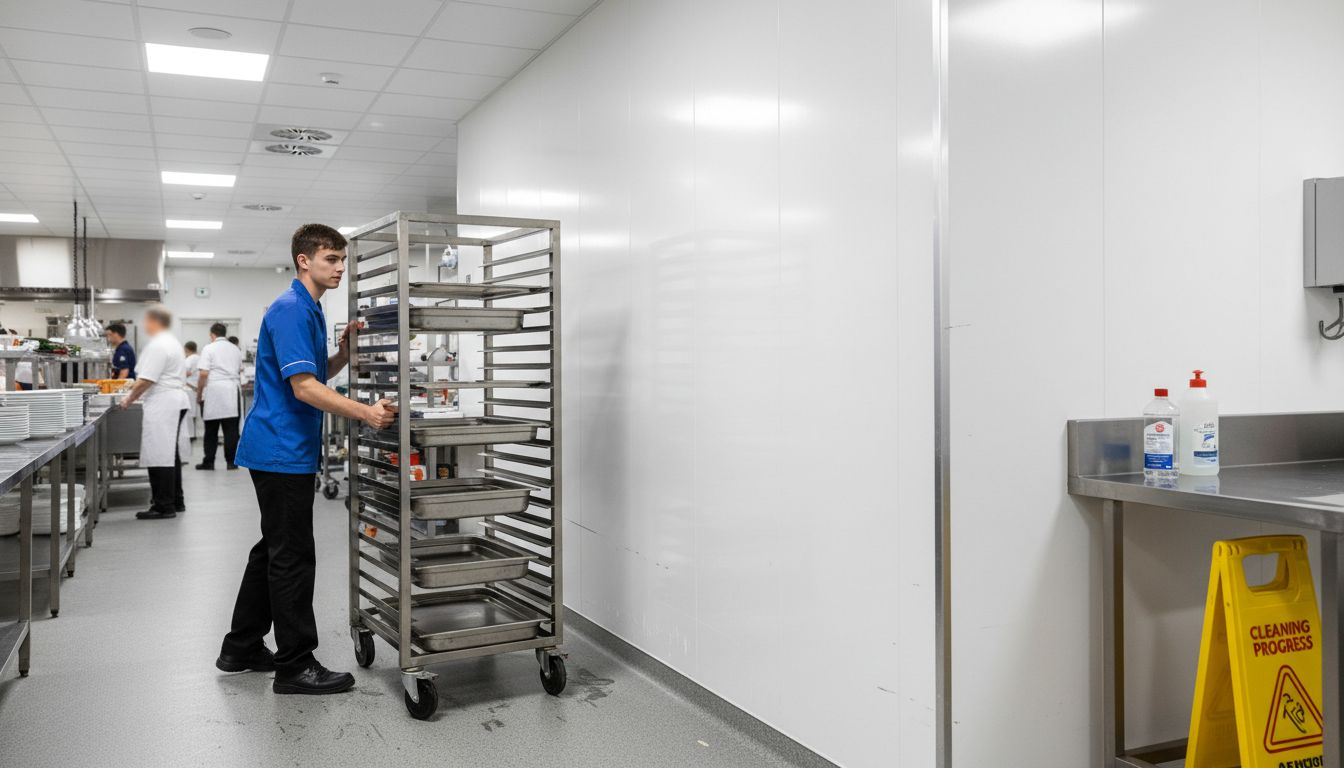
Structural integrity persists through years of aggressive cleaning regimens. Unlike painted walls that require repainting every few years or tiles that crack and allow moisture penetration, panels maintain appearance and performance. The durability of waterproof wall panels reduces facility downtime by eliminating frequent repair cycles.
Material | Impact Resistance (psi) | Steam Cleaning Cycles | Typical Lifecycle |
Waterproof Panels | 2800-3200 | 1000+ | 15-20 years |
Ceramic Tiles | 1000-1500 | 300-500 | 8-12 years |
Painted Walls | 200-400 | 50-100 | 3-5 years |
Commercial kitchens benefit immensely from impact resistance in commercial kitchens where equipment movement and cleaning intensity exceed typical facility conditions. Panels absorb impacts that would shatter tiles or dent painted drywall.
Extended lifecycles translate directly to reduced replacement costs and less operational disruption. When walls maintain integrity for 15-20 years versus 5-8 years for alternatives, you avoid multiple renovation cycles. Each avoided renovation saves thousands in materials, labour, and facility downtime.
Color retention matters for maintaining professional appearance. Panels resist UV degradation and chemical staining far better than painted surfaces. Healthcare facilities particularly value this stability as it supports the clean, professional environment patients expect.
Pro tip: Specify panels with impact ratings exceeding 2800 psi for commercial kitchen installations to maximize durability where equipment collisions occur frequently, ensuring walls withstand the demands of professional food preparation environments.
Advantage 3: Faster and Easier Installation
Installation efficiency determines how quickly facilities return to full operation after wall upgrades. Waterproof panels fundamentally simplify the installation process compared to ceramic tile systems that require extensive prep, setting time, and skilled labour.
The streamlined installation requires fewer steps and less specialized expertise. You eliminate grout mixing, tile spacing, extended curing periods, and multiple-day projects. Panels install 30-40% faster than tiles, enabling quicker project turnaround and less facility downtime across commercial and healthcare applications.
Retrofit suitability makes panels ideal for upgrading existing facilities. Unlike tile installation requiring complete wall removal down to studs, panels often mount directly over existing surfaces after basic preparation. This capability proves invaluable when facilities cannot afford extended closures.
The installation process for waterproof wall panels follows a straightforward sequence:
Clean and prepare existing wall surfaces by removing loose material and ensuring flatness
Apply adhesive to wall substrate using recommended trowel size and pattern
Position and fix panels starting from corners, ensuring proper alignment throughout
Seal joints and edges with compatible silicone sealant to complete waterproof barrier
Install trim pieces and finishing profiles for professional appearance
Clean surfaces and inspect seals before facility reopens to service
Reduced labour requirements lower total project costs substantially. Tile installation demands multiple skilled tradespeople over several days. Panel installation often requires fewer installers completing work in a single day or weekend, minimizing disruption to facility operations.
Critical hygiene environments benefit from rapid compliance upgrades. Healthcare facilities facing audit findings can remediate wall surface issues quickly without relocating patients or closing entire wings. Commercial kitchens maintain service schedules while upgrading to food safety compliant surfaces.
Minimal facility disruption protects revenue and operational continuity. Every day a commercial kitchen stays closed costs thousands in lost sales and disappointed customers. Healthcare facilities face similar pressures maintaining bed availability and service access.
Pro tip: Engage installers with specific waterproof panel experience to avoid common sealing errors at panel joints and penetrations, as improper sealing compromises the entire waterproofing system regardless of panel quality.
Advantage 4: Lower Maintenance and Cleaning Costs
Ongoing maintenance expenses often exceed initial installation costs over a wall system’s lifetime. Waterproof panels slash these operational costs by eliminating time-consuming cleaning procedures and reducing repair frequency that plague traditional finishes.
Smooth, non-porous surfaces resist dirt and grime accumulation that embeds in textured tiles and painted walls. Cleaning staff achieve superior results with less effort. Cleaning times decrease by up to 50%, with maintenance intervals extended to 10-15 years versus 3-5 for painted walls according to facility management data.
Chemical cleaner reduction delivers environmental and cost benefits simultaneously. The efficient cleaning enabled by smooth panel surfaces requires less chemical volume per cleaning cycle. You reduce chemical purchasing costs while supporting environmental sustainability initiatives.
Extended maintenance intervals between major interventions reduce labour costs and service disruptions. Painted walls require repainting every few years as moisture damage and cleaning wear down finishes. Tiles need grout replacement and periodic re-sealing. Panels maintain performance for a decade or more without significant intervention.
Key maintenance savings with waterproof panels include:
Single-pass cleaning replaces multiple scrubbing cycles required for grout and textured surfaces
Reduced cleaning chemical consumption lowers supply costs and environmental impact
Eliminated grout maintenance removes recurring labour and material expenses
Rare repair requirements reduce contractor callouts and facility disruption
Extended repainting intervals eliminate 3-5 year redecoration cycles
Lower total cleaning labour frees staff for other facility priorities
Faster cleaning liberates staff for higher-value activities. When cleaning teams complete rounds in half the time, facilities gain capacity for enhanced services or reduce staffing costs. Either outcome improves operational efficiency.
Meeting hygiene protocols becomes less resource-intensive. Facilities maintain compliance with less labour investment, protecting budgets while ensuring patient safety and food safety standards. The streamlined cleaning supports consistent protocol adherence even during staffing challenges.
Lifecycle cleaning costs accumulate dramatically over decades. Calculate the annual savings from halved cleaning time, multiply across years, and the economic advantage becomes clear. These operational savings often exceed the installation cost differential within the first few years.
Advantage 5: Cost Effectiveness and Lifecycle Benefits
Economic analysis reveals waterproof panels deliver superior value despite higher initial material costs. Total cost of ownership calculations incorporating installation, maintenance, repairs, and replacement cycles show compelling financial advantages over ceramic tiles and painted walls.
Higher upfront investment faces natural resistance in budget-conscious facilities. However, focusing solely on purchase price ignores the substantial savings realized during years of operation. Panels demonstrate approximately 30% lower lifecycle costs with fewer renovations and higher ROI due to durability and low maintenance when analyzed properly.
The lifecycle cost benefits of waterproof panels become apparent through comprehensive analysis:
Cost Component | Waterproof Panels | Ceramic Tiles | Painted Walls |
Initial Installation (per sqm) | £75-95 | £60-80 | £25-40 |
Annual Cleaning Labour | £8-12 | £16-24 | £18-28 |
Maintenance (10-year) | £5-10 | £25-40 | £60-90 |
Replacement Frequency | 15-20 years | 10-12 years | 4-6 years |
Total 20-Year Cost (per sqm) | £240-310 | £380-520 | £420-640 |
Reduced renovation frequency significantly impacts total ownership costs. Facilities using painted walls face 3-4 complete renovations over 20 years. Tile installations require 1-2 replacements. Quality panels often last the entire period without replacement, saving thousands in materials and labour.
Improved hygiene compliance reduces infection-related costs in healthcare settings. Hospital-acquired infections cost the NHS billions annually. Wall systems preventing microbial growth contribute to infection reduction strategies, potentially avoiding costly outbreaks and associated liability.
Budget-constrained facilities particularly benefit from lifecycle cost analysis. When capital budgets limit frequent refurbishments, investing in durable solutions that extend replacement intervals becomes financially prudent. The extended performance protects against future budget uncertainties.
Return on investment accelerates when operational savings compound over time. The combination of reduced cleaning costs, eliminated maintenance expenses, and extended lifecycles typically recovers higher initial investment within 3-5 years. Subsequent years deliver pure savings.
Pro tip: Calculate total cost of ownership over 15-20 years rather than focusing on initial material costs, as lifecycle analysis consistently favors waterproof panels despite higher upfront investment, particularly in facilities facing budget constraints for future renovations.
Advantage 6: Reliable Availability and Supplier Support in the UK
Product availability and supplier reliability often receive insufficient attention during material selection. These practical considerations determine whether projects complete on schedule and facilities access replacement materials when needed years later.
Wide product availability ensures you find appropriate panels for specific applications. The UK market offers extensive ranges of colors, finishes, and performance grades suitable for diverse facility requirements. From commercial kitchen splash zones to healthcare patient rooms, appropriate products exist.
Fast, nationwide delivery minimizes project delays that inflate costs and extend facility downtime. 90% contractor satisfaction with UK suppliers reflects dependable delivery, wide product ranges, and timely customer service according to industry surveys. This reliability supports tight project schedules and just-in-time installation approaches.
Strong supplier support simplifies specification and installation challenges. Technical guidance helps facility managers select appropriate products for specific applications. Installation support reduces errors that compromise performance. Responsive customer service resolves issues quickly when they arise.
Key benefits of UK supplier reliability for waterproof wall panels include:
Comprehensive product ranges accommodate varied facility requirements and budget levels
Next-day delivery options support urgent projects and emergency repairs
Technical expertise assists with product selection and installation planning
Consistent product lines ensure future availability for expansions and repairs
Complete accessory ranges provide trims, adhesives, and finishing components
ISO certifications verify quality management and product consistency
Peace of mind matters when facilities depend on critical hygiene and operational deadlines. Knowing products arrive when promised and suppliers stand behind their materials reduces project risk. This reliability proves especially valuable when facilities face regulatory deadlines or seasonal demand pressures.
Scaling projects benefits from consistent product lines. When facilities expand or renovate additional areas, matching existing installations maintains appearance and performance consistency. Reliable suppliers maintain product availability across years, supporting phased improvement programs.
The UK market maturity ensures competitive pricing alongside reliable supply. Multiple qualified suppliers compete for business while maintaining service standards. This competitive environment benefits facility managers seeking value without sacrificing quality or support.
Summary Comparison and Situational Recommendations
Synthesizing the advantages demonstrates clear performance differentials between waterproof panels and traditional wall finishes. The comparison clarifies which solution suits specific facility contexts, budgets, and operational priorities.
Panels outperform tiles and painted walls in hygiene, durability, cost savings, and maintenance across nearly every metric facility managers consider important. The comprehensive advantages make panels the logical choice for demanding commercial and healthcare applications.
Criteria | Waterproof Panels | Ceramic Tiles | Painted Walls |
Hygiene Performance | Excellent, seamless, non-porous | Good, but grout harbors bacteria | Poor, moisture absorption |
Impact Resistance | 2800-3200 psi | 1000-1500 psi | 200-400 psi |
Installation Time | Fast, 1-2 days typical | Slow, 3-5 days typical | Medium, 2-3 days typical |
Cleaning Efficiency | 50% faster than alternatives | Moderate, grout intensive | Moderate, texture retains dirt |
Lifecycle Cost | 30% lower over 20 years | Moderate | Highest, frequent repainting |
Maintenance Interval | 10-15 years | 5-8 years | 3-5 years |
Situational recommendations help facility managers match solutions to specific contexts:
Commercial kitchens requiring maximum impact resistance and food safety compliance benefit from high-grade panels with NHS-equivalent certifications
Healthcare facilities needing NHS hygiene standard compliance should specify certified antimicrobial panels with documented infection control performance
Budget-conscious facilities prioritizing lifecycle savings over lowest initial cost achieve best value with mid-range panels offering 15-year performance
Retrofit projects in operational facilities gain most from quick-install panel systems minimizing disruption and accelerating return to service
High-traffic corridors and public areas require panels with superior impact ratings and color retention for long-term appearance
Decision priorities guide optimal selection. If hygiene compliance drives your specification, certification and seamless installation take precedence. When durability matters most, impact ratings and steam cleaning tolerance become critical. Budget-focused decisions demand lifecycle cost analysis rather than purchase price comparison.
Consider total ownership costs including installation, cleaning, maintenance, and replacement across expected facility lifecycles. This comprehensive view consistently favors waterproof panels despite higher initial material costs.
Selecting certified panels for regulated environments protects against compliance failures. Healthcare facilities must verify NHS or equivalent certification. Commercial kitchens should confirm food safety compliance. Documentation requirements vary by jurisdiction and application.
The best waterproof wall panels for UK facilities balance performance specifications with budget realities while ensuring reliable supplier support. Quality products from established suppliers deliver predictable long-term performance.
Pro tip: Consult detailed installation guides and manufacturer technical documentation before finalizing specifications to ensure selected panels meet your specific regulatory requirements and performance expectations, as guidance varies significantly between healthcare and food service applications.
Explore High-Quality Waterproof Wall Panels for UK Facilities
Ready to upgrade your facility walls with proven hygienic solutions? Discover comprehensive ranges of certified waterproof PVC wall cladding engineered for demanding UK commercial and healthcare environments. Browse hygienic wall cladding sheets and trims designed to meet NHS standards and food safety regulations while delivering the durability and maintenance savings detailed throughout this guide.
Complete your installation with professional-grade adhesives and accessories for wall panels ensuring proper waterproofing and long-term performance. Explore practical applications and installation techniques in our detailed guide on uses for hygienic PVC wall cladding to maximize your investment in facility hygiene upgrades.
Frequently Asked Questions
What are the main benefits of waterproof wall panels in healthcare settings?
They provide smooth, non-porous surfaces that inhibit microbial growth and meet NHS hygiene standards effectively. Waterproof wall panels in healthcare also withstand regular intensive cleaning and high traffic without structural damage or appearance degradation.
How do waterproof wall panels compare to ceramic tiles in maintenance costs?
Panels reduce cleaning time by up to 50% and require repairs far less frequently than tiles, leading to approximately 30% lower lifecycle costs overall. The seamless surfaces eliminate grout maintenance that tiles require every few years, as documented in maintenance cost comparison studies.
What should UK facility managers consider when selecting waterproof wall panels?
Verify NHS or equivalent hygiene certification, assess impact resistance ratings for your environment, evaluate installation speed, review maintenance requirements, calculate lifecycle costs, and confirm trusted UK supplier support. Comprehensive selection factors for UK facility managers ensure you choose panels matching your specific operational and regulatory requirements.
Can waterproof wall panels be installed over existing walls in retrofit projects?
Yes, panels suit retrofit applications perfectly as they often require less surface preparation and install 30-40% faster than tiles, significantly minimizing operational downtime. The retrofit installation of waterproof wall panels enables facilities to upgrade hygiene standards without extensive demolition or extended closures.
Recommended


Comments