

Top advantages of waterproof cladding for high-risk facilities
- Mick Brightmore
- 4 days ago
- 7 min read


Choosing the wrong wall finish in a busy hospital ward or commercial kitchen is not merely an aesthetic misstep. It can trigger a failed CQC inspection, a forced closure, or a contamination incident that damages both patients and reputation. Facility managers across the UK are under mounting pressure to balance strict regulatory demands, aggressive cleaning schedules, and tight budgets, all while keeping operations running. Waterproof cladding has emerged as the surface solution that addresses all three simultaneously. This article breaks down the essential selection criteria, the most compelling advantages, and the material choices that matter most for high-risk environments.
Table of Contents
Key Takeaways
Point | Details |
Regulatory compliance | Waterproof cladding simplifies meeting strict UK hygiene and safety standards. |
Minimal disruption | Installation is fast and clean compared to traditional finishing options. |
Lasting hygiene | Impermeable surfaces prevent bacteria and mould from taking hold, easing long-term cleaning. |
Material flexibility | PVC and acrylic claddings each offer unique advantages for challenging spaces. |
Reduced costs | Lifelong lower maintenance and rapid fit-out lead to cost savings for busy facilities. |
Essential criteria for waterproof cladding in regulated environments
Before you evaluate any product, you need a clear framework for what your wall system must actually achieve. In regulated environments, surface selection is never just about looks or price. It is about long-term compliance, operational resilience, and infection control.
The regulatory landscape in the UK is demanding. Facilities must align with HACCP, NHS, CQC, and PAS9980 standards covering food safety, infection prevention, and fire performance. Each framework places specific demands on wall surfaces, from impermeability and chemical resistance to fire-rated classifications. Ignoring these requirements during procurement is a costly shortcut.
The hygiene and compliance impact of surface choice is significant. Porous or jointed surfaces such as painted plaster or grout-heavy tiling create microscopic harbourage points for bacteria and mould. In food preparation areas and clinical spaces, this is unacceptable. Your wall system must be smooth, seamless where possible, and resistant to the disinfectants used in your facility.
Key criteria to evaluate before purchasing:
Regulatory alignment: Does the product meet HACCP, NHS, CQC, and PAS9980 requirements?
Chemical resistance: Can it withstand repeated exposure to hospital-grade disinfectants or food-safe cleaning agents?
Impact resistance: Will it hold up in high-traffic corridors, loading areas, or trolley bays?
Moisture impermeability: Is it fully waterproof, not just water-resistant?
Fire performance: Does it carry the appropriate fire-rated classification for your setting?
Ease of cleaning: Can staff clean it quickly with standard protocols, reducing labour time?
Understanding why protecting high-risk spaces demands more than standard finishes is the first step toward making a sound investment.
Pro Tip: Involve your infection prevention officer or food safety lead before finalising any cladding specification. Their sign-off early in the process prevents costly redesigns and compliance failures after installation.
Unpacking the top advantages of waterproof cladding
Once you have your criteria in place, the practical advantages of waterproof cladding become immediately clear. These are not marketing claims. They are operational benefits that directly affect your facility’s running costs, safety record, and compliance status.
Impermeable surface for superior hygiene. Unlike painted plasterboard or grouted tiles, waterproof cladding panels offer a non-porous surface that bacteria and mould simply cannot penetrate. This is fundamental in clinical and food-handling environments where cross-contamination is a genuine risk.
Fire-rated options for peace of mind. Many waterproof panel benefits include fire-rated classifications, making them suitable for corridors, wards, and kitchen extraction areas where fire safety regulations are strict.
Exceptional durability under pressure. These panels resist impact, moisture ingress, and aggressive cleaning chemicals. In a busy hospital or food production facility, walls take a beating. Waterproof cladding is engineered to absorb that punishment without cracking, peeling, or staining.
Rapid, low-disruption installation. This is one of the most underappreciated advantages. Fast installation reduces disruption in operational facilities like hospitals and kitchens, where even a few hours of downtime carry real financial and operational consequences.
Minimal ongoing maintenance. Smooth, seamless surfaces are wiped clean in seconds. There is no grout to scrub, no paint to touch up, and no specialist products required. This directly reduces cleaning labour costs over time.
Wide range of finishes and colours. Modern cladding is available in a broad palette of colours and finishes, allowing facilities to maintain a professional, welcoming appearance without sacrificing hygiene performance. Explore clinical wall solutions designed specifically for healthcare environments.
“Installation can be completed in a fraction of the time required for ceramic tiles, meaning less disruption for busy UK hospitals.”
For facility managers juggling operational continuity with compliance obligations, these advantages are not optional extras. They are the baseline expectation.
PVC versus acrylic: Material choices for challenging settings
Not all waterproof cladding is made from the same material, and the difference matters considerably in high-risk environments. The two dominant options are PVC and acrylic, and each has a distinct performance profile.
Feature | PVC cladding | Acrylic cladding |
Moisture resistance | Excellent | Good |
Chemical tolerance | Very high | Moderate |
Impact resistance | High | Moderate |
Aesthetic range | Broad | Very broad |
Best setting | Hospitals, kitchens, wet rooms | Receptions, low-risk areas |
Cost | Competitive | Higher |
PVC is the default choice for regulated, high-moisture, and chemical-heavy environments. It is robust, fully waterproof, and engineered to withstand the kind of repeated disinfection cycles that are standard in NHS facilities and commercial kitchens. The healthcare-grade features of quality PVC cladding include dimensional stability, resistance to warping, and long service life even under demanding conditions.
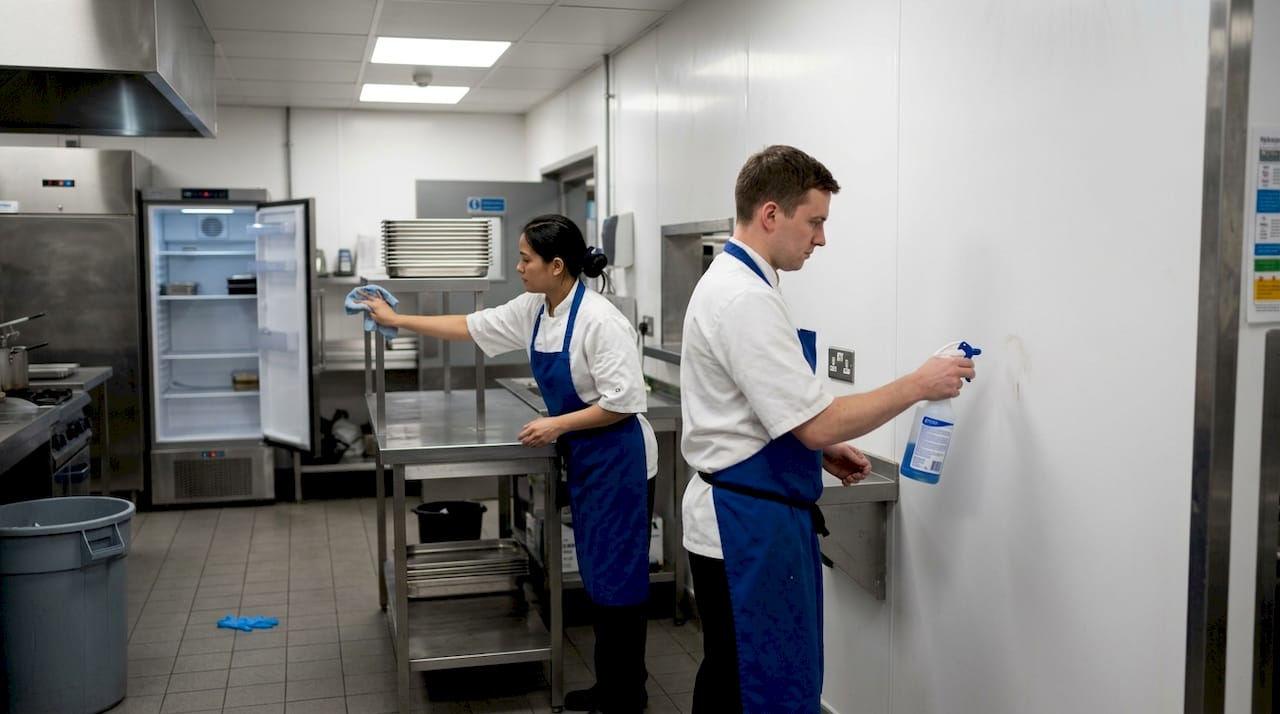
Acrylic cladding, by contrast, performs better in lower-risk zones where aesthetics take priority over chemical resilience. Think reception areas, staff break rooms, or outpatient waiting zones where the cleaning regime is lighter and the visual impact matters more.
A quick suitability checklist for facility managers:
Choose PVC if: Your space involves frequent wet mopping, steam cleaning, or chemical disinfection.
Choose PVC if: The area is subject to physical impact from equipment, trolleys, or foot traffic.
Choose acrylic if: The primary concern is visual appeal in a low-moisture, low-chemical environment.
Choose acrylic if: You need a premium finish for a client-facing or administrative zone.
Understanding this distinction before purchasing prevents the common mistake of specifying a visually appealing product that fails within 18 months under operational conditions.
Real-world results: Case study insights and maintenance impact
Data from UK healthcare and food service facilities consistently shows that waterproof cladding delivers measurable improvements in hygiene scores, maintenance costs, and operational continuity. The evidence is not theoretical.
In before-and-after scenarios from NHS trusts and commercial kitchen refurbishments, the pattern is consistent. Facilities that replaced painted plasterboard or ceramic tiling with waterproof PVC cladding reported faster cleaning cycles, fewer failed hygiene inspections, and significantly reduced reactive maintenance spend. Fast installation also meant that refurbishment projects were completed with minimal ward or kitchen closures.
Metric | Traditional finishes | Waterproof cladding |
Average cleaning time per wall (per week) | 45 minutes | 15 minutes |
Annual maintenance spend (per 100 sq m) | £1,200 to £1,800 | £300 to £500 |
Hygiene inspection pass rate | Variable | Consistently high |
Typical refurbishment downtime | 5 to 10 days | 1 to 2 days |
Lifespan before replacement | 7 to 10 years | 20 to 25 years |
The savings on cleaning labour alone often justify the upfront investment within two to three years. When you factor in avoided closures, reduced inspection failures, and longer asset life, the financial case becomes compelling.
Facilities focused on enhancing hygiene in healthcare settings have found that the transition to waterproof cladding also supports staff confidence and patient safety perceptions. Clean, well-maintained surfaces signal rigour and professionalism.
For a broader view of hygiene transformation in UK facilities, the evidence points clearly toward waterproof cladding as the long-term standard.
Pro Tip: Schedule an annual wall audit as part of your planned preventative maintenance programme. Catching minor panel damage or sealant degradation early avoids the much larger cost of emergency repairs or unplanned closures.
Why informed selection matters more than ever
Having reviewed the performance data and spoken with facility managers across healthcare and food service, one truth stands out clearly: the single biggest mistake is treating cladding as a commodity purchase.
Many facilities default to the lowest quoted price, only to discover that cheap imported panels warp under steam cleaning, fail chemical resistance tests, or simply do not meet the fire classification required by their insurer or regulator. The installer matters too. Poor fitting, inadequate sealing around joints, or incorrect adhesive selection can undermine even the best panel within months.
The uncomfortable reality is that “the lowest cost product is rarely the lowest cost solution if shutdowns and major repairs follow.” Lifecycle thinking, not upfront cost, is the correct framework for this decision.
We also see facilities that specify the right product but neglect to update their cleaning protocols. A panel rated for chemical resistance still needs the correct dilution and dwell time to deliver its hygiene promise. Selection and operations must align.
Exploring the full range of hygienic cladding advantages before committing to a specification is not overcaution. It is professional due diligence. The facilities that get this right spend less, comply more consistently, and avoid the operational disruption that keeps facility managers awake at night.
Explore waterproof cladding solutions with Hygienic Sheets
If you are ready to specify waterproof cladding for your facility, Hygienic Wall Cladding from Hygienic Sheets offers a full product range built for regulated environments across the UK. From robust PVC panels in a wide range of colours and finishes to pastel options for patient-facing spaces, every product is selected for durability, compliance, and ease of installation.
We also supply the full suite of cladding adhesives and accessories to ensure a compliant, professional finish, along with waterproof ceiling cladding for complete room coverage. Our team is available to support your specification process, whether you are refitting a single ward or procuring for a multi-site rollout. Get in touch to discuss your project requirements and request tailored product recommendations.
Frequently asked questions
What UK standards does waterproof cladding help facilities meet?
Waterproof cladding aids compliance with HACCP, NHS, CQC, and PAS9980 standards covering food safety, infection control, and fire performance requirements.
Is waterproof cladding faster to install than tiles or paint?
Installation is significantly faster than ceramic tiling or painted finishes, reducing operational downtime and allowing facilities to return to normal use within days rather than weeks.
Which is better for wet, chemical-heavy areas: PVC or acrylic cladding?
PVC cladding is the preferred choice for high-moisture and chemical environments, while acrylic suits lower-risk, design-focused zones where chemical exposure is minimal.
Can waterproof cladding reduce cleaning and maintenance costs?
Yes. Its smooth, impermeable surface requires far less time to clean and dramatically reduces annual maintenance spend compared to tiled or painted alternatives.
How does waterproof cladding improve hygiene?
It prevents moisture infiltration, eliminates grout lines where bacteria accumulate, and provides a surface that withstands disinfection protocols without degrading, making routine cleaning faster and more effective.
Recommended
Comments