

Hygienic wall coverings: standards, compliance, materials
- Mick Brightmore
- 5 hours ago
- 8 min read

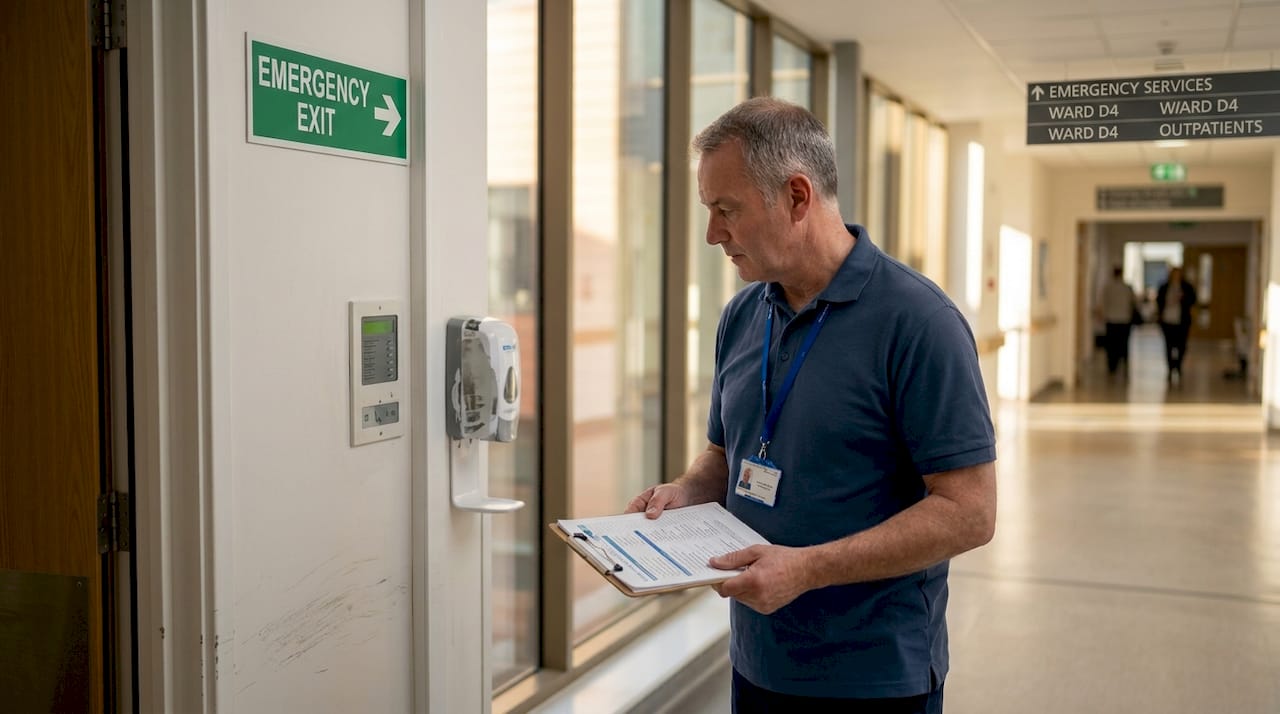
Choosing a wall covering labelled “hygienic” is not the same as choosing one that actually performs under scrutiny. Many facility managers discover this distinction only when an infection control audit flags a non-compliant surface, or when a food safety inspector identifies grout lines harbouring bacteria invisible to the naked eye. The reality is that wall coverings in healthcare wards, commercial kitchens, and hotel food preparation areas are a direct factor in contamination risk, regulatory compliance, and operational continuity. This article cuts through the confusion, explaining which standards apply, how materials compare, and what procurement decisions will protect your facility in 2026 and beyond.
Table of Contents
Key Takeaways
Point | Details |
Non-porous materials best | Certified PVC and FRP panels outperform porous alternatives for hygienic protection. |
Seamless installation critical | Perfect joints and finishes prevent bacteria traps and ensure standard compliance. |
Lifecycle cost justifies investment | Premium wall coverings reduce infection and downtime, offsetting upfront costs over time. |
Sector-specific standards apply | Healthcare, food and hospitality each require tailored compliance and performance benchmarks. |
Regular audits sustain hygiene | Scheduled inspections and cleaning regimes keep facilities compliant year-round. |
Why hygienic wall covering standards matter
Regulatory frameworks governing wall coverings in high-risk environments are more demanding than many procurement teams realise. In healthcare, NHS Estates guidance and infection prevention protocols set clear expectations for surface impermeability and cleanability. In food service, HACCP (Hazard Analysis and Critical Control Points) principles require that all surfaces in food contact zones resist moisture, chemicals, and microbial colonisation. The EHEDG (European Hygienic Engineering and Design Group) extends similar requirements to food processing environments, while hotel chains increasingly enforce their own brand standards for kitchen and wet-area wall finishes.
The consequences of falling short are significant. A failed food safety audit can trigger operational shutdowns, financial penalties, and reputational damage that takes months to recover from. In healthcare, inadequate wall surfaces contribute directly to healthcare-associated infection (HAI) rates, which remain a measurable patient safety metric. Lifecycle cost analysis favours premium certified materials for reducing contamination over the long term, making compliance an investment rather than a cost.
Here are the top five reasons strict wall covering standards exist in your sector:
Infection control: Impermeable surfaces prevent bacterial colonisation in healthcare and food environments.
Regulatory compliance: HACCP, EHEDG, and NHS frameworks mandate specific surface performance criteria.
Operational continuity: Non-compliant surfaces risk audit failures and costly facility downtime.
Chemical resistance: Frequent cleaning with industrial agents demands surfaces that do not degrade.
Lifecycle value: Non-porous coverings outperform porous materials for bacterial reduction, reducing long-term remediation costs.
“Non-porous wall coverings consistently outperform porous alternatives for bacterial reduction. Class A fire ratings and FDA compliance are not optional extras in critical environments; they are baseline requirements.”
For sector-specific detail, hospital wall cladding standards and wall cladding compliance guidance provide a practical starting point for your review.
Core standards for hygienic wall coverings explained
Understanding what a certification actually requires helps you evaluate supplier claims with confidence. EHEDG certification confirms that a material meets hygienic engineering principles for food processing, including surface smoothness, chemical resistance, and cleanability. HACCP compliance means the material supports a facility’s critical control points by not introducing contamination risk. FDA standards, relevant for facilities supplying the US market or operating under international food safety frameworks, set thresholds for material safety in food contact zones. NHS guidance focuses on antimicrobial performance, seamless installation, and resistance to the cleaning agents used in clinical settings.
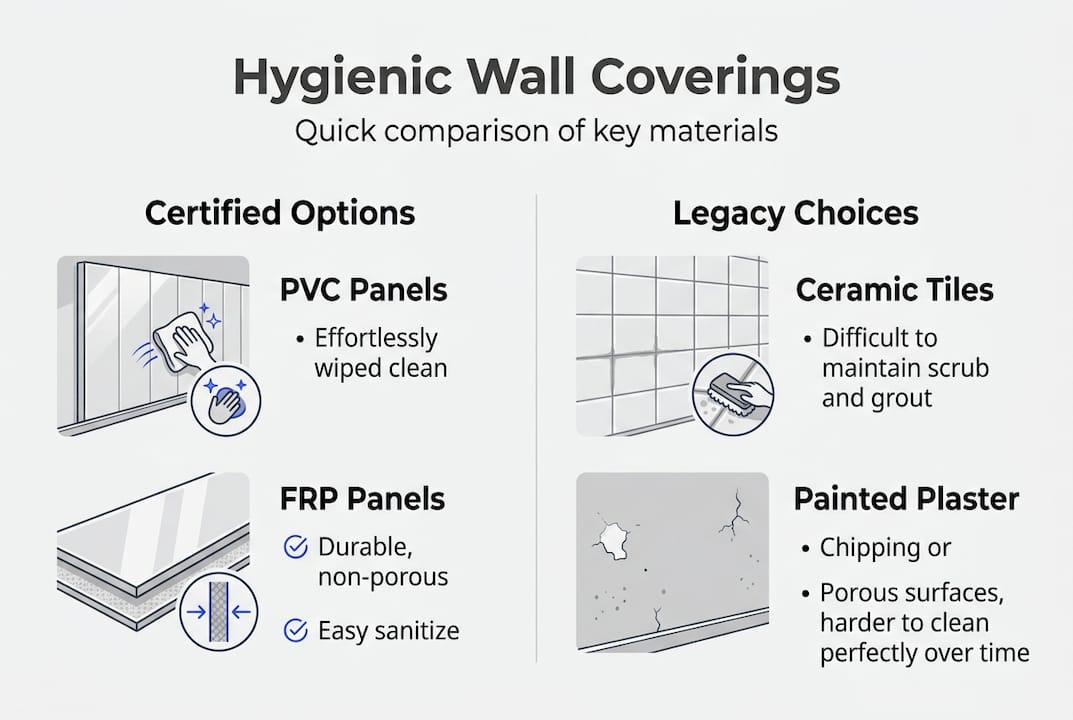
EHEDG and HACCP certified non-porous PVC and FRP panels are regarded as the benchmark for both healthcare and food service environments. The table below compares key performance criteria across common wall covering types:
Criteria | PVC panels | FRP panels | Ceramic tiles | Painted plaster |
Porosity | Non-porous | Non-porous | Low (grout porous) | High |
Seamless finish | Yes | Yes | No | Yes |
Chemical resistance | Excellent | Excellent | Moderate | Poor |
Fire rating | Class 1 available | Class 1 available | Non-combustible | Variable |
Antimicrobial options | Yes | Limited | Limited | Limited |
Ease of cleaning | High | High | Moderate | Low |
Sector-specific requirements add further nuance. Healthcare environments prioritise antimicrobial surface treatments and seamless installation to eliminate bacteria traps. Food service facilities require resistance to acidic and alkaline cleaning agents used daily. Hospitality settings balance cleanability with aesthetic requirements, particularly in guest-facing areas adjacent to food preparation zones.
What certifications mean in practice:
EHEDG: Confirms hygienic design principles for food processing environments.
HACCP-compliant: Supports critical control point management by eliminating surface contamination risk.
Class 1 fire rating: Required in most commercial and healthcare settings under UK Building Regulations.
ISO 9001: Indicates quality management in manufacturing, relevant for procurement confidence.
Seamless installation is not merely an aesthetic preference. Empirical evidence shows that seamless surfaces over tiled alternatives measurably reduce contaminant transfer, particularly in wet and high-traffic zones. For a broader overview, the hygienic wall protection guide and UK healthcare cladding resources offer detailed sector comparisons.
Material choices and performance benchmarks
Not all materials marketed as hygienic deliver equivalent performance. Understanding the practical differences helps you build a shortlist grounded in evidence rather than marketing language.
PVC wall panels are the most widely specified option in UK healthcare and food service facilities. They are non-porous, available with antimicrobial additives, lightweight, and straightforward to install. Cost per square metre is competitive, and lifecycle cost analysis favours premium PVC for infection reduction over time.
FRP (Fibre Reinforced Plastic) panels offer superior impact resistance, making them suitable for high-traffic areas such as hospital corridors and commercial kitchen loading zones. They share PVC’s non-porous credentials but tend to carry a higher unit cost.
Stainless steel is the gold standard for direct food contact surfaces but is expensive, prone to surface scratching over time, and acoustically challenging in large spaces. It remains the preferred choice for specific zones rather than entire wall systems.
Ceramic tiles are a legacy choice that many facilities are actively replacing. Grout lines are inherently porous, and seamless materials reduce contamination risks compared to tiled surfaces in high-risk zones.
Material | Porosity | Antimicrobial | Relative cost | Maintenance demand |
PVC panels | Non-porous | Available | Low to moderate | Low |
FRP panels | Non-porous | Limited | Moderate to high | Low |
Stainless steel | Non-porous | Inherent | High | Moderate |
Ceramic tiles | Grout porous | Limited | Moderate | High |
Painted plaster | Porous | Rare | Low | High |
Use this sequential checklist when evaluating your material shortlist:
Confirm the material’s porosity rating and request independent test data.
Verify relevant certifications: EHEDG, HACCP, Class 1 fire rating, and ISO where applicable.
Assess chemical resistance against the specific cleaning agents used in your facility.
Review antimicrobial treatment options and their longevity under repeated cleaning cycles.
Calculate total lifecycle cost, including installation, maintenance, and replacement intervals.
Check supplier lead times and availability for your project scale.
Pro Tip: When a supplier describes a product as simply “hygienic,” ask for the specific porosity data and cleaning protocol documentation. A genuinely compliant material will have both readily available.
For a detailed breakdown of options, the wall cladding types overview and kitchen wall panel guide are worth reviewing before finalising your specification.
Installation and audit considerations for compliance
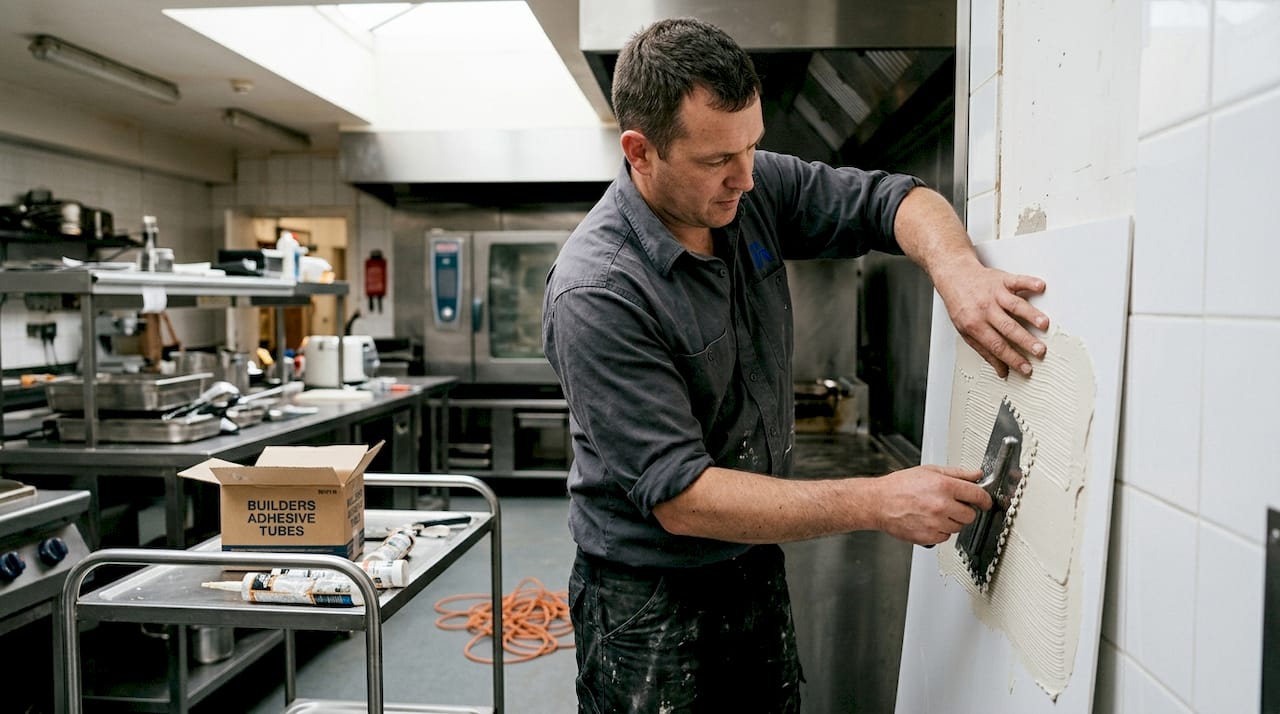
A compliant material installed poorly is still a compliance failure. This is one of the most overlooked aspects of hygienic wall covering procurement. Joint sealing, corner finishing, and the choice of adhesive are as critical as the panel specification itself.
Perfect seals and joints are essential to avoid bacteria traps, and ongoing audits with documented maintenance records are a core requirement for sustained compliance. Inspectors in both healthcare and food service environments will examine joints, corners, and trims as closely as the panel surface itself.
Steps for compliant installation and ongoing audit readiness:
Use manufacturer-specified adhesives: Incorrect adhesives can compromise panel integrity and void certifications.
Seal all joints with compatible sealant: Silicone or PVC-compatible sealants rated for the cleaning chemicals in use.
Install appropriate trims and corner joints: These eliminate the gaps and edges where bacteria accumulate.
Document the installation: Retain records of materials used, batch numbers, and installer qualifications.
Schedule regular inspections: Quarterly visual checks and annual formal audits maintain compliance evidence.
Maintain a cleaning log: Documented cleaning regimes are a standard audit requirement in healthcare and food service.
Pro Tip: The most common installation failures are missed internal corners, incorrect trim selection, and the use of general-purpose adhesives not rated for hygienic environments. Specify trims and adhesives from the same system as your panels to ensure compatibility.
For further guidance, UK wall system benchmarks and wall panels for high-risk areas provide practical installation and audit frameworks.
Making the right choice for your facility
Procurement decisions for hygienic wall coverings should be driven by evidence, not by the lowest unit price or the most persuasive sales pitch. The right choice depends on your sector, your cleaning regime, your regulatory obligations, and your long-term operational goals.
Sector-tailored requirements are clear: antimicrobial properties are non-negotiable in healthcare, chemical resistance is the priority in food service, and seamless finishes deliver hygiene benefits across all sectors. Matching your specification to these requirements is the foundation of a defensible procurement decision.
Five key takeaways for facility managers and procurement officers:
Certifications matter: Request EHEDG, HACCP, and fire rating documentation before approving any specification.
Seamless beats tiled: In any high-risk zone, seamless panels reduce contamination risk and cleaning time.
Lifecycle cost is the real metric: A premium panel that lasts 20 years with minimal maintenance outperforms a cheap option replaced every five.
Installation quality is compliance: Specify the full system, including trims, adhesives, and sealants, not just the panel.
Document everything: Audit trails for materials, installation, and cleaning are your protection during inspections.
Justifying investment in premium wall coverings is straightforward when you frame it around audit outcomes, infection risk reduction, and operational continuity. For a broader view of choosing wall finishes that align with your sector’s demands, the evidence consistently points toward certified, non-porous, seamless systems.
Source compliant hygienic wall coverings for your facility
Moving from specification to procurement is simpler when your supplier understands the standards you are working to. At Hygienic Sheets, we supply hygienic wall cladding panels that meet the performance benchmarks required in healthcare, food service, and hospitality environments across the UK.
Our product range covers the full system, not just the panels. From cladding adhesives and accessories to trims, corner joints, and profiles, every component is selected for compatibility and compliance. We also supply ceiling cladding options for facilities requiring a complete hygienic envelope. With fast nationwide delivery, ISO-backed quality, and a team experienced in supporting both small refurbishments and large-scale fit-outs, we make it straightforward to procure a compliant, fully documented wall system that will stand up to your next audit.
Frequently asked questions
Which material is considered most hygienic for wall coverings?
Non-porous PVC and FRP panels certified by HACCP and EHEDG are regarded as the most hygienic by sector experts, offering seamless, cleanable surfaces with antimicrobial treatment options.
How do I ensure wall covering installation meets standards?
Focus on seamless finishes, manufacturer-specified adhesives, and compatible trims, then maintain regular cleaning audits with documented records to eliminate bacteria traps and satisfy inspectors.
Are tiled surfaces suitable in high-risk zones?
Empirical evidence favours seamless panels over tiled surfaces because grout lines harbour bacteria and create contamination points that are difficult to eliminate through routine cleaning.
How can I justify premium wall covering investment?
Lifecycle cost analysis consistently shows that premium certified materials reduce infection risk, lower maintenance frequency, and minimise operational downtime, making the initial outlay cost-effective over a ten to twenty year horizon.
Recommended
Comments