

How wall cladding prevents contamination for hygiene compliance
- Mick Brightmore
- 16 minutes ago
- 7 min read

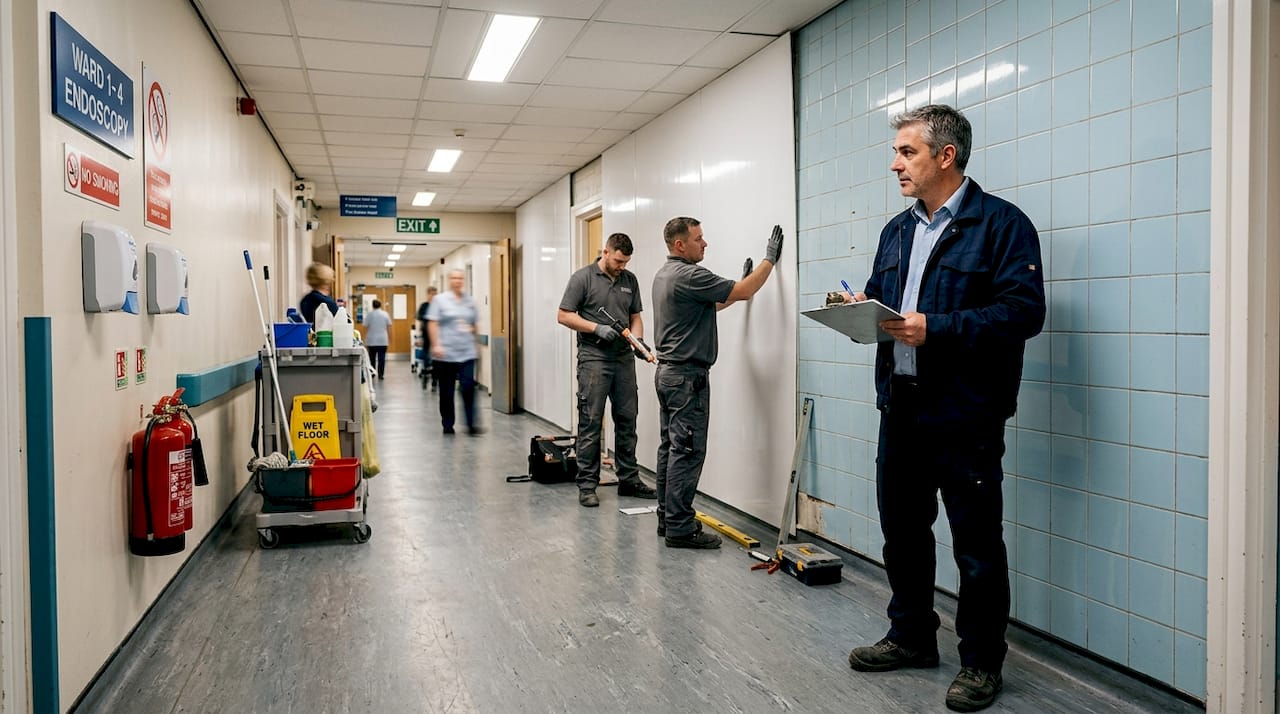
Painted plaster and standard ceramic tiles might look clean, but they are quietly working against you. Traditional finishes like paint or tile can harbour bacteria in micro-cracks and grout lines, making outbreaks more likely in hygiene-sensitive sectors. For facility managers in healthcare and food service, that is not a minor inconvenience — it is a compliance liability and a genuine patient or consumer safety risk. This guide cuts through the noise and gives you a clear, practical framework for understanding how hygienic wall cladding works, what to look for, and how to apply it correctly in your facility.
Table of Contents
Key Takeaways
Point | Details |
Seamless protection | Wall cladding creates a smooth, non-porous barrier that blocks contamination. |
Antimicrobial power | Advanced panels actively reduce bacteria, delivering ongoing germ control. |
Durable compliance | Quality materials and expert installation help maintain hygiene standards and regulatory compliance. |
Tailored for risk | Choosing the right product and maintaining it properly matches your facility’s unique hygiene needs. |
Why wall cladding is essential for contamination control
Contamination in healthcare wards and food processing areas rarely announces itself. It builds quietly in the places you cannot easily reach: behind cracked grout, beneath peeling paint, and along the edges of poorly sealed tiles. These are not cosmetic problems. They are active microbial reservoirs.
The main contamination vectors in these environments include splash zones near sinks, food prep surfaces, and clinical wash areas; microbial build-up in surface irregularities; and damage caused by trolleys, equipment, and repeated chemical cleaning. Traditional painted plaster develops hairline cracks within months of installation. Tiles, even when freshly grouted, create a network of porous lines that absorb moisture and organic matter.
“Wall cladding consistently outperforms traditional finishes for hygiene and compliance, offering a continuous, non-porous surface that eliminates the bacterial harbours found in grout and cracked paint.”
The benefits of PVC cladding over these legacy materials are well established. A continuous, non-porous barrier leaves nowhere for bacteria to anchor. Regulatory frameworks in the UK, including those from the Food Standards Agency and NHS infection control guidance, increasingly expect facilities to move beyond painted surfaces in high-risk zones.
Key reasons wall cladding outperforms traditional finishes:
No grout lines or surface cracks for microbial colonisation
Resistant to impact damage from equipment and trolleys
Compatible with high-frequency chemical cleaning regimes
Faster to clean and inspect during audits
Supports compliance with sector-specific hygiene standards
Understanding why PVC wall panels are now the default choice for new builds and refurbishments in these sectors makes the decision straightforward.
Pro Tip: Specify wall cladding at the design stage, not as an afterthought. Retrofitting around existing fixtures costs more and often compromises the seamless finish that makes cladding effective.
How hygienic wall cladding prevents contamination: Key features
Not all cladding is equal. The features that genuinely prevent contamination go beyond surface appearance. Here is what separates high-performance hygienic panels from standard decorative alternatives.
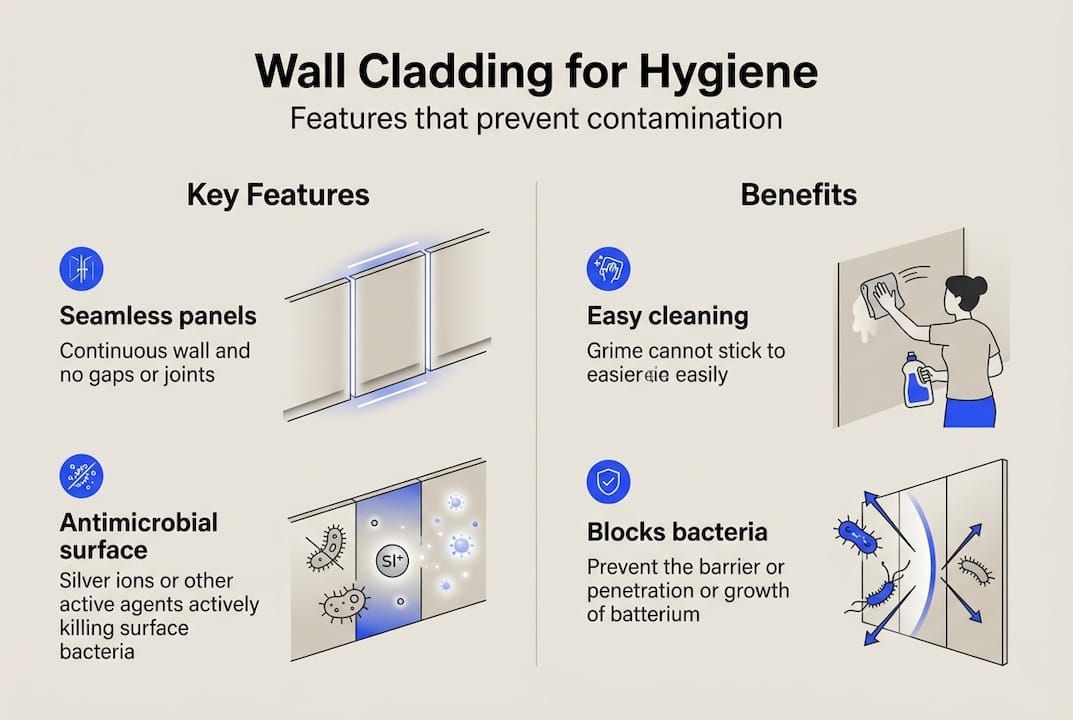
Antimicrobial surface treatments are one of the most significant advances in this category. Silver ion technology, embedded directly into the panel surface, actively disrupts bacterial cell membranes. Advanced panels can kill up to 99.9% of bacteria, including resistant strains, between routine cleans. That is not a marketing claim — it is a measurable reduction in contamination load that matters enormously in ICUs and food production lines.
Chemical resistance is equally critical. Facilities use caustic sanitisers, bleach-based solutions, and high-pressure washdowns that would degrade painted surfaces within weeks. Materials such as PVC, stainless steel, and FRP are selected specifically for their ability to withstand these aggressive cleaning environments without surface degradation.
Seamless installation removes the grout lines and joints that traditional tiling creates. When panels are correctly fitted with compatible trims and adhesives, the result is a continuous surface with no crevices for moisture or organic matter to collect.
When choosing PVC wall panels, look for panels that combine all three features rather than optimising for just one.
Material | Antimicrobial options | Chemical resistance | Impact resistance | Relative cost |
PVC | Yes (silver ion) | High | Good | Low to medium |
Stainless steel | Limited | Very high | Excellent | High |
FRP (fibreglass) | Limited | High | Very good | Medium |
The advantages of hygienic cladding become especially clear when you compare the long-term maintenance burden of each option against its upfront cost.
Choosing the right cladding material for your facility
Material selection is where many facilities make avoidable mistakes. Over-specifying stainless steel in a low-risk corridor wastes budget. Under-specifying PVC in a wet processing zone creates ongoing hygiene failures. The right choice depends on your contamination risks, cleaning regime, and budget.
PVC outperforms stainless steel in cost and maintenance for the majority of healthcare and food service applications. FRP suits moisture-heavy areas such as cold stores and wet processing rooms. Antimicrobial additives are non-negotiable for healthcare settings where resistant organisms are a documented risk.
How to assess your space and select the right material:
Map your contamination risk zones: splash areas, high-touch surfaces, and wet process zones need the highest specification.
Review your cleaning regime: identify the chemicals used and their concentrations to confirm material compatibility.
Check regulatory requirements: NHS estates guidance and FSA standards may specify minimum surface performance criteria.
Compare lifecycle costs, not just purchase price: a cheaper panel that degrades under daily sanitising costs more over three years.
Consult your supplier about antimicrobial options: not all PVC panels include silver ion treatment as standard.
For specific applications, PVC wall cladding uses span everything from hospital corridors and operating theatres to commercial kitchens and food packaging lines. Healthcare wall cladding in particular benefits from panels that combine impact resistance with antimicrobial performance.
Pro Tip: Do not overlook ceiling cladding. Airborne contaminants, steam, and condensation settle overhead, and an unprotected ceiling above a hygienic wall installation is a gap in your contamination control strategy.
Installation quality: Preventing hidden risks and contamination traps
You can specify the best panels on the market and still end up with a contamination problem if installation is poor. This is one of the most underestimated risks in facility refurbishment projects.
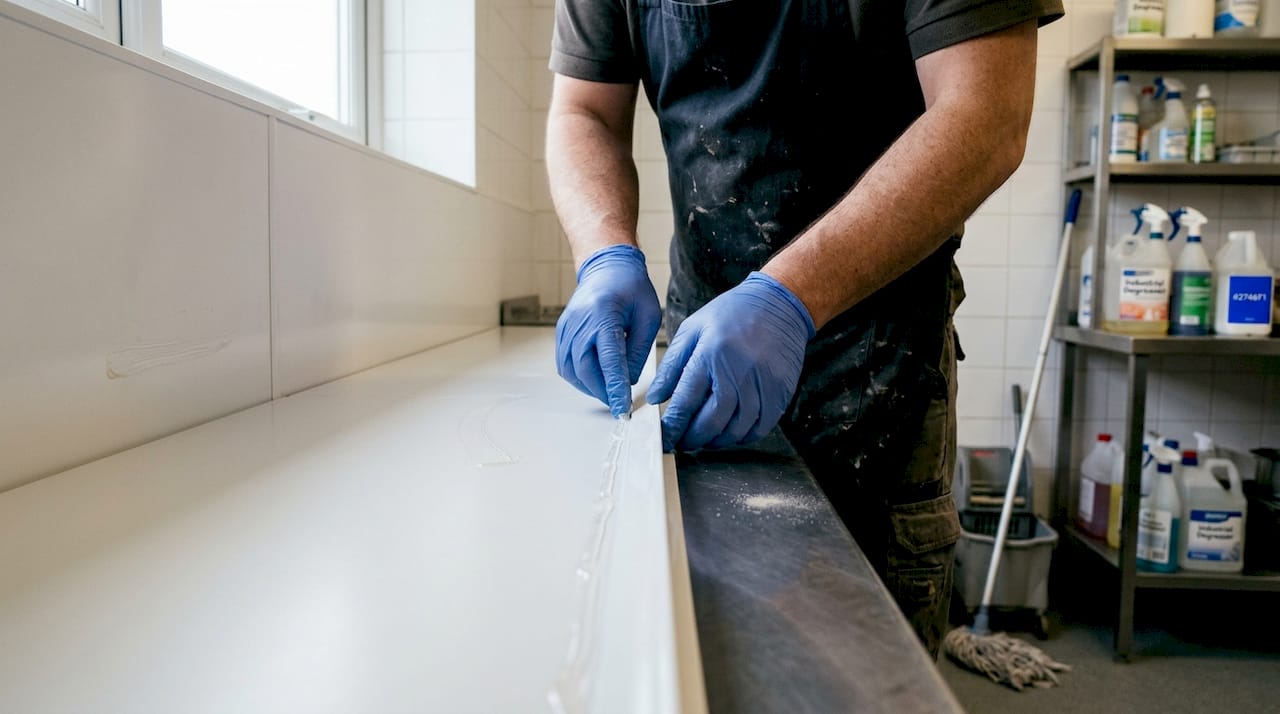
Poor installation creates bacterial traps: gaps at panel edges, incompatible trims that leave exposed substrate, and messy joints that collect moisture and organic debris. In high-risk areas like ICUs and wet processing zones, these details are not minor — they are the difference between passing and failing a hygiene inspection.
Common installation pitfalls to avoid:
Gaps between panels and adjacent surfaces, particularly around pipework penetrations
Using trims from a different supplier that do not create a flush, sealed joint
Applying adhesive inconsistently, leaving voids behind panels where moisture can accumulate
Failing to seal cut edges, especially in wet zones
Rushing installation in occupied facilities, leading to shortcuts on edge detailing
“Incompatible accessories and rushed edge detailing are among the most common reasons hygienic cladding installations fail inspection in UK healthcare and food service facilities.”
For guidance on getting this right, proper cladding installation technique makes a measurable difference to long-term hygiene performance. Using compatible adhesives and accessories from the same supplier ensures the entire system performs as intended, rather than relying on mismatched components.
Pro Tip: Always request a system warranty that covers panels, trims, and adhesives together. A supplier who stands behind the complete installation is a supplier who has confidence in the compatibility of their products.
Maintenance for lasting hygiene: Keeping contamination at bay
Even the best-specified and best-installed cladding will underperform without a consistent maintenance programme. The good news is that hygienic cladding is designed to make your cleaning team’s job easier, not harder.
The chemical resistance of cladding means it withstands the harsh cleaners and sanitising routines that would destroy painted or tiled surfaces. That durability translates directly into reduced labour costs and a lower risk of surface degradation creating new contamination points.
Preventive checks to include in your maintenance schedule:
Inspect seams and joins monthly for any signs of lifting or separation
Check corner trims and edge profiles for impact damage after equipment movements
Look for discolouration or staining that may indicate surface degradation or chemical incompatibility
Verify that sealant around penetrations (pipes, sockets, fixtures) remains intact
Document findings and schedule repairs before minor issues become compliance failures
Setting | Cleaning frequency | Inspection interval | Key focus areas |
Hospital ward | Daily | Monthly | Splash zones, bed areas, door edges |
Operating theatre | After each procedure | Weekly | All surfaces, joins, ceiling panels |
Commercial kitchen | Daily (multiple) | Fortnightly | Cooking splash zones, floor junctions |
Food processing line | After each shift | Weekly | Wet zones, drainage areas, overhead panels |
For overhead surfaces, ceiling cladding hygiene requires the same attention as walls, particularly in steam-heavy environments. Pairing your maintenance routine with approved hygienic cleaning solutions ensures you are not inadvertently degrading your panels with incompatible products.
Ready to raise your hygiene standards?
If this guide has clarified what your facility needs, the next step is sourcing materials that are built for the job. Specifying the right panels, trims, and adhesives from a supplier who understands hygiene compliance is not a luxury — it is the foundation of a defensible contamination control strategy.
At Hygienicsheets.com, we supply hygienic wall cladding sheets across the UK, with a full range of PVC panels in multiple colours, finishes, and antimicrobial specifications suited to healthcare, food service, and commercial environments. Our product range includes cladding adhesives and accessories designed to work as a complete system, so your installation performs as intended from day one. Fast nationwide delivery, ISO-certified products, and expert support mean you can move from specification to installation with confidence.
Frequently asked questions
What is the best wall cladding material for preventing contamination in hospitals?
PVC with antimicrobial additives is widely regarded as the most effective and cost-efficient choice for hygiene-critical areas, outperforming stainless steel on both maintenance burden and long-term cost.
Do antimicrobial wall panels really reduce infection risk?
Yes. Advanced panels kill up to 99.9% of bacteria using silver ion treatments, providing measurable contamination reduction between routine cleaning cycles.
How often should hygienic wall cladding be maintained or cleaned?
Cleaning frequency depends on your sector: daily in hospitals and multiple times per shift in food processing. Cladding materials are engineered to withstand these intensive routines without surface degradation.
What installation mistakes increase contamination risk?
Gaps at panel edges, incompatible trims, and poorly sealed penetrations are the most common failures. Poor installation creates bacterial traps that undermine the hygiene performance of even the best-specified panels.
Recommended
Comments