

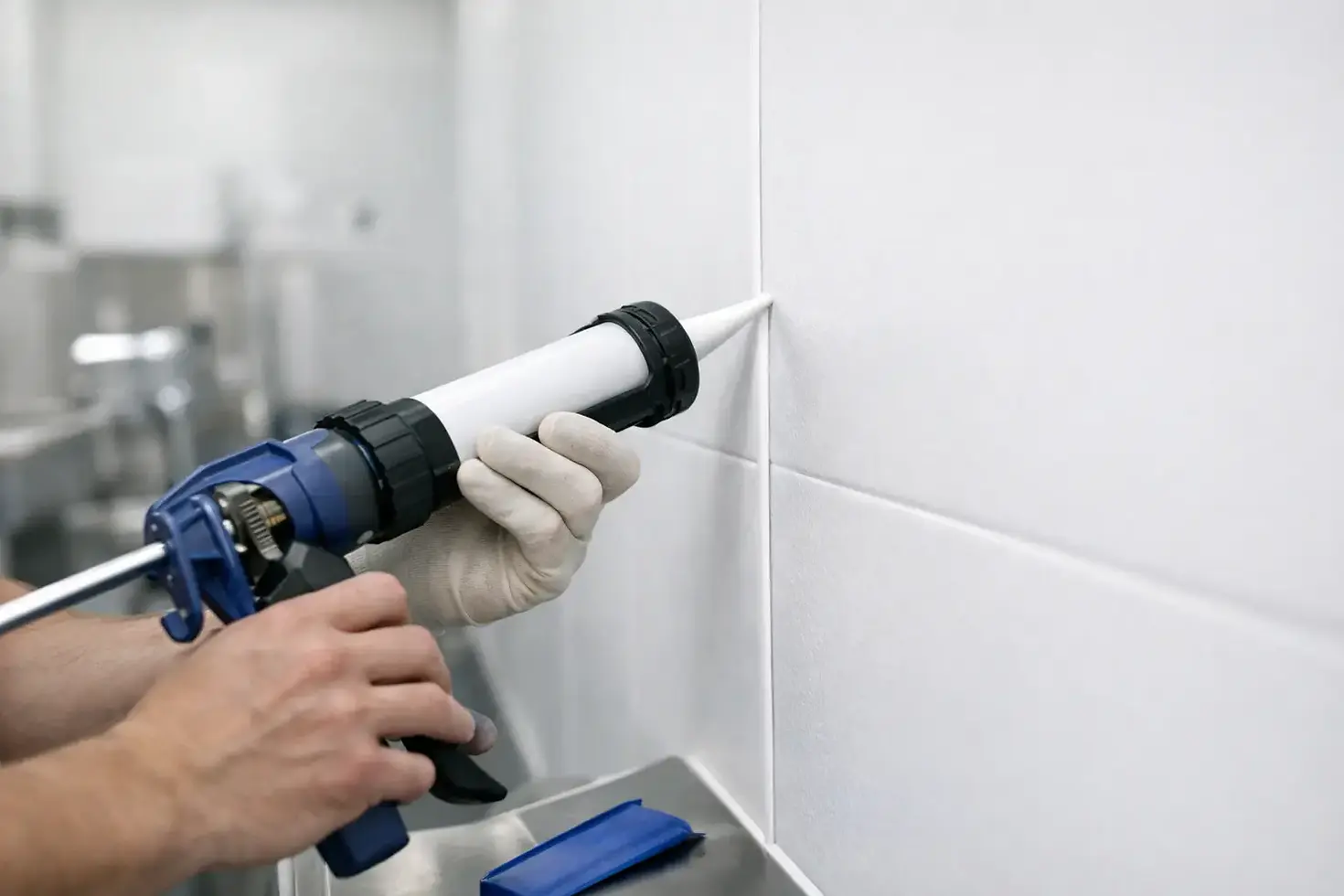
How to Seal Cladding Joints Properly
A cladding job can look perfectly fitted and still fail at the joints. That is usually where water gets in, dirt starts to build, and a hygienic finish becomes harder to maintain. If you are looking at how to seal cladding joints, the goal is not simply to fill a gap. It is to create a clean, durable and waterproof connection that stays easy to wipe down in busy kitchens, bathrooms, utility rooms and commercial washdown areas.
When joints are sealed well, the whole system works better. Moisture stays out, cleaning is quicker, and the finished wall keeps the neat, grout-free appearance that makes hygienic cladding such a practical alternative to tiles. Get it wrong, and even quality sheets can be let down by weak points around panel edges, trims and corners.
Why sealing cladding joints matters
In hygiene-sensitive spaces, the joint is not just a cosmetic detail. It is one of the most important parts of the installation. Any small opening can allow water, steam, grease or cleaning residue to sit behind the panels. Over time, that can lead to staining, mould growth, odours or substrate damage.
This matters just as much in a home bathroom as it does in a commercial kitchen. In both cases, the wall finish needs to resist moisture and stay easy to clean. A properly sealed joint supports that by closing off vulnerable edges and helping the panels perform as a single waterproof surface.
There is also a visual benefit. A tidy bead of sealant in the right place gives the installation a cleaner, more professional finish. That is especially important with white gloss or coloured PVC sheets, where rough joints and smeared sealant stand out immediately.
How to seal cladding joints without creating weak spots
The most reliable approach is to treat sealing as part of the full cladding system, not as a final patch-up job. Joints work best when the sheets, trims, adhesive and sealant are compatible and installed in the right order.
Start with the substrate. The wall behind the cladding should be dry, stable and as flat as possible. If the surface is uneven, panels may not sit properly in the trims, and that can leave inconsistent gaps that are difficult to seal neatly. A sound background gives you better contact, better alignment and a longer-lasting finish.
Next, make sure the panel edges are clean and accurately cut. A rushed cut can leave rough edges or gaps that no amount of sealant will disguise well. Sealing should reinforce a well-fitted joint, not compensate for poor preparation.
In most installations, trims do much of the structural work. Internal corners, external corners, division trims and end caps help control spacing and give the sheet edges proper support. Sealant then works with those trims to create a hygienic, watertight barrier. If you skip trims where they are needed, the seal alone may not cope with movement, cleaning or regular moisture exposure.
Choosing the right sealant for cladding joints
Not every sealant is suitable for PVC wall cladding. For wet and hygiene-critical environments, you need a product designed to bond properly, resist moisture and stay stable over time. A low-quality sealant may discolour, shrink, crack or lose adhesion, particularly in rooms with temperature changes or frequent washdowns.
A sanitary-grade sealant is often the right choice around exposed edges, internal corners and other moisture-prone areas. It helps resist mould and creates a smooth finish that is easier to wipe clean. The key is compatibility. PVC sheets, trims and adhesives should be used with a sealant intended for the same kind of installation.
Colour also matters. White is the standard choice for most hygienic cladding because it blends cleanly with white sheets and trims. In some design-led settings, a matched finish may be preferred, but the main priority should always be a neat, waterproof seal rather than trying to make the joint disappear completely.
Where to apply sealant
This is where many fitting problems begin. Too little sealant leaves gaps. Too much creates mess, traps dirt and can make the job look overworked.
Sealant is commonly applied inside trims before the panel is inserted, at internal corners, around perimeter edges, and where the cladding meets fixtures or other wall finishes. It is also used around penetrations such as pipes, sockets and service points where moisture could otherwise get behind the sheets.
The exact amount depends on the trim type and joint detail. A small, consistent bead is usually better than a heavy application. You want enough to create contact and weather the joint, but not so much that it spills out excessively and needs major cleaning up afterwards.
In shower areas and behind sinks, sealing needs extra care. These are the points most likely to see direct water exposure, so any weak spots will show up faster. If an edge or corner is likely to be repeatedly soaked, give that area the same attention you would give the panel face itself.
Step by step fitting for a clean, waterproof result
Before sealing, dry-fit the sheets and trims. This lets you check alignment, confirm cut accuracy and make adjustments before adhesive and sealant are in play. It is much easier to correct a tight corner or awkward edge at this stage than once the panel is fixed.
Apply your adhesive to the back of the cladding sheet as specified for the product and wall surface. Then apply sealant where required inside the trim channels or at the joint detail. Once the sheet is positioned, press it firmly into place so the panel edge beds into the trim correctly.
As the sealant compresses, you may see a slight squeeze-out. That is normal if it is controlled. Smooth any visible bead promptly with the right finishing tool or a gloved finger, depending on the sealant instructions. The aim is a tidy, continuous line with no voids, breaks or smears across the panel face.
Work methodically. If you rush from one board to the next, missed sections and uneven joints are more likely. On larger commercial fit-outs, consistency matters just as much as speed. A well-organised install will save time on snagging and leave a much better finish for handover.
Common mistakes when sealing cladding joints
One of the most common errors is sealing onto dirty surfaces. Dust, grease and cutting debris reduce adhesion and can leave the seal vulnerable from day one. Always clean panel edges and trims before applying the bead.
Another issue is relying on sealant to fix poor spacing. If a joint is too wide or the panel is not seated properly, the seal may look acceptable at first but fail under cleaning, moisture or movement. Good joint design starts with accurate measuring and fitting.
Using the wrong product is another avoidable problem. General-purpose sealants may seem convenient, but they are often a false economy in wet rooms and hygiene-critical spaces. If the seal discolours or breaks down early, the cost of remedial work quickly outweighs the saving.
Over-finishing can also spoil the result. Excessive wiping spreads sealant over the face of the cladding and leaves a dull, untidy mark, especially on gloss sheets. A single clean pass is usually all that is needed.
How to keep sealed joints looking good
Once cured, sealed joints should be simple to maintain. Regular wiping with suitable non-abrasive cleaners will usually be enough to keep them in good condition. One of the biggest advantages of PVC hygienic cladding is that there is no grout line to trap dirt, so maintenance is lighter than with tiled walls.
That said, joints should still be inspected now and then, particularly in areas exposed to heat, steam or frequent washing. If a section starts to lift or crack, deal with it early. Small repairs are straightforward when caught in time, but ignored damage can let moisture behind the panels.
For project buyers managing multiple rooms or larger sites, consistency is key. Using a complete system of matching sheets, trims, adhesives and sealants helps reduce installation variables and gives a more reliable result across the whole job. That is one reason many installers prefer to source everything together rather than mixing products from different suppliers.
When a simple seal is not enough
Some environments need more than a basic domestic approach. Commercial kitchens, food prep areas, healthcare rooms and heavy-use wash spaces demand joints that can stand up to repeated cleaning, strict hygiene expectations and regular moisture exposure. In those settings, product choice and fitting accuracy matter even more.
It also depends on the substrate and room conditions. A newly plastered wall that has not dried properly, a damp background, or a surface with movement can all affect joint performance. If the wall itself is unstable, even a good sealant may struggle long term. The best finish comes from treating the whole installation as a system, not just focusing on the visible bead.
If you want cladding that stays waterproof, easy to clean and presentable for the long haul, sealing the joints properly is not the extra step. It is the step that makes the rest of the installation worth doing well. With the right materials, careful prep and a consistent application, the finish will look better on day one and keep working hard long after fitting is complete.


Comments