

How to Choose Wall Cladding for Hygienic Spaces
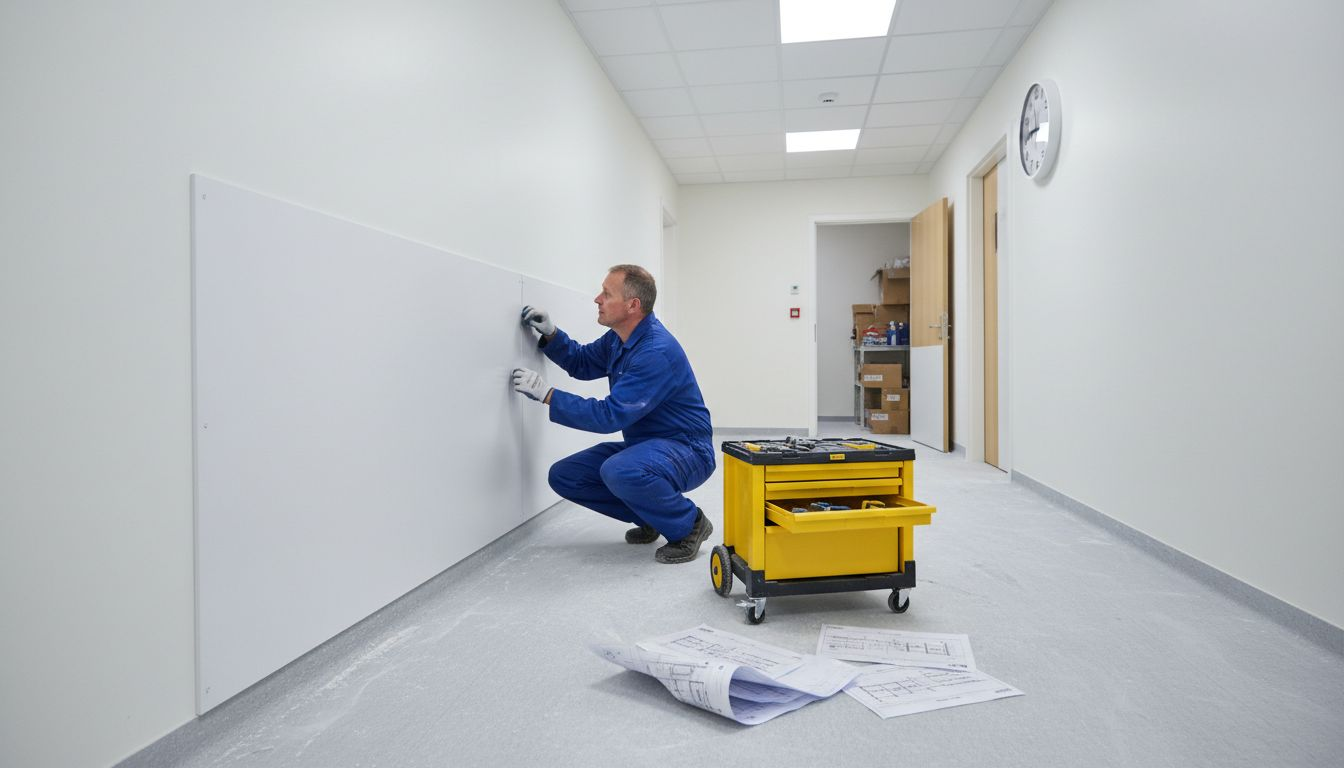
Choosing the Best Wall Cladding for Hygienic Environments
Maintaining strict hygiene in United Kingdom healthcare settings and commercial kitchens often feels relentless when frequent cleaning and constant wear put every surface to the test. Facility managers recognise that even small flaws in wall cladding can lead to costly contamination risks and rising maintenance demands. Choosing durable, hygienic PVC wall cladding offers a practical solution, delivering the strength and cleanability these high-risk environments demand while aligning with rigorous cleanliness expectations and risk management strategies.
Table of Contents
Step 1: Assess Hygiene And Durability Requirements
Step 2: Select Suitable PVC Cladding Types And Finishes
Step 3: Compare Installation Methods And Ease Of Fitting
Step 4: Check Compatibility With Trims And Accessories
Step 5: Verify Compliance And Ongoing Maintenance Needs
Quick Summary
Major Insight | Clear Explanation |
1. Assess hygiene and durability | Evaluate hygiene performance and material durability to ensure cladding prevents contamination and can withstand cleaning protocols. |
2. Choose appropriate PVC finishes | Select PVC cladding types based on specific hygiene requirements, focusing on cleanability, resistance, and aesthetic needs. |
3. Consider installation methods carefully | Installation techniques impact hygiene; choose methods that minimise bacterial traps and ensure sealed surfaces. |
4. Ensure trims and accessories compatibility | All wall cladding components must work together to maintain a contamination-free environment and meet hygiene standards. |
5. Maintain ongoing compliance and documentation | Regular inspections and maintenance logs are essential for maintaining hygiene compliance and improving safety standards. |
Step 1: Assess hygiene and durability requirements
Choosing the right wall cladding for hygienic spaces requires a strategic evaluation of both hygiene performance and material durability. This assessment ensures you select surfaces that not only prevent contamination but withstand demanding cleaning protocols and environmental stressors.
Begin by thoroughly understanding the specific environment’s requirements. Different sectors like healthcare, food preparation, and pharmaceutical facilities have unique challenges. Hygienic design risk management principles recommend a comprehensive risk-based approach that considers multiple critical factors:
Material composition that resists bacterial growth
Ability to withstand frequent high-temperature sanitisation
Seamless surface preventing microbial accumulation
Chemical resistance to cleaning agents
Structural integrity under repeated mechanical stress
Evaluate potential wall cladding materials against these key performance indicators. Professional-grade hygienic wall panels should demonstrate:
Here’s a concise comparison of wall cladding needs across key hygienic sectors:
Sector | Top Hygiene Priority | Durability Requirement | Specialist Consideration |
Healthcare | Antimicrobial surfaces | Impact resistance | Near-perfect sealed junctions |
Food Preparation | Easy cleanability | Chemical tolerance | High-temp sanitisation fit |
Pharmaceuticals | Contamination prevention | Abrasion resistance | Stringent regulatory compliance |
Laboratories | Microbial resistance | Structural stability | Frequent inspection cycles |
Smooth, non-porous surface preventing microorganism adhesion
High resistance to impact and abrasion
Compatibility with standard cleaning and disinfection protocols
Long-term dimensional stability
Selecting wall cladding is not just about appearance, but creating a robust barrier against contamination risks.
Professional tip: Always request material certifications and independent test reports demonstrating hygiene performance before finalising your wall cladding selection.
Step 2: Select suitable PVC cladding types and finishes
Selecting the right PVC wall cladding involves understanding the unique requirements of your specific hygienic environment. PVC’s physical properties offer remarkable flexibility for creating robust, easy-to-clean surfaces that meet stringent hygiene standards.
Consider these critical factors when choosing PVC cladding types and finishes:
Rigid versus flexible panel configurations
Surface texture and smoothness
Colour and aesthetic requirements
Chemical and moisture resistance
Temperature tolerance
Infection control capabilities
Professional-grade hygienic PVC wall panels typically come in several primary variants:
Smooth, high-gloss finishes for maximum cleanability
Slightly textured surfaces for enhanced slip resistance
Antibacterial-infused panel options
Specialised healthcare and food preparation grades
The right PVC cladding transforms a basic surface into a sophisticated contamination barrier.
Each environment demands specific performance characteristics. Healthcare facilities might prioritise antimicrobial properties, while food preparation areas require panels that withstand intense cleaning chemicals and temperature variations.
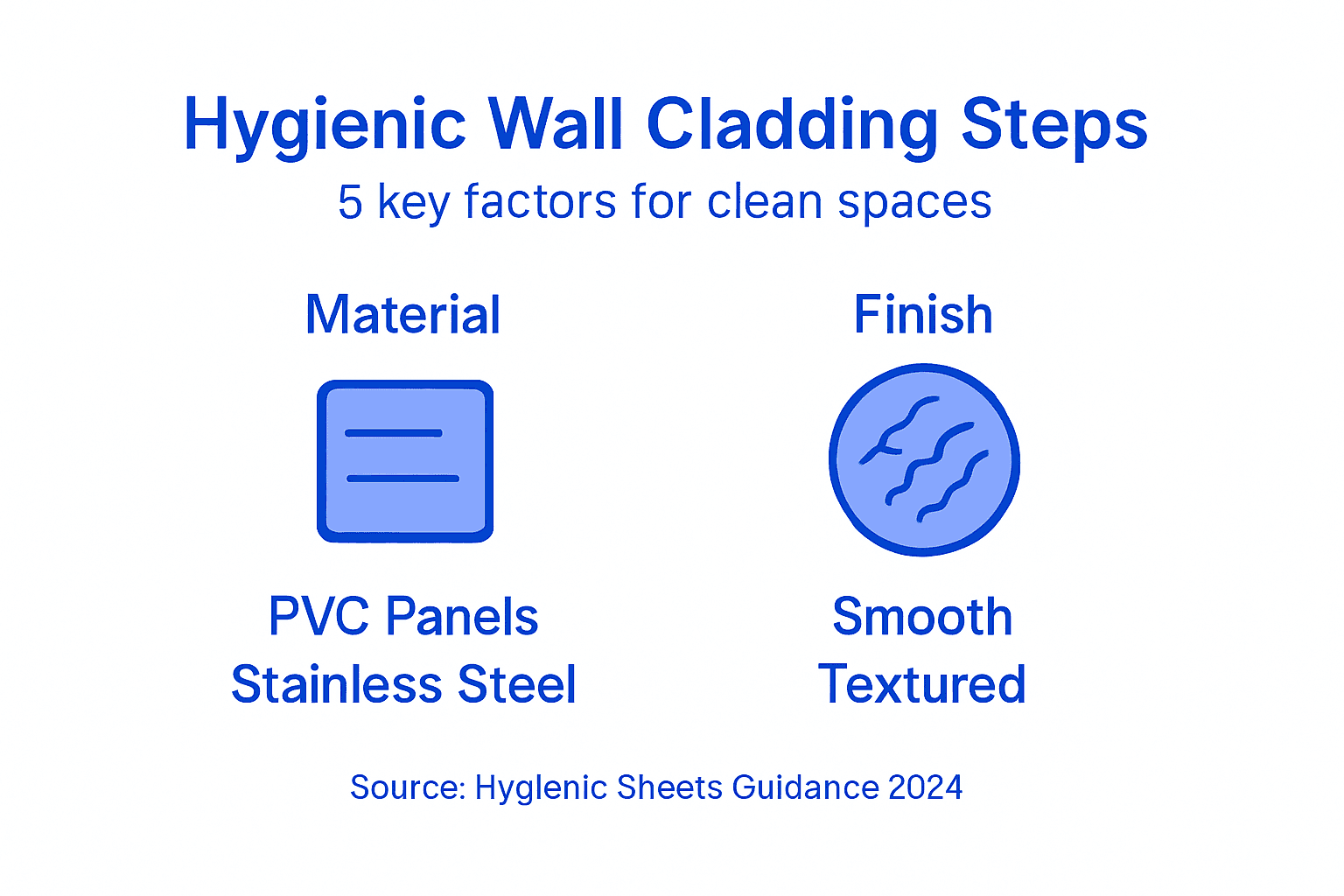
Compare PVC wall cladding finishes for hygienic settings:
Finish Type | Cleanability Level | Common Use Case | Visual Appeal |
High-gloss Smooth | Excellent | Hospitals, clinics | Bright, modern |
Textured (Slip-Resist) | Moderate | Wet food prep areas | Subtle, practical |
Antibacterial-Infused | Superior | Infection-sensitive sectors | Neutral, functional |
Specialist Grade | High | Intensive sanitation zones | Clinical, industrial |
Professional tip: Always request technical specifications and independent laboratory test results to confirm the PVC cladding’s suitability for your precise hygienic requirements.
Step 3: Compare installation methods and ease of fitting
Installing wall cladding in hygienic environments requires precision and careful consideration of hygienic design principles. Your installation method can significantly impact the overall effectiveness of your wall surface in preventing contamination and maintaining cleanliness.
Key installation methods to evaluate include:
Adhesive bonding techniques
Mechanical fixing approaches
Welded joint systems
Modular panel installation
Seamless integration methods
Professional installers typically assess these critical factors:
Minimising potential bacterial trap points
Ensuring smooth, sealed surface junctions
Maintaining structural integrity
Facilitating future maintenance and replacement
Proper installation is as crucial as selecting the right cladding material.
Different hygienic environments demand specific installation strategies. Healthcare facilities require near-perfect seal continuity, while food preparation areas need methods that withstand frequent high-pressure cleaning and temperature variations.
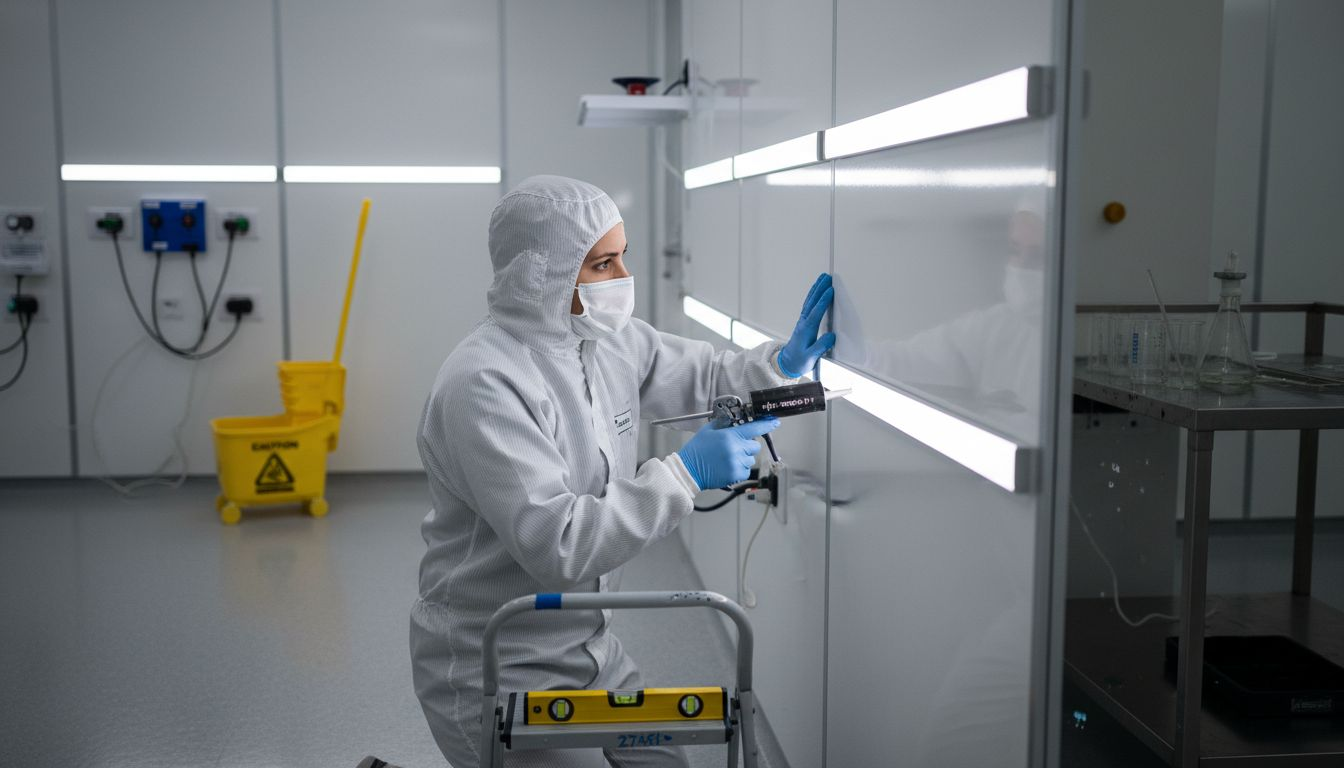
Professional tip: Always engage specialists with specific experience in hygienic environment installations to ensure optimal performance and compliance with industry standards.
Step 4: Check compatibility with trims and accessories
Ensuring seamless integration of wall cladding requires meticulous attention to trims and accessory compatibility. Hygienic design principles dictate that every component must work together to maintain a contamination-free environment.
Key compatibility considerations include:
Material composition matching
Chemical resistance levels
Surface smoothness and finish
Sealing capability
Cleaning and maintenance requirements
Temperature and humidity tolerance
Professional assessment involves:
Verifying material chemical compatibility
Checking surface finish consistency
Evaluating joint and connection integrity
Assessing cleaning and sanitisation potential
Incompatible trims can transform a hygienic surface into a potential contamination risk.
Different hygienic environments demand nuanced approaches. Healthcare settings require absolute precision, while food preparation areas need robust, easy-to-clean solutions that withstand aggressive cleaning protocols.
Professional tip: Request comprehensive technical specifications and compatibility test reports for all trims and accessories before final installation.
Step 5: Verify compliance and ongoing maintenance needs
Compliance is more than a one-time checkbox; it’s an ongoing commitment to maintaining hygienic standards. Wall system maintenance requirements demand systematic and meticulous approaches to ensure long-term performance and safety.
Key compliance verification steps include:
Regulatory documentation verification
Periodic professional inspections
Performance tracking
Cleaning validation protocols
Maintenance record keeping
Risk assessment reviews
Comprehensive maintenance strategies require:
Establishing baseline performance standards
Creating regular inspection schedules
Documenting cleaning and maintenance activities
Updating risk management protocols
Continuous monitoring transforms compliance from a requirement into a proactive safety strategy.
Different hygienic environments necessitate unique maintenance approaches. Healthcare facilities might require monthly detailed assessments, while food preparation areas need more frequent, rigorous cleaning validation procedures.
Professional tip: Develop a digital maintenance log that tracks every inspection, cleaning, and performance metric to demonstrate ongoing compliance and identify potential improvements.
Elevate Your Hygienic Spaces with Expert Wall Cladding Solutions
Selecting the right wall cladding for hygienic environments requires careful consideration of durability, cleanability and contamination prevention. If you want to overcome common challenges such as maintaining seamless joints, chemical resistance and compliance with rigorous sanitation standards, you need high-quality products tailored to your sector’s needs. From healthcare to food preparation, hygienic PVC wall cladding provides that essential barrier against bacteria and moisture.
Explore the extensive range of premium PVC wall panels, trims and accessories available at Hygienic Sheets. Designed for quick installation, long-lasting performance and easy maintenance, our products meet strict hygiene standards to protect your facility effectively. Visit https://hygienicsheets.com now to secure the perfect solution for your project and benefit from fast nationwide delivery and expert customer support. Take the next step towards safer, cleaner, compliant environments today.
Frequently Asked Questions
How do I assess hygiene and durability requirements for wall cladding in hygienic spaces?
Choosing wall cladding for hygienic spaces starts with evaluating your specific hygiene performance and durability needs. Consider factors such as material composition, resistance to bacterial growth, and its ability to withstand high-temperature sanitisation. Review your environment’s unique challenges to make an informed decision.
What are the differences between PVC cladding types and finishes for hygienic environments?
PVC wall cladding types vary by structure and finish, with options ranging from high-gloss smooth surfaces to textured finishes. Assess the cleanability, chemical resistance, and aesthetic requirements for your specific setting to ensure compliance with hygiene standards. Select the cladding that best fits your operational needs and environment.
What installation methods should I consider for wall cladding in hygienic settings?
When installing wall cladding in hygienic spaces, consider methods such as adhesive bonding, mechanical fixing, and welded joints. Each installation technique influences the seamlessness of the cladding surface and overall effectiveness in preventing bacterial growth. Choose an installation method that aligns with the specific hygiene requirements of your environment.
How can I ensure compatibility between wall cladding and trims or accessories?
To ensure compatibility between your wall cladding and trims, evaluate the material composition, chemical resistance, and surface finishes. Conduct checks for sealing capabilities and maintenance requirements. Selecting compatible components is vital to maintaining a contamination-free environment.
What ongoing maintenance is required for wall cladding to ensure hygiene compliance?
Ongoing maintenance for wall cladding involves regular inspections, cleaning validation protocols, and keeping detailed performance records. Implement a routine maintenance schedule to track compliance and address any hygiene concerns proactively. For best results, aim to review your systems monthly or quarterly as needed.
How do I verify that my wall cladding complies with hygiene standards?
Verify your wall cladding’s compliance by reviewing regulatory documentation and conducting periodic professional inspections. Establish a baseline for performance and keep maintenance records updated to ensure ongoing adherence to hygiene standards. Implementing these practices will help maintain a contamination-free environment.
Recommended
Comments