

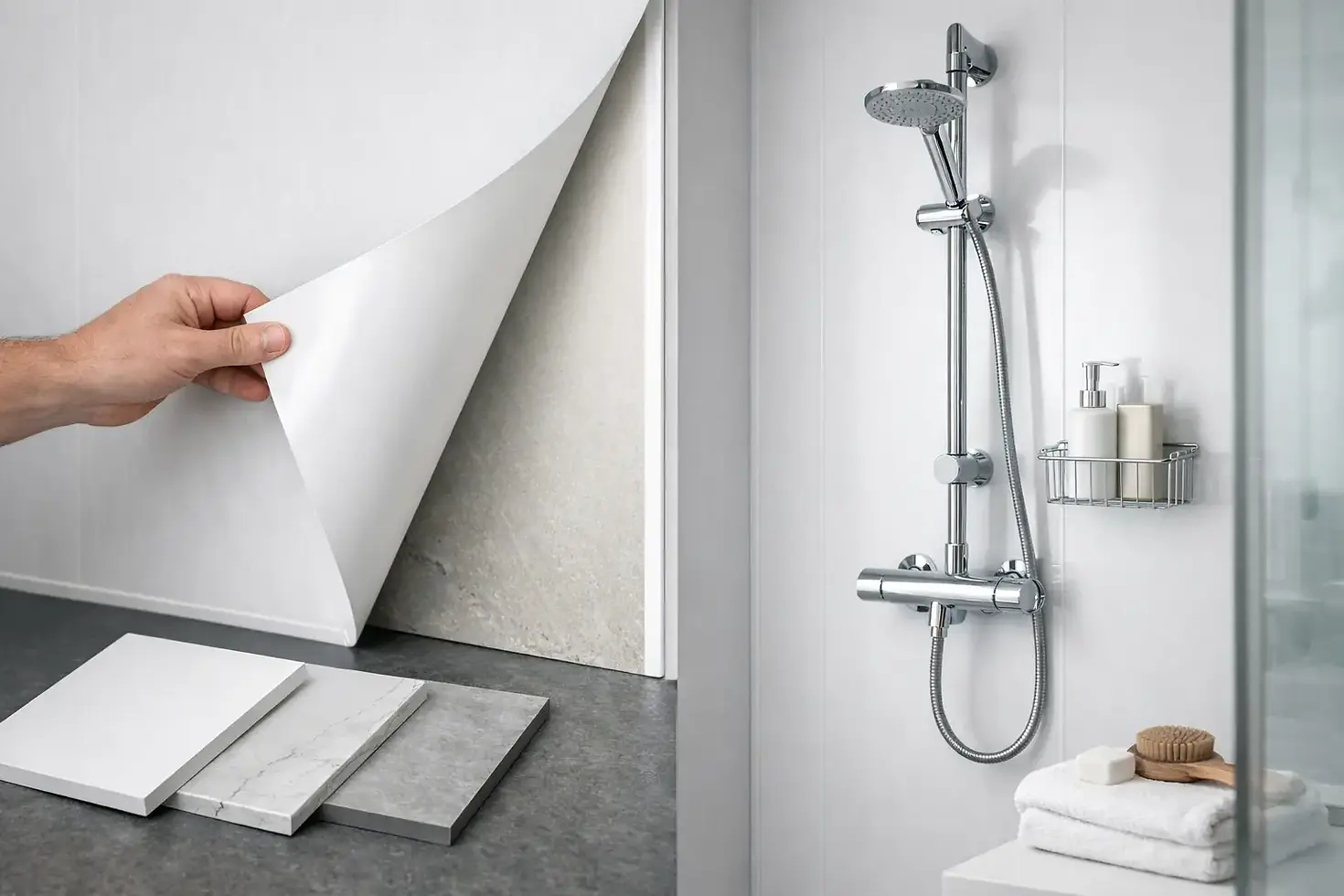
Guide to PVC Shower Wall Panels
- tim
- Jun 8
- 6 min read
A shower wall that still looks clean after months of daily use usually comes down to one thing - the surface you chose at the start. Tiles can look smart, but grout lines are where maintenance begins. This guide to PVC shower wall panels is for anyone who wants a faster-fitting, easier-clean alternative that stands up well in busy bathrooms.
PVC shower wall panels are designed to create a waterproof, wipe-clean surface with far less upkeep than traditional tiling. For homeowners, that means less scrubbing and fewer issues with discolouration or mould. For installers and trade buyers, it means a quicker route to a finished wall, with fewer drying times and a cleaner handover.
Why PVC shower wall panels make sense
The main appeal is practical. PVC panels give you a grout-free finish, which immediately removes one of the biggest weak points in a shower area. Grout absorbs moisture over time, holds dirt, and can become a breeding ground for staining and mould. A properly installed PVC panel system creates a sealed surface that is far easier to keep hygienic.
That matters in any bathroom, but especially in family homes, rental properties, hotels, care settings and changing areas where cleaning needs to be quick and consistent. A non-porous surface helps reduce ongoing maintenance, and that saves time long after the installation is complete.
There is also the installation advantage. Panels are generally quicker to fit than tiles because you are covering larger areas in fewer pieces. You are not dealing with individual tile spacing, grout application and the delays that come with drying and finishing. That can make a real difference on projects where turnaround matters.
Appearance is another reason buyers choose them. PVC shower wall panels are no longer limited to plain, purely functional finishes. White remains a dependable option for a clean, bright look, but there are also gloss and coloured finishes that suit more design-led bathrooms. If you want the room to feel sharp and easy to maintain, panels give you that without sacrificing practicality.
A guide to PVC shower wall panels for different bathrooms
Not every bathroom has the same demands, so the right panel choice depends on where it is being used.
In a domestic en-suite or family bathroom, the focus is often on keeping the room bright, easy to clean and resistant to everyday splashes, steam and soap residue. A smooth white or light-coloured panel works well here because it reflects light and keeps the space looking fresh.
In rental properties and high-use washrooms, durability tends to matter just as much as appearance. Landlords and facilities teams usually want a finish that can be cleaned quickly, resists staining and keeps maintenance calls to a minimum. PVC is a strong fit because it is waterproof, low maintenance and less vulnerable to the long-term grout issues often seen with tiled walls.
For commercial settings, compliance and performance may be the deciding factors. In these environments, buyers often need hygienic wall surfaces that are easy to sanitise and suitable for regular cleaning. Panels with strong hygiene credentials, fire performance and stain resistance are often the safer choice.
What to look for before you buy
Not all wall panels are made to the same standard, so it is worth checking the specification rather than buying on appearance alone.
Water resistance is non-negotiable in a shower area. The panel itself needs to be fully suitable for wet environments, but the full system matters too. Trims, adhesive and sealant all play a part in keeping the installation watertight. Buying panels without the correct matching components can create avoidable problems later.
Surface finish matters more than people think. A smooth, easy-clean surface will make ongoing maintenance simpler and help the shower stay looking cleaner between deep cleans. If the product is resistant to stains, mould and bacteria, that adds a further layer of practical value.
It is also sensible to consider durability features such as UV stability and fire rating, particularly if you are specifying materials across several rooms or for commercial work. These details are not just technical extras. They affect how well the panels perform over time and whether they are suitable for more demanding sites.
Stock availability is another factor that often gets overlooked until it causes delays. If you are working to a programme, being able to order panels, trims, adhesives and accessories from one specialist supplier can save time and reduce the risk of mismatched products arriving from different places.
How PVC shower wall panels are installed
One reason these panels are popular with both tradespeople and capable DIY buyers is that installation is relatively straightforward. The exact fitting method depends on the panel type and the wall condition, but the principle is simple - prepare the surface, cut panels accurately, bond them securely and seal joints properly.
The wall behind the panels should be sound, dry and as even as possible. Panels can often be fixed over existing surfaces, including some tiles, provided the background is stable and suitable for bonding. That can save time on strip-out and make refurbishment work less disruptive.
Accurate measuring is essential, especially around shower valves, pipework, trays and corners. Clean cuts and correctly fitted trims make the difference between a job that looks average and one that looks properly finished. In wet areas, sealing should never be treated as an afterthought. The waterproof performance of the installation depends on the joints and edges being completed correctly.
For larger projects, speed is one of the biggest advantages. Covering a shower wall with large PVC sheets or panels is typically much faster than setting tiles one by one. That can help installers reduce labour time and get rooms back into use sooner.
PVC panels vs tiles - the real trade-offs
Tiles still have their place. Some buyers prefer the look of ceramic or porcelain, and in certain design schemes they may be the first choice. But from a practical point of view, tiles come with more maintenance and more installation stages.
PVC shower wall panels are usually easier to clean, quicker to install and less likely to develop the kind of grout-related issues that make shower areas look tired. They are particularly useful where hygiene, speed and low upkeep matter most.
The trade-off is mostly about finish preference and project type. If someone wants a heavily textured, traditional tiled look, panels may not match that exact appearance. But if the priority is a clean, modern, waterproof wall that stays presentable with minimal effort, PVC often comes out ahead.
Cost can also depend on the full job rather than the material alone. Tiles may look competitive at first, but once adhesive, grout, trims, labour and maintenance are considered, panels can offer better value over time.
Maintenance and long-term performance
This is where PVC performs strongly. Once installed, shower wall panels need very little day-to-day effort. A regular wipe with appropriate cleaning products is usually enough to keep the surface in good condition. Because there are no grout lines to trap dirt, cleaning is quicker and the finish stays neater with less work.
That low-maintenance benefit matters in homes, but it is even more valuable in commercial settings where cleaning schedules are tight and surfaces need to be kept presentable. A panel that resists staining, moisture and mould is not just easier to live with - it is easier to manage.
Long-term performance still depends on choosing good-quality products and fitting them properly. A premium-grade PVC panel system with the right trims, adhesives and sealants will always give a better result than mixing components and hoping for the best.
Choosing the right finish for your project
The best finish usually comes down to the type of room and the impression you want to create. White remains a popular option because it delivers a bright, clinical-clean appearance that works in almost any shower space. Gloss finishes can make smaller bathrooms feel lighter and more open, while softer shades can help a room feel less stark without losing the practical benefits.
For trade and commercial buyers, it often makes sense to choose finishes that are easy to standardise across multiple rooms. That simplifies ordering, fitting and maintenance. For homeowners, visual preference plays a bigger role, but the same practical question still applies - will this surface be easy to keep looking good in six months' time?
That is why many buyers choose a complete system from a specialist supplier such as Hygienic Sheets. It takes the guesswork out of compatibility and makes it easier to source panels, trims and fitting products together, with dependable stock and fast nationwide delivery.
If you want a shower wall that works hard, cleans easily and looks smart without the usual grout-related upkeep, PVC panels are a very practical choice. The best results come from keeping the decision simple - choose the right specification, buy the full system, and fit it properly from the start.


Comments