

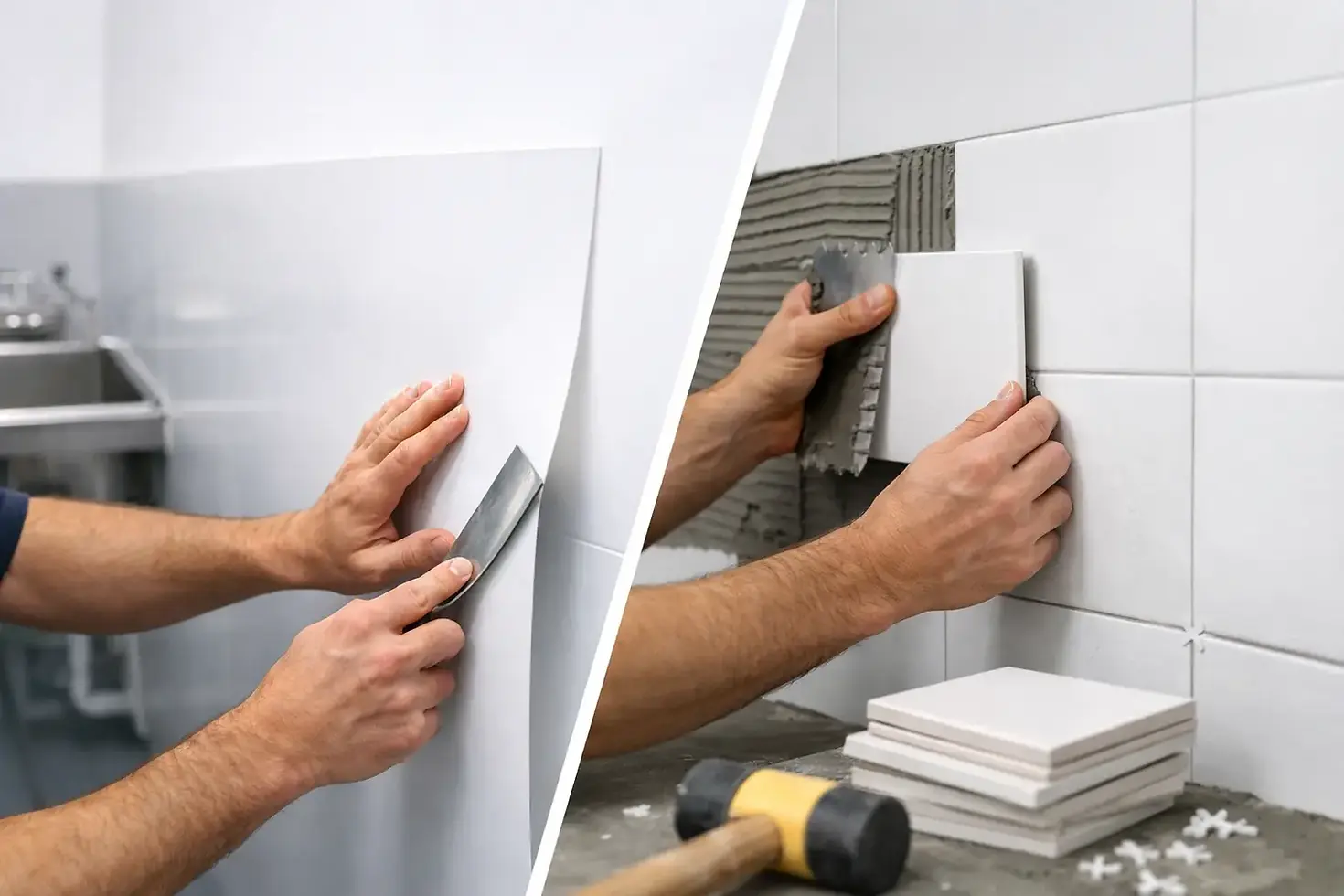
Cladding Sheets Versus Wall Tiles Compared
- tim
- 9 hours ago
- 5 min read
A tiled wall can look smart on day one, but the real test begins when grout starts holding moisture, discolouring or becoming harder to clean. When comparing cladding sheets versus wall tiles, the best choice depends on the room, the required hygiene standard, the condition of the existing walls and how quickly the work needs to be completed. For wet, busy and hygiene-sensitive interiors, PVC wall cladding often provides a more practical long-term finish.
Cladding sheets versus wall tiles: the practical differences
Wall tiles are a familiar choice for bathrooms, kitchens and washrooms. They are available in a huge choice of shapes, colours and finishes, and a well-installed tiled surface can be durable. However, tiles are installed one by one, require adhesive and grout, and normally need a sound, level background before fitting begins.
PVC cladding sheets create a smooth, near-seamless wall surface with far fewer joints. Full-sized sheets cover a large area quickly and can often be fitted over existing tiles or prepared wall surfaces, reducing strip-out time and disruption. Matching trims, sealants and adhesives form a complete wall system, giving installers a neat finish around corners, edges, windows and pipework.
This difference matters most where walls are cleaned regularly. A grout line is a recessed joint that can trap dirt, soap residue and moisture. A smooth PVC surface is non-porous, waterproof and easy to wipe down, making it a strong option for commercial kitchens, food preparation areas, care settings, washrooms, changing areas and domestic bathrooms.
Hygiene and cleaning performance
For facilities managers and business owners, cleaning time is not a minor detail. It affects staffing, presentation and the ability to maintain expected hygiene standards. Grout can stain over time and may need periodic deep cleaning, sealing or replacement. In damp rooms, damaged grout and poorly maintained sealant can also create conditions where mould develops.
Hygienic wall cladding removes most of those cleaning challenges. Premium PVC sheets are resistant to stains, mould and bacteria, with no grout joints across the main wall area. A routine clean with suitable non-abrasive products is generally all that is needed to keep the surface looking presentable.
This does not mean tiles are unhygienic by default. Properly installed and maintained tiles can perform well, particularly in low-use domestic rooms. The difference is the ongoing workload. Where a wall is exposed to splashes, steam, grease or frequent cleaning, a grout-free surface gives cleaners and occupiers fewer places for contamination to build up.
Where hygiene is the deciding factor
Cladding sheets are particularly well suited to areas where cleanliness needs to be visible as well as achievable. Commercial kitchens, cafés, butchers, clinics, salons, school washrooms and utility spaces all benefit from a smooth, washable wall finish. Food-contact-approved PVC options can also support appropriate specifications in food-related environments.
For a bathroom renovation at home, the same benefit is simpler: less scrubbing around grout lines and fewer concerns about staining in the shower area. White sheets create a clean, bright look, while pastel and gloss finishes offer more scope to coordinate with sanitaryware, flooring and fittings.
Installation speed and disruption
Installation is often where the comparison becomes clear. Tiling is a skilled process that can involve removing old finishes, repairing the substrate, setting out tile lines, applying adhesive, cutting tiles, grouting and allowing materials to cure. It is worthwhile when the design calls for it, but it can extend a refurbishment programme.
Cladding sheets are designed to reduce these stages. Large panels cover more wall space in one go, and they can be cut around sockets, fittings and services with the correct tools. In suitable conditions, they may be fitted directly onto sound existing tiles, plasterboard, plywood or other prepared backgrounds. This can save considerable time during washroom, kitchen and changing-room upgrades.
Fast fitting does not mean corners should be cut. The wall must still be dry, stable and suitably flat. Correct adhesive coverage, carefully sealed joints and the right trims are essential, especially in shower areas and rooms exposed to regular moisture. A quality panel needs a quality installation if it is to remain watertight and easy to clean.
For contractors and shopfitters working to a handover date, a complete sheet, trim, adhesive and sealant package also makes ordering more straightforward. Having compatible products available together avoids delays caused by sourcing small but essential finishing components separately.
Appearance, design and finish
Tiles remain a popular design feature for a reason. They offer detailed patterns, textured finishes and small-format layouts that can suit heritage properties, feature walls and high-end decorative schemes. If a customer specifically wants a herringbone pattern, handmade appearance or natural stone effect, tiles may be the right visual choice.
Wall cladding has a different design strength. It delivers a clean, continuous appearance that makes smaller rooms feel brighter and less busy. Gloss finishes reflect light well in bathrooms and washrooms, while white and subtle pastel options provide a professional finish for commercial interiors without compromising practicality.
The decision is not simply decorative versus functional. Modern PVC sheets can look crisp and considered, especially when matching internal corners, external corners and edge trims are used. They are often the better choice when the desired look is clean, modern and easy to maintain rather than heavily patterned.
Durability, moisture and daily use
Both systems can last well when specified and installed correctly, but they cope with day-to-day use differently. A tile surface is hard and can be highly durable, although individual tiles may crack if the background moves or receives a sharp impact. Repairing one damaged tile can be awkward if matching stock is no longer available.
PVC cladding sheets are waterproof and built for demanding internal environments. They protect the wall behind from splashes and moisture, and their smooth surface will not absorb water in the way grout can. UV-stable options help maintain their appearance under normal indoor light exposure, while Class 1 fire-rated sheets can support projects where fire performance is part of the specification.
No wall finish is suitable for every condition. Areas exposed to direct, intense heat or unusual chemical use should be assessed carefully before materials are selected. The right solution depends on the exact location, the substrate and the requirements of the building. For standard bathrooms, kitchens, utility rooms and hygiene-sensitive commercial spaces, PVC cladding is a dependable all-round option.
Cost: consider the whole job, not just the surface
The price per square metre is only part of the calculation. Tiles can appear economical until labour, preparation, grout, trims, waste and longer installation time are added. If old tiles need removing, the cost and mess can increase again.
Cladding sheets may have a higher upfront material cost than basic tiles in some cases, but they can reduce labour time, substrate preparation and future cleaning effort. This is particularly relevant for larger projects, where each extra day on site has a cost. For property operators, the ability to refurbish a washroom or food area quickly can also reduce downtime.
Maintenance should be included in the value comparison. Regrouting, repairing cracked tiles and managing mould around joints all add up over the life of a wall. A smooth PVC surface is designed to keep maintenance simple, which can make it the more cost-effective choice over time.
Which wall finish should you choose?
Choose wall tiles when decorative detail, texture or a traditional tiled appearance is the priority, and there is time for a full installation. They remain a good fit for feature walls and lower-demand domestic spaces where routine grout maintenance is acceptable.
Choose PVC hygienic cladding when speed, cleanability and moisture resistance matter most. It is especially effective for commercial kitchens, washrooms, changing facilities, healthcare-related spaces, bathrooms and utility rooms. At Hygienic Sheets, matching sheets, trims, adhesives and sealants make it easier to specify the complete installation rather than treating the panel as a standalone purchase.
Before ordering, measure each wall carefully, allow for openings and plan the trims needed for every edge, internal corner and external corner. A well-planned cladding system can turn an awkward, hard-to-clean wall into a bright, durable surface that is ready for everyday use.


Comments