

Do Hygienic Wall Sheets Need Backing Before Fitting?
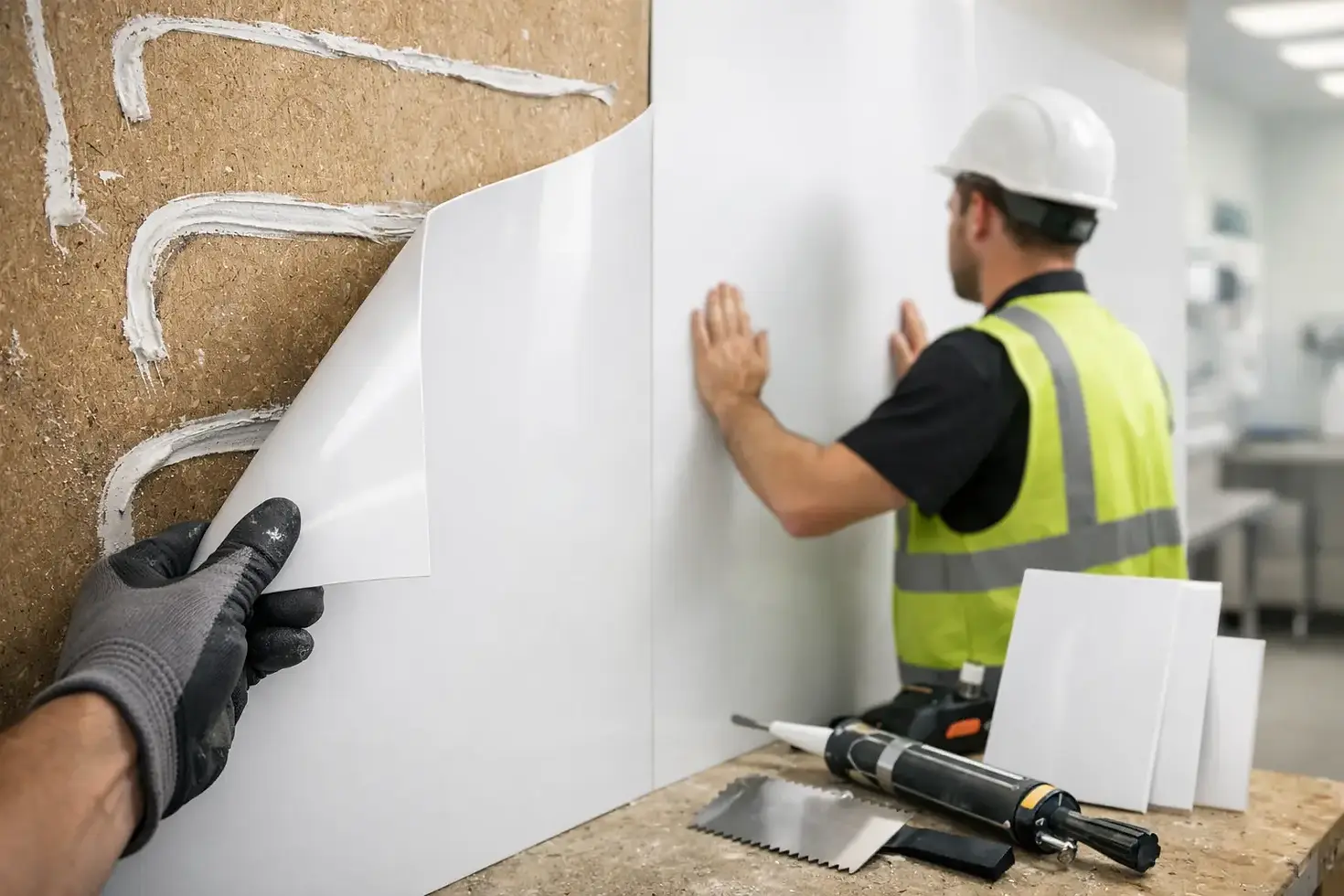
A wall that looks acceptable from a distance can still cause problems once cladding is fitted. So, do hygienic wall sheets need backing? Not always. PVC hygienic wall sheets can be bonded directly to an existing wall when it is sound, dry, clean and sufficiently flat. Where the surface is damaged, uneven, damp or unstable, a suitable backing is often the right first step for a long-lasting, professional finish.
The key is not simply whether there is a wall behind the sheet. It is whether that wall provides a reliable surface for the adhesive and support for the cladding over its full area. Getting this decision right helps prevent hollow spots, visible imperfections, failed bonds and moisture-related issues later on.
What does backing mean for hygienic wall sheets?
In wall-cladding projects, “backing” can mean different things. It may refer to the existing plastered wall, plasterboard, plywood, cement-based board or another sheet material installed before the PVC panels. It is not usually a separate layer that every hygienic wall sheet must have.
The backing surface must be capable of carrying the panel and adhesive without movement. Hygienic sheets are designed to create a smooth, grout-free and easy-clean wall finish, but they are a finishing system rather than a repair for poor substrates. They will follow serious dips, bulges and defects in the wall behind them.
For a clean installation, the ideal backing is flat, dry, firm and free from anything that could interfere with adhesion. That includes loose paint, flaking plaster, wallpaper, dust, grease, silicone residue and signs of active damp.
When hygienic wall sheets do not need extra backing
A separate backer board is normally unnecessary when fitting to a properly prepared wall. A sound plastered wall, plasterboard partition or smooth rendered surface can be suitable, provided it meets the basic preparation requirements.
The wall should be dry all the way through, not just dry to the touch. In a commercial kitchen, washroom, utility area or food-preparation space, trace the cause of any staining or moisture before fitting cladding. Covering an active leak or damp patch traps the problem behind the sheet and can affect both the adhesive bond and the condition of the building fabric.
Minor surface marks are usually not a concern. Small paint imperfections and fine hairline cracks can often be dealt with during preparation, especially where the wall remains firm and level. Use a suitable filler where needed, allow it to cure fully, then sand high spots and remove all dust before applying adhesive.
Existing ceramic tiles can also provide a suitable base in some projects. They need to be securely fixed, clean, degreased and free from loose grout or cracked sections. Deep grout lines and heavily textured tiles may telegraph through the cladding, so these are best levelled first. A smooth tiled surface may require an adhesive chosen specifically for non-porous backgrounds.
Do hygienic wall sheets need backing on poor walls?
Yes, additional backing is often the most reliable option where the existing wall is not fit for direct bonding. This is particularly relevant on older walls, heavily repaired surfaces and areas where previous finishes have been removed.
A new backing board creates a consistent substrate and can save time compared with repeatedly filling, sanding and repairing an uneven wall. It also gives installers a more predictable surface for adhesive application, helping sheets sit flat and joints close neatly.
Consider fitting backing where the wall has any of the following issues:
Loose, blown or crumbling plaster
Significant hollows, raised areas or uneven blockwork
Old timber laths or unstable wall linings
Severe tile profiles, damaged tiles or stubborn adhesive residue
Studwork that needs a new, level facing surface
Localised damage that cannot be repaired to a smooth, solid finish
The right board depends on the room and wall construction. Moisture-resistant plasterboard, exterior-grade plywood or a suitable cement-based board may be appropriate in certain situations. For wet rooms and high-moisture areas, choose a backing material designed for the conditions and make sure the underlying structure is dry and protected from water ingress.
Do not use backing to hide unresolved damp, rotten timber or failing masonry. These issues need proper repair first. Hygienic PVC cladding is waterproof on the face when correctly installed, but it cannot correct a structural or moisture problem behind the wall.
Flatness matters more than a perfect-looking wall
PVC wall sheets create a crisp, continuous finish, particularly in gloss colours and white panels. That finish can make an uneven substrate more noticeable, not less. A ridge, depression or proud screw head may show through once the sheet is bonded.
Check the wall with a long straightedge before starting. Small variations can often be filled or sanded, but large changes in level are a sign that the wall should be repaired or overboarded. Pay close attention around door frames, service boxes, corners and where sheets will meet trims. These are the areas where poor preparation becomes most visible.
A flat substrate also makes it easier to maintain consistent adhesive contact. If a sheet bridges across a hollow, it may flex when pressed or knocked. In a busy kitchen, corridor or clinical area, that movement can put unnecessary strain on the bond and sealed joints.
Preparing the wall for direct bonding
Good preparation is what turns a high-quality panel into a dependable hygienic wall system. Start by removing old finishes that are not secure. Wallpaper must come off completely, while flaky paint and loose plaster should be taken back to a firm surface.
Next, clean the wall thoroughly. Kitchen walls can carry a film of grease that is not always obvious, and bathroom walls may have soap residue or silicone contamination. Adhesive needs direct contact with a clean substrate, so allow washed surfaces to dry completely before fitting.
Any porous or dusty background may need sealing or priming with a compatible product. This reduces excessive suction and helps the adhesive cure as intended. Very smooth, non-porous surfaces may need a different preparation method, which is why matching the adhesive to the substrate matters as much as choosing the sheet itself.
Dry-fit the panels before applying adhesive. This allows you to check cut-outs, sheet direction, trim positions and joint alignment without pressure. It is also the right time to confirm that the wall is flat enough for the finish you expect.
The adhesive and trims are part of the backing decision
Even a good wall can give a poor result if the wrong adhesive is used. Hygienic wall sheets should be fitted with an adhesive suitable for PVC cladding and the background being covered. Apply it evenly so the sheet is supported across its full face, rather than relying on isolated blobs that can leave unsupported areas.
Matching trims, joint sections and sealant are equally important. Internal and external corners protect sheet edges and create a neat finish. Joining trims help maintain consistent gaps between panels, while a quality sanitary sealant closes vulnerable edges around worktops, floors, windows, shower areas and service penetrations.
In hygiene-sensitive spaces, these details are not cosmetic extras. They help create a smooth, wipe-clean surface with fewer places for dirt and moisture to collect. A correctly sealed cladding system is easier to maintain than tiled walls with grout lines, particularly where frequent cleaning is required.
Backing on stud walls and partitions
Stud walls deserve a closer check because movement is more likely than on solid masonry. A plasterboard-faced partition can be suitable for direct bonding if it is firmly fixed, dry and in good condition. Make sure screws are secure and recessed, joints are smooth, and there are no soft or damaged areas.
Where a partition is lightweight, uneven or likely to receive knocks, installing an appropriate backing board can improve rigidity. This is useful in commercial washrooms, food-service areas, corridors and utility spaces where walls need to stand up to regular use.
If fixtures such as shelving, dispensers, hand dryers or heavy equipment will be mounted after cladding, plan their support before the sheets are fitted. PVC sheets should not be expected to carry heavy loads on their own. Install suitable noggins, pattresses or structural fixings behind the cladding where required.
A practical rule for choosing whether to use backing
Ask one simple question: would you trust this surface to hold a large sheet flat and secure for years? If the answer is yes, direct bonding is usually the quickest and most cost-effective route. If the answer is no, repairing or overboarding the wall before cladding will protect the quality of the finished installation.
For trade buyers, this assessment should happen before materials are ordered and fitting dates are booked. It avoids lost time on site and helps ensure you have the right boards, adhesive, trims and sealant available together. For home renovators, it prevents the frustration of fitting attractive new cladding over a wall that was not ready for it.
At Hygienic Sheets, the focus is on supplying complete PVC wall-cladding systems that are practical to fit and built for demanding interiors. Choosing the right substrate preparation is what allows waterproof, easy-clean panels to perform at their best.
If you are unsure whether to bond directly, inspect the wall honestly rather than taking a shortcut. A sound backing may not be visible once the project is complete, but it is the foundation of a smooth, hygienic finish that stays looking right.


Comments