


Best Shower Wall Materials for Modern Bathrooms
A shower enclosure is the hardest-working surface in most bathrooms. It is exposed to daily water, steam, soap residue and temperature changes, so the finish needs to do more than look good on installation day. The best shower wall materials create a waterproof, easy-clean barrier that stays smart without demanding constant maintenance.
For a rental refresh, family bathroom or commercial washroom, the right choice depends on the level of use, the condition of the existing walls, the available budget and how quickly the room needs to be back in service. Tiles remain familiar, but grout-free alternatives now give homeowners and trade installers faster fitting, lower maintenance and a cleaner finish.
What a shower wall material needs to do
A shower wall is not simply a decorative backing. Water can find its way through poorly sealed joints, cracked grout and porous surfaces, leading to mould, damaged plasterboard and expensive remedial work behind the visible finish.
The most reliable material should be fully waterproof or installed as part of a proven waterproof system. It should also resist stains, tolerate regular cleaning and cope with steam without swelling, peeling or losing its finish. In commercial settings, hygiene matters just as much as appearance. Smooth, non-porous surfaces give dirt and bacteria fewer places to settle, while fewer joints mean less cleaning time.
Installation is another practical consideration. A material may look cost-effective per square metre but become expensive once specialist fitting, preparation and downtime are factored in. This is where wall cladding can offer a clear advantage over more traditional finishes.
Best shower wall materials compared
PVC shower wall cladding
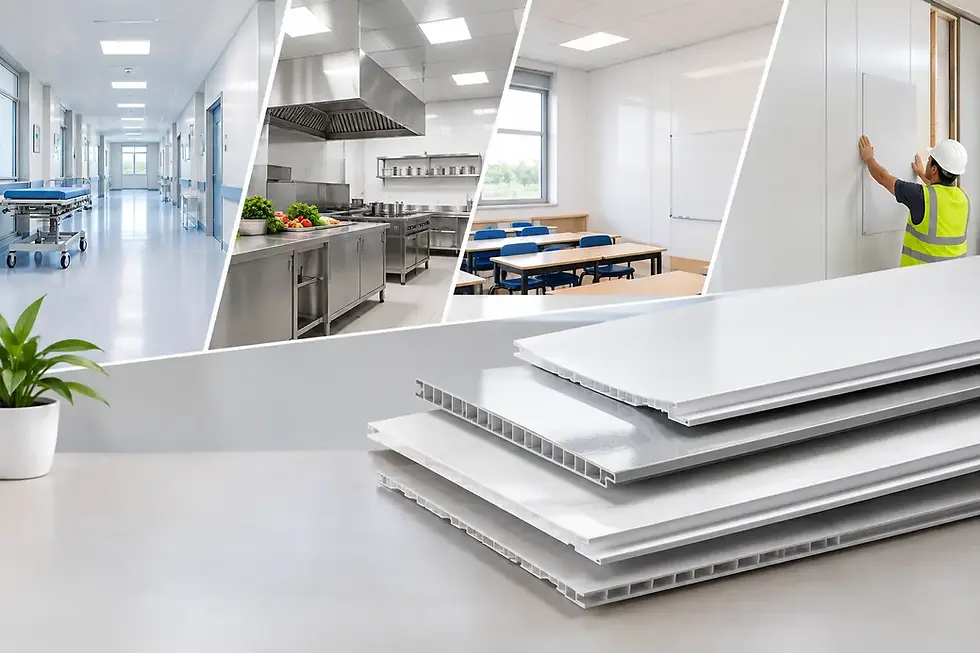
PVC wall cladding is one of the most practical choices for shower walls, bathrooms, wet rooms and utility areas. Premium PVC sheets create a smooth, waterproof surface with no grout lines across the main wall area. They can often be fitted directly over sound tiles, plasterboard, blockwork or other suitable substrates, reducing demolition, mess and installation time.
For households, the appeal is straightforward: wipe the walls clean, rather than scrubbing discoloured grout. For installers and facilities teams, large sheet formats help cover more area quickly and produce a consistent finish. Matching internal corners, external corners, joining trims and sealants complete the system, protecting edges and joints where water exposure is greatest.
PVC cladding is available in white, pastel and gloss finishes, so it can suit a clean clinical look, a bright family bathroom or a more design-led refurbishment. Quality matters here. Look for premium sheets that are waterproof, UV stable, stain resistant and designed for interior hygiene-sensitive spaces. In relevant commercial projects, Class 1 fire-rated and food-contact-approved products can also support wider specification requirements.
The trade-off is that panels need careful measuring and a sound fixing method. Joints, trims and the perimeter seal must be installed properly. A panel system is only as watertight as its finishing details, particularly around shower trays, screens, valves and pipe penetrations.
Ceramic and porcelain tiles
Tiles are a well-established shower wall finish and remain a strong option where a particular pattern, texture or high-end decorative effect is the priority. Porcelain tiles are especially dense and water resistant, while ceramic tiles offer a broad choice of styles and price points.
The weakness is not usually the tile itself. It is the grout. Grout lines need regular cleaning and periodic maintenance, and they can become stained or harbour mould in poorly ventilated bathrooms. Cracked grout or failed sealant can also allow water behind the tiled surface. The more intricate the tile layout, the more joints there are to manage.
Tile installation is slower than fitting large wall sheets and normally requires a flat, prepared surface, adhesive, grout, cutting equipment and curing time. It can be a sensible long-term choice for a feature wall or a bathroom where traditional finishes are expected, but it is not always the fastest route to a hygienic, low-maintenance shower enclosure.
Acrylic shower panels
Acrylic panels provide a glossy, modern appearance and are generally waterproof, lightweight and easy to clean. They are often sold in decorative colours, stone effects and high-shine finishes, making them popular in domestic bathrooms where visual impact is a priority.
They can be quick to install compared with tiles, though product quality and thickness vary. Acrylic may scratch more easily than some other options, and it can require careful handling during transport and fitting. It is also worth checking how the panel will behave around heat sources, as well as the manufacturer’s requirements for adhesives and backing surfaces.
Acrylic is a good middle ground for a sleek domestic shower area. For high-traffic settings, projects that need broad sheet availability or hygiene-led specifications may benefit more from purpose-designed PVC hygienic cladding.
Laminate wall panels
Laminate shower panels often use a decorative surface bonded to a core, with convincing marble, timber and stone-effect designs available. They can deliver a premium look with fewer visible joints than tiles and are usually faster to install.
Their suitability depends heavily on the construction of the panel and the quality of sealing at every cut edge and joint. If moisture reaches a vulnerable core, swelling and failure can follow. This does not make laminate unsuitable, but it means installers must follow the approved installation method precisely and avoid treating it as a fit-and-forget material.
Laminate can be a good choice where a particular decorative finish is central to the brief. In a heavily used shower, prioritise a fully waterproof system and confirm the product is intended for continuous wet-area use.
Natural stone
Natural stone brings character that manufactured materials cannot fully replicate. Slate, marble, travertine and granite can create an impressive bathroom, particularly in high-value residential projects.
However, stone is not the low-maintenance option. Many varieties are porous and require sealing, with some needing ongoing resealing to reduce staining and water absorption. Cleaning products must be chosen carefully because acidic cleaners can damage certain stone surfaces. Installation is also labour-intensive, and the weight of the material may affect substrate and handling requirements.
Stone works best when the budget allows for specialist installation and continuing care. It is rarely the most practical answer for a fast refurbishment, rental property or hygiene-critical room.
How to choose the right material for your shower
Start with the room’s real use rather than its mood board. A lightly used en-suite has different demands from a busy family bathroom, a changing facility or staff washroom. Where several people use the shower each day, smooth, grout-free surfaces can substantially reduce cleaning effort and make routine inspection easier.
Next, assess the existing walls. If old tiles are sound and well bonded, fitting compatible cladding over them can save considerable time and disposal costs. If the wall is damp, unstable or uneven, resolve that issue first. Covering a failing substrate only delays the problem.
Also consider the full installation system. The panels or tiles are only one part of a watertight enclosure. Adhesive, trims, sealant, shower tray detailing and cut-outs around fittings all affect the result. Ordering these items together helps avoid mismatched components and work delays once installation has started.
Finally, be realistic about maintenance. A tiled shower can look excellent, but grout needs attention. Stone needs specialist care. A quality PVC panel system is designed for simple regular cleaning with non-abrasive products, making it especially attractive where time, hygiene and durability matter.
Why PVC cladding suits demanding bathrooms
PVC hygienic wall cladding is particularly effective when the brief is practical: waterproof walls, a clean finish, quick fitting and reduced upkeep. Its large sheets minimise joints, while the non-porous face resists moisture, mould and everyday staining. There is no grout to discolour, crack or scrub.
It also gives buyers flexibility. White cladding creates a bright, professional finish for washrooms and shower areas, while gloss and pastel options can bring more personality to domestic bathrooms. With the correct trims and sealants, the result is tidy, durable and designed to stand up to daily use.
For contractors working to a programme, dependable stock and a complete set of installation products matter as much as the panel itself. Hygienic Sheets supplies wall cladding alongside the practical accessories needed to finish the job properly, helping projects move from measurement to installation without unnecessary sourcing delays.
Before choosing, order samples where possible and view them in the room’s actual lighting. Then plan every edge, joint and fitting penetration before the first panel is cut. That small amount of preparation is what turns a good shower wall material into a shower enclosure that stays clean, watertight and presentable for years.

Comments