

What are cladding trims and profiles: essential guide 2026

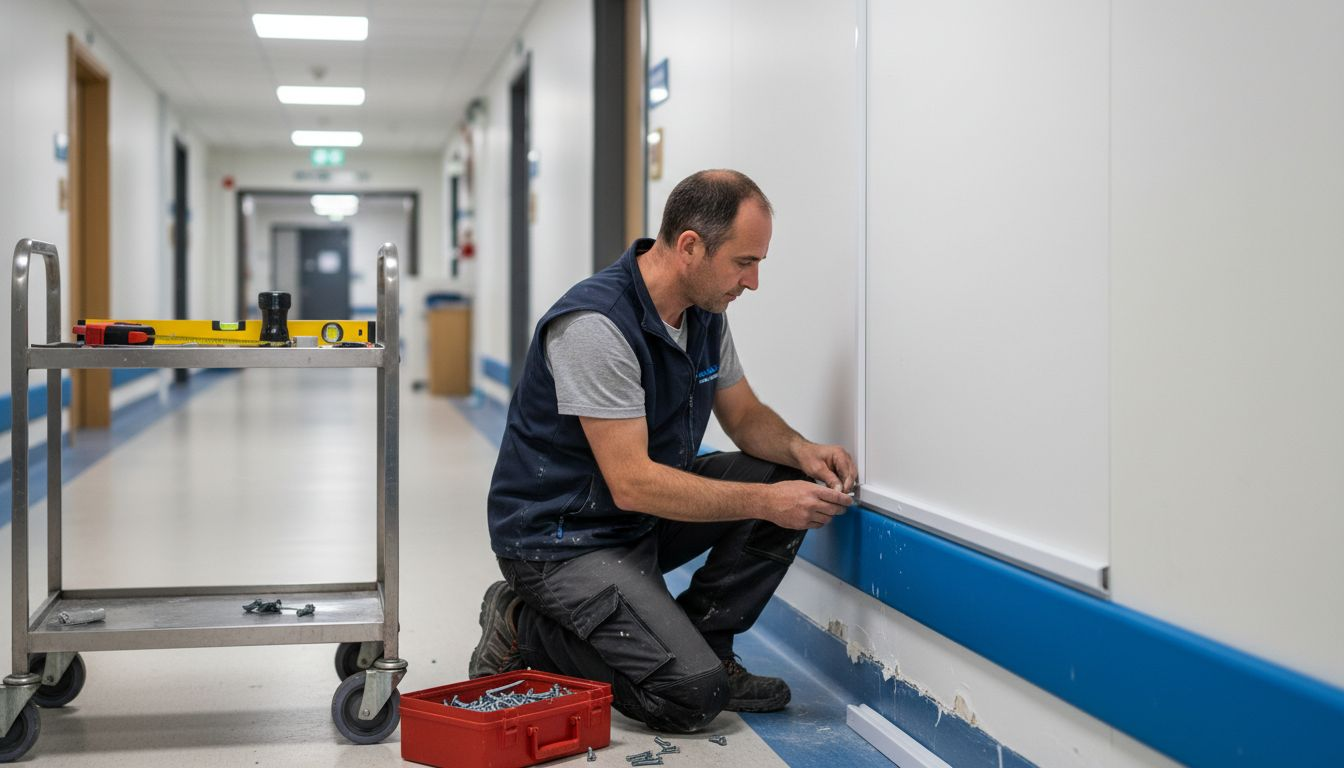
Many assume cladding trims are decorative finishing touches, but this misconception can compromise hygiene and durability in critical environments. Cladding trims and profiles are precision components designed to ensure hygiene and moisture resistance in critical sectors. For construction and facility management professionals overseeing healthcare facilities, commercial kitchens, and food preparation areas, understanding these engineered elements is essential for meeting stringent UK hygiene standards and preventing costly failures.
Table of Contents
Key takeaways
Point | Details |
Core function | Trims seal joints, protect vulnerable edges, and prevent moisture ingress that enables bacterial growth. |
Material selection | PVC offers moisture resistance and chemical tolerance, whilst aluminium provides mechanical strength with proper coating. |
Installation precision | Accurate measurements and MS polymer adhesives prevent gaps that compromise hygiene compliance. |
Application specificity | Different trim types serve distinct purposes from corner sealing to floor-to-wall transitions. |
Long-term benefits | Proper trim use reduces maintenance costs, extends system life, and maintains hygiene standards. |
Introduction to cladding trims and profiles
Cladding trims and profiles are specialised components that form the backbone of hygienic wall cladding systems. Rather than mere decorative elements, they function as edge protectors, joint sealers, and moisture barriers that maintain system integrity in demanding environments. These precision-engineered pieces connect wall panels, seal vulnerable edges, and create smooth transitions between surfaces.
The sectors relying most heavily on these components include healthcare facilities, commercial kitchens, food preparation areas, pharmaceutical manufacturing, and veterinary practices. In these environments, even minor gaps or unsealed joints can harbour bacteria, compromise cleaning protocols, and lead to regulatory failures. Understanding wall cladding hygiene in UK facilities reveals how critical proper trim selection becomes for compliance.
UK hygiene standards provide the regulatory framework for these installations. NHS HTM 08-01 establishes requirements for healthcare environments, whilst HACCP principles govern food preparation spaces. Both demand systems that resist moisture penetration, facilitate thorough cleaning, and eliminate bacterial harborage points. Trims and profiles directly address these requirements by sealing the vulnerable points where wall panels meet floors, ceilings, corners, and other surfaces.
Key trim categories include:
Edge and perimeter trims that seal panel boundaries
Corner profiles for internal and external junctions
Joint trims connecting adjacent panels with watertight seals
Transition pieces bridging different surface types
Starter strips establishing proper installation foundations
These components work together to create impenetrable barriers against moisture, chemicals, and contaminants whilst maintaining surfaces that withstand repeated cleaning with harsh disinfectants.
Functions and purpose of cladding trims and profiles
The primary function of cladding trims centres on edge protection. Exposed panel edges are vulnerable to impact damage, moisture penetration, and material degradation. Trims shield these edges whilst creating flush surfaces that resist bacterial colonisation. This protection becomes critical in environments where trolleys, equipment, and daily operations create constant contact risks.
Properly engineered trims prevent gaps that enable moisture and bacterial invasion, which is key to hygiene compliance. Moisture ingress represents one of the most significant threats to hygienic environments. Water trapped behind cladding panels creates ideal conditions for mould growth and bacterial proliferation. Quality trims incorporate features like neoprene seals and interlocking designs that form watertight barriers.
Material properties directly influence hygiene performance. PVC trims offer inherent moisture resistance, chemical tolerance, and ease of cleaning. Their non-porous surfaces prevent bacterial adhesion and withstand repeated exposure to cleaning chemicals without degrading. Aluminium trims provide superior mechanical strength and fire resistance, though they require protective coatings to resist chemical attack in aggressive cleaning environments.
Functional benefits extend beyond basic protection:
Sealed joint systems eliminate gap spaces where contaminants accumulate
Smooth surface transitions facilitate efficient cleaning protocols
Chemical-resistant materials maintain integrity under harsh disinfectants
Durable construction reduces maintenance frequency and replacement costs
Colour-matched designs maintain aesthetic standards alongside hygiene
These functions combine to maintain system integrity over decades of service. Wall cladding trims essential for hygiene demonstrates how proper trim specification prevents the gradual deterioration that compromises hygiene standards.
Pro Tip: Specify trims with integral antimicrobial additives for enhanced protection in high-risk clinical areas. These additives provide continuous surface defence between cleaning cycles.
Common trim types and their applications
Two-part joint trims represent the gold standard for connecting adjacent wall panels. These systems feature interlocking sections that compress neoprene seals, creating watertight connections that flex with building movement. The design accommodates thermal expansion whilst maintaining seal integrity, making them ideal for areas exposed to temperature variations like commercial kitchens.
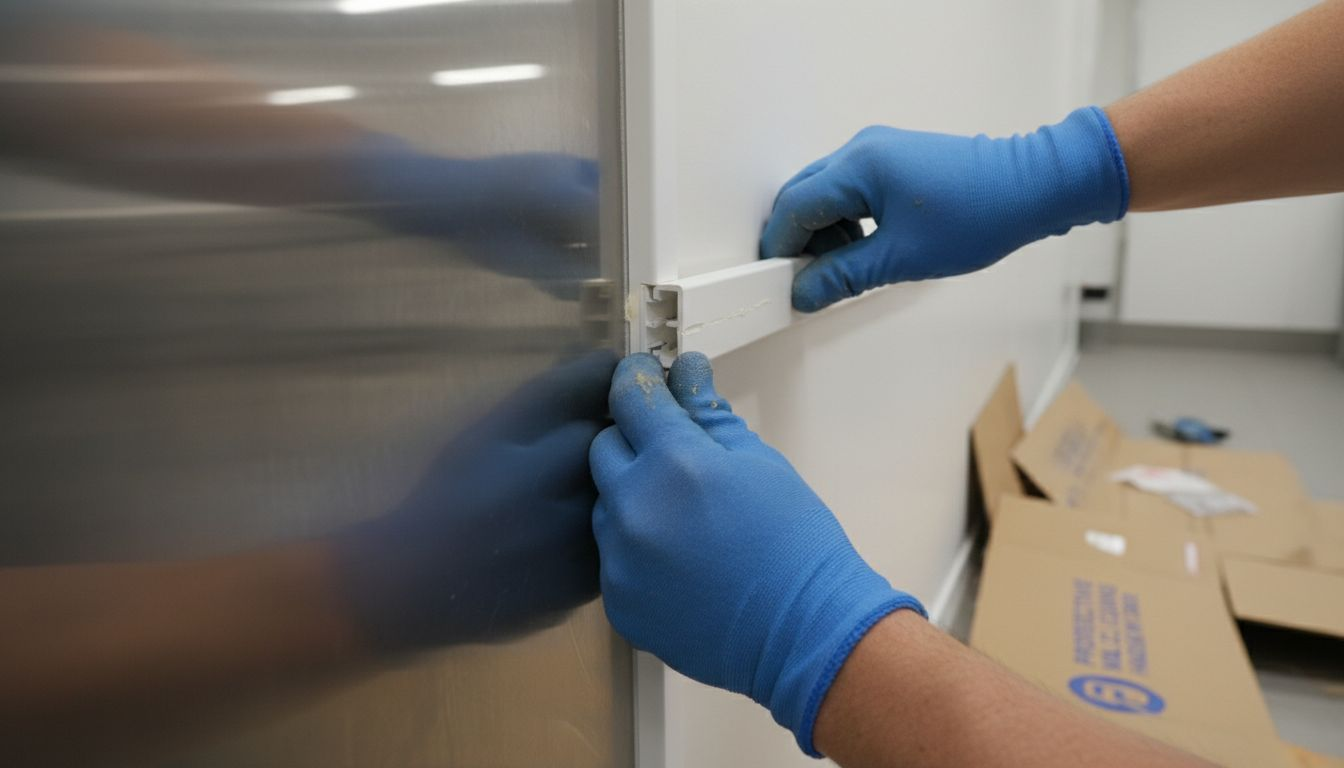
Start and edge trims establish proper panel positioning at perimeters. These profiles secure panel edges against walls, floors, or ceilings whilst concealing cut edges and creating finished appearances. Their grooved designs accept panel tongues securely, preventing gaps that could admit moisture or harbour contaminants.
Internal and external corner profiles solve the challenge of creating hygienic junctions at wall intersections. Internal corners feature radiused profiles that eliminate sharp angles where debris accumulates. External corners provide impact protection whilst maintaining smooth, cleanable surfaces. Both types prevent the gaps that occur when panels meet at angles.
Transition trims bridge the junction between wall cladding and flooring systems. These specialised profiles create seamless connections that prevent moisture from penetrating beneath either surface. In food preparation areas and wet rooms, these transitions form critical barriers against water migration.
Trim Type | Primary Application | Hygiene Benefit |
Two-part joint | Panel connections | Watertight seal with neoprene compression |
Start/edge | Perimeter sealing | Conceals edges, prevents moisture ingress |
Internal corner | Wall junctions | Radiused profile eliminates debris traps |
External corner | Wall junctions | Impact protection with smooth surfaces |
Transition | Floor-to-wall | Prevents water migration between systems |
Selecting appropriate trim types depends on location, exposure conditions, and regulatory requirements. Understanding why hygienic cladding matters helps clarify how trim selection impacts overall system performance in specific environments.
Materials used in cladding trims and profiles
PVC dominates trim material selection for hygienic environments due to its comprehensive performance characteristics. Its lightweight nature simplifies installation whilst maintaining structural integrity. The material’s inherent moisture resistance prevents water absorption that leads to dimensional instability or mould growth. Chemical resistance allows PVC trims to withstand repeated exposure to chlorine-based disinfectants, quaternary ammonium compounds, and other aggressive cleaning agents without surface degradation.
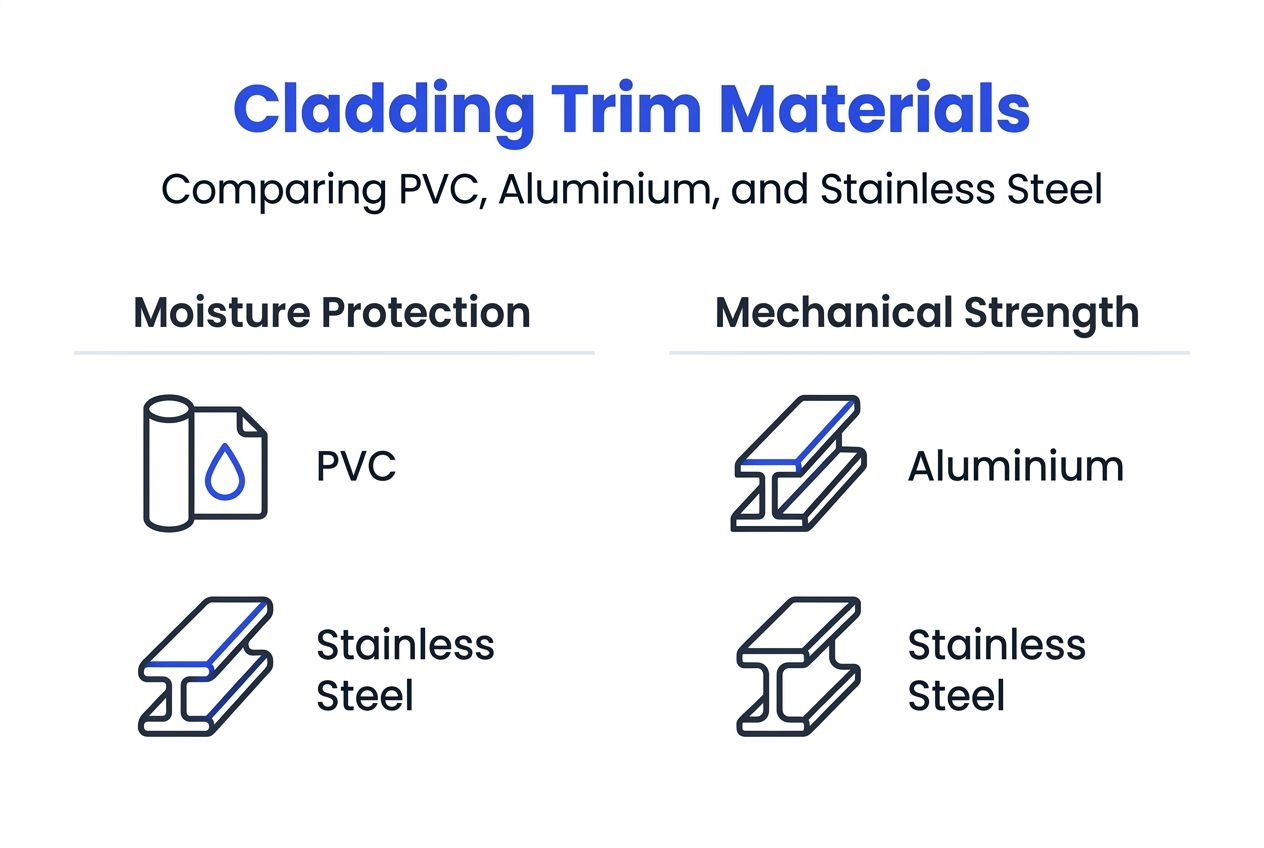
Aluminium trims offer advantages where mechanical strength takes priority. Their rigidity provides superior impact resistance in high-traffic areas or locations where equipment contact occurs frequently. Fire resistance makes aluminium suitable for environments with stringent fire safety requirements. However, uncoated aluminium risks corrosion when exposed to acidic or alkaline cleaning chemicals, necessitating protective powder coating or anodising treatments.
PVC trims provide moisture resistance and ease of cleaning; aluminium trims offer higher mechanical strength but require coating to resist chemical attack. This material choice directly impacts long-term performance and maintenance requirements.
Selection criteria should evaluate:
Chemical exposure frequency and type of cleaning agents used
Mechanical stress from equipment, trolleys, or daily operations
Fire safety requirements and building regulations
Installation complexity and labour availability
Lifecycle costs including replacement frequency
Material | Moisture Resistance | Chemical Tolerance | Mechanical Strength | Fire Rating | Best Application |
PVC | Excellent | High | Moderate | Standard | General hygiene areas, wet rooms |
Aluminium | Good (coated) | Moderate | Excellent | High | High-impact zones, fire-sensitive areas |
PVC ceiling cladding hygiene principles apply equally to trim selection, emphasising moisture barriers and cleaning compatibility. Further guidance on hygienic cladding trims and joints provides detailed material specifications.
Pro Tip: Request material certifications confirming chemical resistance to specific cleaning agents you’ll use. Generic claims don’t guarantee compatibility with your facility’s protocols.
Installation best practices for hygiene compliance
Proper installation determines whether trims achieve their hygiene and sealing functions. The process demands precision measurement, appropriate adhesives, and attention to detail that prevents gaps forming over time.
Measure accurately before cutting, accounting for thermal expansion gaps specified by manufacturers
Clean mounting surfaces thoroughly, removing dust, oils, and contaminants that compromise adhesion
Apply MS polymer or polyurethane adhesives in continuous beads without gaps
Press trims firmly into position, ensuring complete contact across entire lengths
Verify seal integrity immediately, checking for voids or lifting
Allow full curing time before exposing installations to moisture or cleaning
Correct installation with precise measurements and MS polymer adhesives is essential to avoid gaps that compromise hygiene. MS polymer adhesives offer superior flexibility and chemical resistance compared to traditional contact adhesives. Their elastomeric properties accommodate building movement without losing bond strength. Curing times typically range from 24 to 48 hours depending on temperature and humidity conditions.
Colour matching maintains both aesthetics and compliance. Mismatched trims create visual discontinuities that draw attention to joints rather than presenting unified surfaces. Most manufacturers offer trim colours coordinated with panel ranges, simplifying specification. Colour options for hygienic wall cladding extend to trim selections for cohesive installations.
Common installation mistakes include:
Inadequate surface preparation leaving contaminants that prevent proper bonding
Insufficient adhesive application creating void spaces
Forcing trims into position rather than ensuring proper fit
Premature exposure to moisture before adhesives fully cure
Neglecting to verify measurements before cutting
These errors create hygiene vulnerabilities that may not become apparent until moisture penetration or bacterial growth occurs. Hygienic cladding installation guides and resources on how to install hygienic wall cladding provide detailed procedures preventing these failures.
Pro Tip: Double-check all measurements before cutting and verify seal compression by running your finger along joints. Any gaps you can feel will admit moisture and compromise hygiene.
Common misconceptions about cladding trims
Many believe trims are interchangeable or decorative only, but they have precise hygienic sealing and protective functions. This misconception leads to inappropriate selections that fail to meet environmental demands. Each trim type serves specific engineering purposes with features tailored to particular applications.
The assumption that all PVC trims perform identically ignores significant quality variations. Manufacturing standards, material purity, and design precision differ substantially between suppliers. Budget trims may lack the dimensional accuracy needed for proper sealing or use formulations that degrade under chemical exposure. Specifying trims requires verification of performance characteristics, not just material type.
Another common error involves treating installation as secondary to panel fitting. Poor trim installation undermines entire cladding systems regardless of panel quality. Gaps measuring mere millimetres provide sufficient space for moisture penetration and bacterial colonisation. The notion that these small imperfections don’t matter contradicts hygiene principles and regulatory requirements.
Material suitability misconceptions create problems in specific environments:
Assuming aluminium always outperforms PVC ignores chemical resistance requirements
Believing PVC can’t handle high-impact applications overlooks reinforced profiles
Thinking any adhesive works equally well fails to account for chemical exposure
Expecting trims to compensate for poor panel installation creates system failures
The belief that welded joints always surpass trim systems oversimplifies the decision. Whilst welded finishes eliminate trim visibility, they require specialised equipment and skilled labour. Trim systems offer maintenance advantages, allowing section replacement without extensive rework. Understanding why hygienic cladding matters clarifies how both approaches serve different project needs.
These misconceptions stem from treating hygienic cladding as standard construction rather than specialised systems requiring informed specification. The consequences range from failed inspections to costly remediation work replacing inadequate installations.
Comparison of welded vs trim finishes
Welded joint finishes create fully sealed, monolithic surfaces by thermally fusing adjacent panels. The process eliminates visible joints and potential gaps, producing the highest hygiene standard available. Hot air welding equipment melts PVC material, allowing panels to bond at molecular level. When executed properly, welded joints match parent material strength whilst maintaining complete impermeability.
Trim systems offer practical advantages balancing hygiene with installation efficiency. Pre-manufactured trims install faster than welding, reducing labour costs and project timelines. They accommodate building movement through flexible seal designs rather than rigid fusion. Maintenance becomes simpler since damaged sections can be replaced without specialised equipment or extensive surface preparation.
Cost considerations extend beyond initial installation. Welding requires investment in equipment, training, and quality control procedures. Trim systems need only standard hand tools and appropriate adhesives. However, welded installations potentially offer longer service lives in extremely demanding environments, offsetting higher upfront costs through reduced maintenance.
Aspect | Welded Joints | Trim Systems |
Hygiene level | Excellent (seamless) | Very good (sealed) |
Installation speed | Slower (skilled labour) | Faster (standard tools) |
Initial cost | Higher | Moderate |
Maintenance | Requires rewelding | Section replacement |
Flexibility | Limited | Accommodates movement |
Appearance | Invisible joints | Visible profiles |
Best for | Operating theatres, cleanrooms | General healthcare, commercial kitchens |
Installation time differences become significant on large projects. Welded systems may require twice the labour hours compared to trim installations. This impacts project schedules and contractor availability, particularly in occupied facilities requiring phased work.
Hygiene performance depends more on installation quality than method choice. Poorly executed welding with incomplete fusion creates worse outcomes than properly installed trims. Conversely, trims installed with gaps or inadequate adhesive fail to achieve their sealing potential. Both approaches demand rigorous quality control and skilled execution.
The decision typically reflects specific project requirements. Operating theatres, pharmaceutical manufacturing, and cleanrooms often mandate welded finishes for absolute impermeability. Commercial kitchens, food preparation areas, and general healthcare spaces achieve adequate hygiene with quality trim systems whilst benefiting from faster installation and easier maintenance.
Practical benefits and project applications
Proper trim use reduces bacterial growth, lowers maintenance costs and extends cladding system life. Evidence from healthcare facilities demonstrates measurable improvements in hygiene metrics following trim upgrades. NHS trusts report reduced infection rates in refurbished areas where legacy installations with inadequate sealing were replaced with engineered trim systems.
Commercial kitchen operators document lower cleaning labour requirements after installing proper transition trims at floor-to-wall junctions. Previously, moisture trapped beneath inadequate seals required daily attention to prevent mould growth. Sealed systems eliminate this maintenance burden whilst improving food safety audit outcomes. One major UK catering contractor reported 40% reduction in deep cleaning frequency across facilities upgraded with comprehensive trim systems.
Maintenance cost reductions stem from multiple factors:
Sealed edges prevent water damage requiring panel replacement
Chemical-resistant materials maintain appearance without frequent renewal
Impact-protected corners avoid damage from daily operations
Proper sealing prevents mould remediation expenses
Durable installations extend replacement cycles from years to decades
Food preparation facilities benefit particularly from transition trims preventing moisture migration beneath cladding. Water trapped in wall cavities creates ideal conditions for pest harbourage and structural damage. Sealed systems eliminate these risks whilst maintaining surfaces that withstand high-pressure washing protocols.
Healthcare applications demonstrate how trim selection impacts compliance outcomes. Facilities using radiused internal corner profiles report easier compliance with NHS HTM 08-01 cleaning requirements. The elimination of sharp angles where debris accumulates allows housekeeping staff to maintain standards more efficiently.
Pharmaceutical manufacturing environments showcase the importance of material selection. Facilities using PVC trims with documented chemical resistance maintain compliance with GMP requirements through thousands of cleaning cycles. Aluminium trims in high-impact zones prevent damage that could compromise cleanroom classifications.
The economic case strengthens when considering lifecycle costs. Initial investment in quality trims with proper installation typically returns within three to five years through reduced maintenance, avoided remediation, and extended system life. This becomes particularly compelling in facilities facing stringent regulatory scrutiny where hygiene failures carry significant financial and reputational risks.
Explore quality hygienic trims and cladding solutions
Achieving the hygiene and durability outcomes detailed throughout this guide requires access to quality components engineered specifically for demanding environments. Hygienic wall cladding systems perform only as well as their weakest element, making trim selection as critical as panel choice.
Our comprehensive range includes precisely manufactured trims and profiles designed to meet UK hygiene standards across healthcare, food preparation, and commercial applications. From two-part joint systems with integral seals to transition profiles creating watertight floor-to-wall barriers, you’ll find components matched to your specific requirements. Adhesive and accessories complement trim systems, providing the MS polymer adhesives and installation materials that ensure proper sealing.
Whether you’re specifying for a single room refurbishment or a complete facility upgrade, our technical team provides guidance on trim selection, material compatibility, and installation requirements. Fast nationwide delivery ensures your project timeline stays on track. Explore our cladding adhesive and accessories to complete your hygienic wall cladding specification with confidence.
Frequently asked questions
What are cladding trims and profiles?
Cladding trims and profiles are precision-engineered components that seal joints, protect edges, and create hygienic transitions in wall cladding systems. They prevent moisture ingress, eliminate bacterial harborage points, and maintain the integrity of hygienic surfaces in healthcare facilities, commercial kitchens, and food preparation areas. These specialised pieces connect wall panels, seal vulnerable edges at perimeters and corners, and bridge transitions between different surface types whilst withstanding harsh cleaning chemicals and daily operational demands.
How do cladding trims improve hygiene in wall cladding systems?
Trims seal gaps and protect edges, preventing moisture ingress and bacterial growth that compromise hygiene standards. They create smooth, continuous surfaces without crevices where contaminants can accumulate, facilitating thorough cleaning protocols. Quality trims incorporate features like neoprene seals in joint systems that form watertight barriers, whilst radiused corner profiles eliminate the sharp angles where debris typically collects.
Which materials are best for cladding trims in hygienic environments?
PVC trims excel in moisture-prone areas and environments requiring chemical resistance, offering non-porous surfaces that withstand repeated disinfectant exposure without degrading. Aluminium trims provide superior mechanical strength and fire resistance for high-impact zones, though they require protective coating to resist chemical attack. Material selection should match specific environmental demands including cleaning protocols, mechanical stress levels, and regulatory fire safety requirements.
What are common installation mistakes to avoid with cladding trims?
Avoid inadequate surface preparation that leaves contaminants preventing proper adhesive bonding, and insufficient adhesive application creating void spaces where moisture can penetrate. Never force trims into position without ensuring proper dimensional fit, and always allow full curing time before exposing installations to moisture or cleaning. Verify measurements twice before cutting, and check seal integrity by feeling along joints for any gaps that could compromise hygiene performance.
Recommended


You are right that even tiny gaps can compromise hygiene. I learned this the hard way when rodents started getting in through poorly sealed cladding joints in a commercial kitchen. We fixed the openings but also needed a long term solution that would not introduce poisons near food. What finally worked was installing Strike System which uses seismic vibrations and ultrasound. No chemicals no traps and zero maintenance for years. Clean walls need clean pest control to match.