

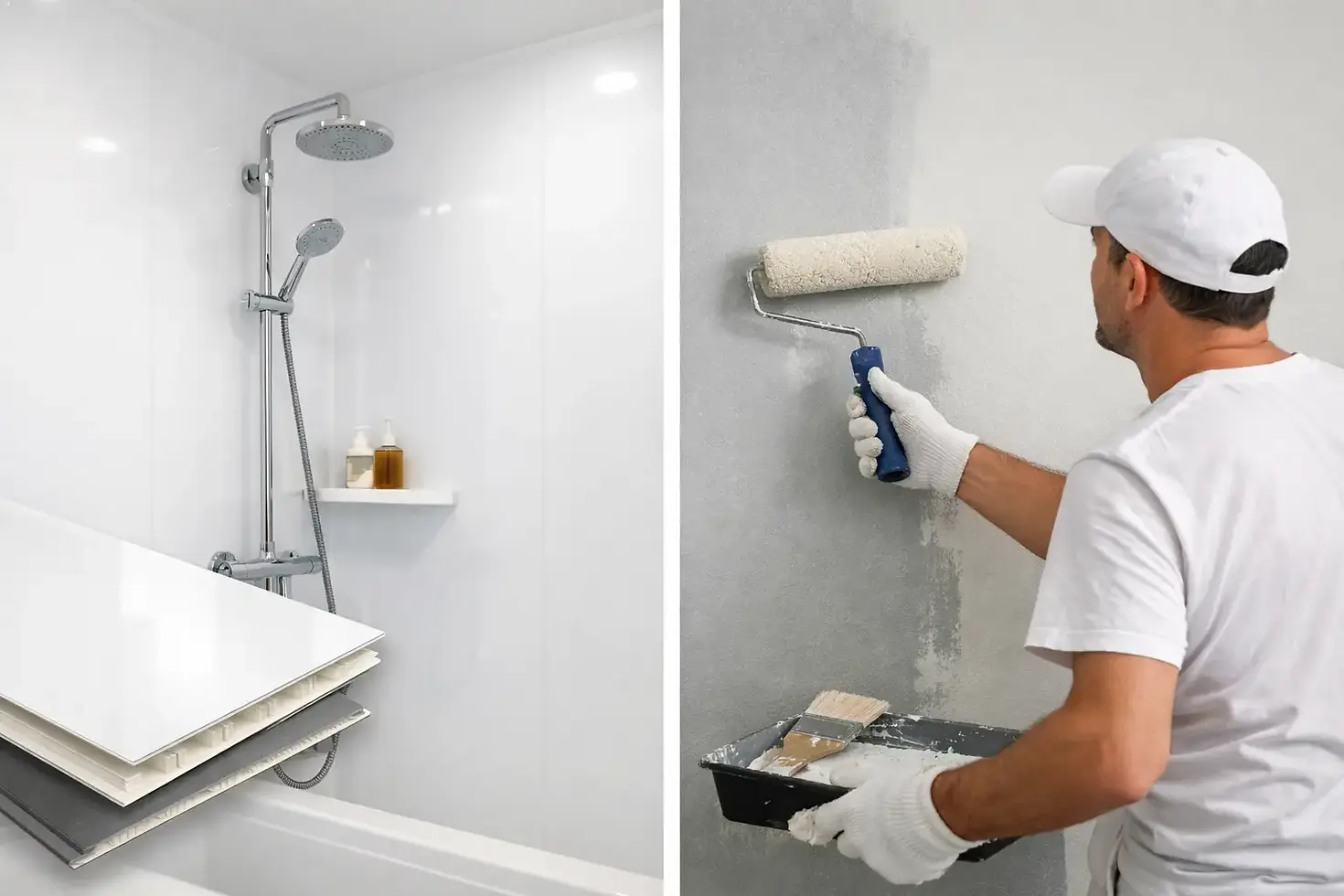
Bathroom Panels vs Paint: Which Wins?
A bathroom that looks fresh on day one can start showing its weak points surprisingly quickly. Peeling around the shower, staining near the basin and mould creeping into corners usually come down to one thing - the wall finish was never right for the job. When comparing bathroom panels vs paint, the real question is not just which looks better at first, but which keeps performing in a wet, hard-working space.
For some bathrooms, paint will do the job well enough. For others, especially busy family bathrooms, rental properties and commercial washrooms, wall panels solve problems that paint cannot. The right choice depends on moisture levels, cleaning demands, budget and how long you want the finish to last without constant touch-ups.
Bathroom panels vs paint: what is the real difference?
Paint is a coating. Even when you choose a bathroom-specific product, you are still relying on a thin surface layer to resist steam, splashes, cleaning products and everyday wear. It can work on walls that are well prepared, properly ventilated and not exposed to heavy water contact.
Bathroom wall panels are a protective surface in their own right. PVC hygienic cladding creates a solid, waterproof barrier over the wall, with sealed joints and trims that help stop moisture getting behind the surface. That changes the conversation completely. Instead of asking whether the finish can cope with the environment, you are fitting a finish designed for wet and hygiene-sensitive spaces from the outset.
That distinction matters in both domestic and commercial settings. A downstairs WC with good ventilation places very different demands on the wall finish than a shower room used several times a day. The more water, condensation and cleaning the room sees, the more panels start to justify themselves.
Where paint still makes sense
Paint remains popular because it is familiar, relatively low cost at the start and easy to change if you want a different look later. If you are redecorating a cloakroom or a bathroom with limited splash exposure, a good quality bathroom paint can be a practical choice.
It is also useful where the substrate is already in excellent condition and the project is purely cosmetic. If the walls are smooth, dry and stable, painting can be quick and tidy. For homeowners who like to refresh colours every few years, paint offers flexibility that fixed wall panels do not.
That said, paint is only as good as the prep behind it. Any weak plaster, existing damp issues or poor ventilation will shorten its life. It may look cost-effective on paper, but repeated repainting, stain blocking and mould treatment soon add to the true cost.
Why panels are often the better long-term option
In wet areas, panels are built for the conditions rather than adapted to them. A quality PVC wall cladding sheet is waterproof, easy to wipe clean and non-porous, which means it does not absorb moisture the way painted plaster can. That makes a noticeable difference around showers, baths, sinks and changing areas.
The hygiene benefit is another major factor. Painted walls can become marked, harder to clean and vulnerable to surface mould over time, especially in corners and around sealant lines. Panels provide a smooth, grout-free finish that is much easier to keep clean. In commercial bathrooms, healthcare settings, food areas and other hygiene-critical interiors, that is not a cosmetic advantage - it is a practical one.
Durability is where panels often pull ahead. They are less likely to chip, peel or stain under regular cleaning, and they hold up well in rooms that need frequent washdowns or stronger standards of cleanliness. For landlords, facilities managers and installers working to a maintenance budget, fewer repairs and less downtime matter just as much as the initial purchase price.
Cost: cheaper now or cheaper over time?
If you compare material cost alone, paint usually wins the first round. A few tins of paint and standard decorating supplies will often cost less upfront than a full wall panelling system with trims, adhesive and sealant.
But upfront cost is only part of the picture. Panels can reduce labour in the right job, particularly where they are installed over suitable existing surfaces and where a quick turnaround matters. There is no drying time between coats, no repeated filling and sanding, and far less risk of having to come back and fix moisture damage later.
Then there is maintenance. Paint tends to need refreshing far sooner in a bathroom than in a dry room. Once peeling starts or mould stains appear, patch repairs rarely blend in neatly. Panels generally ask for little more than routine cleaning. Over several years, that can make them the more cost-effective option, especially in busy or income-generating properties.
Installation and disruption on site
For decorators, paint is straightforward. For installers and refurbishment teams, though, wall panels can be the faster route to a usable bathroom. Much depends on the condition of the walls and the complexity of the room.
Painting sounds simple until the prep begins. Damaged plaster, old flaking coatings, uneven surfaces and damp marks all need attention before the finish goes on. In a bathroom, you also need suitable primers, bathroom-grade paint and enough drying time between coats. That can stretch a small job over several days.
Panels can often be fitted quickly with the right adhesive, trims and sealants, creating a finished surface in less time. For contractors working to programme, that speed is valuable. For homeowners, it means less disruption and a bathroom back in service sooner. A complete system approach also helps avoid the common issue of sourcing panels from one supplier, trims from another and hoping everything works together.
Appearance: is paint more stylish?
This is where buyers often hesitate. Paint has long been seen as the more decorative option because it offers almost unlimited colour choice. If you want a very specific shade or you plan to change the scheme regularly, it has obvious appeal.
But modern bathroom panels are not limited to purely clinical white walls. They are available in a range of finishes, including gloss and softer tones that work well in both domestic bathrooms and commercial washrooms. The look is cleaner, more uniform and more purposeful than many people expect.
It comes down to priorities. If you are designing a feature wall in a lightly used ensuite, paint might give you more freedom. If you want a sharp, durable finish that stays looking clean with minimal effort, panels are usually the stronger choice.
Bathroom panels vs paint in high-moisture areas
The closer you get to direct water exposure, the less convincing paint becomes. Around shower enclosures, bath surrounds and wet room areas, paint is under constant pressure from steam and splashes. Even when it holds up initially, the lifespan is often limited.
Panels are far better suited to these zones because they provide a waterproof facing rather than a decorative skin. When fitted correctly with matching trims and sealants, they create a practical barrier that helps protect the substrate behind. That is a key reason they are so widely used in washrooms, utility spaces, changing rooms and other environments where water is part of daily use.
For anyone fitting out a bathroom that needs to work hard, not just look good for a few months, that extra protection is difficult to ignore.
Which option is right for your project?
If the bathroom is low-use, well ventilated and you want the lowest initial spend, paint may be enough. It can be the right answer for cosmetic refreshes where waterproof performance is not the top priority.
If the room sees frequent moisture, regular cleaning or heavier wear, panels are usually the smarter investment. They suit family bathrooms, rental properties, commercial washrooms and refurbishment projects where reliability matters more than decorating tradition. They also make sense for buyers who want a wall finish that is easy to maintain and quick to source as a complete system.
For many projects, the decision is less about whether paint can work and more about how much future maintenance you are willing to accept. A painted bathroom can look smart, but it often asks for more from you later. Panels ask for more upfront and then tend to get on with the job.
That is why professionals and practical homeowners increasingly choose hygienic wall cladding where performance matters most. If your bathroom needs to stay clean, dry and presentable without constant repainting, it is worth choosing a finish built for the environment rather than one that simply hopes to cope with it. Hygienic Sheets supplies PVC wall cladding, trims and installation essentials that make that choice easier from the start.


Comments