

Why commercial kitchens need wall cladding in 2026
- amrik singh
- Mar 6
- 9 min read

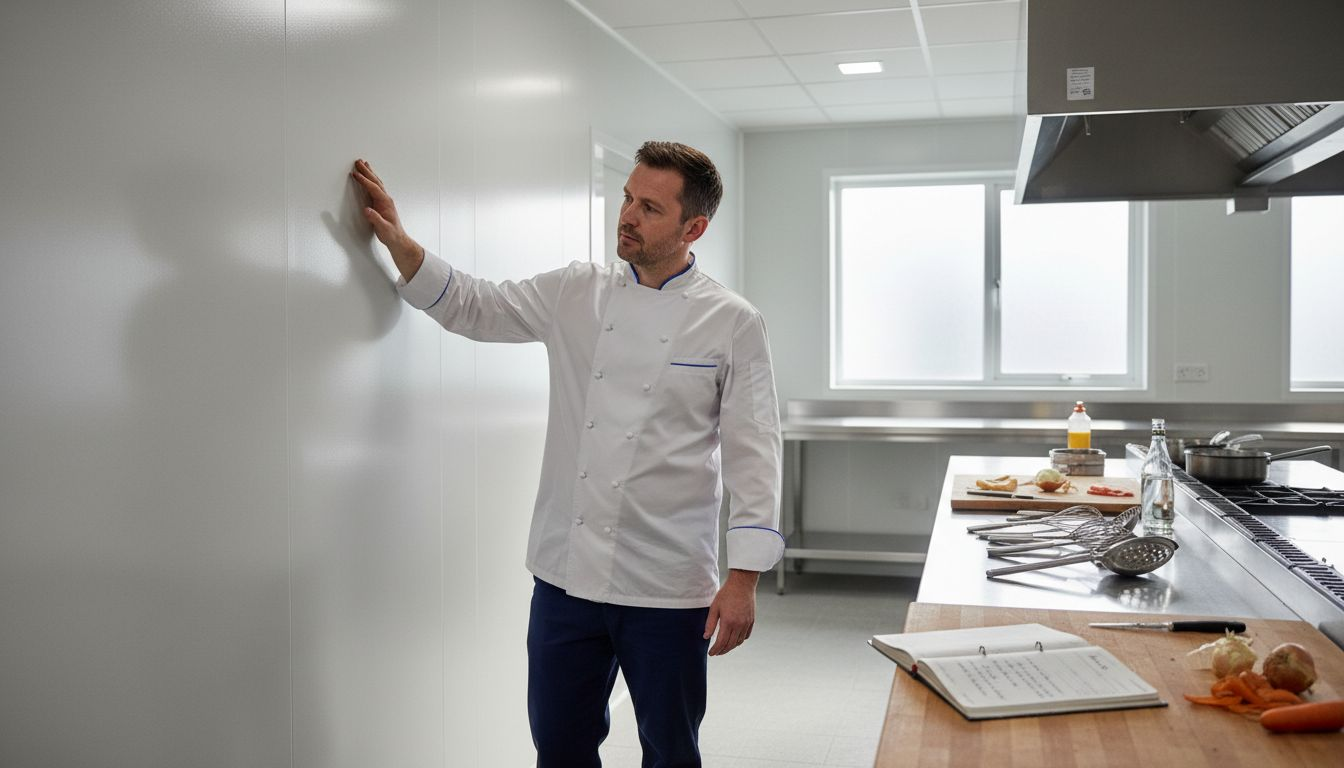
Commercial kitchens choosing hygienic wall cladding reduce cleaning time by up to 70% compared to traditional tiled surfaces. Kitchen walls face relentless exposure to heat, moisture, grease, and frequent cleaning cycles. Traditional materials like tiles or painted plaster crack over time and harbour bacteria in grout lines. Hygienic wall cladding delivers a durable, seamless solution that transforms hygiene management and supports regulatory compliance.
Table of Contents
Key takeaways
Point | Details |
Seamless surfaces prevent bacteria | PVC cladding eliminates grout lines where bacteria thrive, creating smooth, non-porous walls. |
Superior durability | Resists moisture, heat, chemical cleaners, and impacts far better than tiles or paint. |
Massive cleaning savings | Reduces cleaning time by up to 70% compared to traditional wall finishes. |
Regulatory compliance | Meets UK Food Standards Agency requirements for smooth, washable, non-toxic surfaces. |
Faster installation | Installation is quicker and less disruptive than tiling, minimising kitchen downtime. |
Why wall cladding is vital for hygiene in commercial kitchens
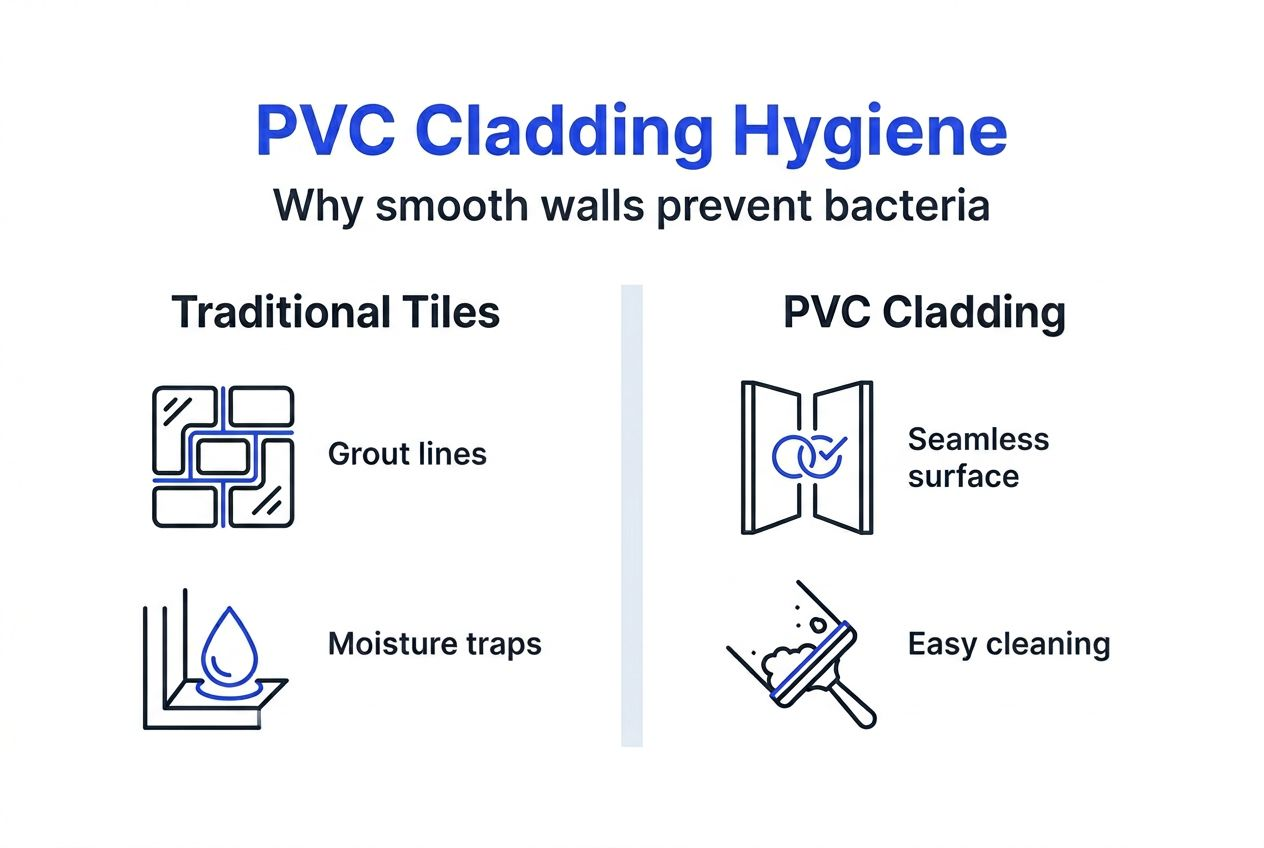
PVC cladding creates smooth, non-porous surfaces that actively prevent bacterial growth. Tiles feature grout lines that absorb moisture and organic matter, fostering bacterial colonies in the exact locations you need clean. These porous joints become microbiological breeding grounds despite aggressive cleaning routines.
Seamless cladding eliminates these harborage points entirely. The continuous surface prevents bacteria, mould, and allergens from establishing footholds on your walls. This reduction in microbial harborage directly supports higher hygiene standards and lowers contamination risks across food preparation zones.
Key hygiene advantages include:
Elimination of grout lines and porous joints where pathogens hide
Smooth surfaces that wipe clean without scrubbing or harsh chemicals
Heat-welded seams creating truly continuous, gap-free walls
Non-reactive material that won’t degrade or absorb contaminants over time
Resistance to moisture penetration preventing hidden mould growth behind walls
The PVC cladding hygiene benefits extend beyond surface cleanliness. By preventing moisture ingress, cladding protects structural elements from water damage that compromises both building integrity and hygiene. You maintain a verifiably clean environment that stands up to health inspections and demonstrates hygienic properties critical for food safety.
Durability and ease of maintenance with hygienic cladding
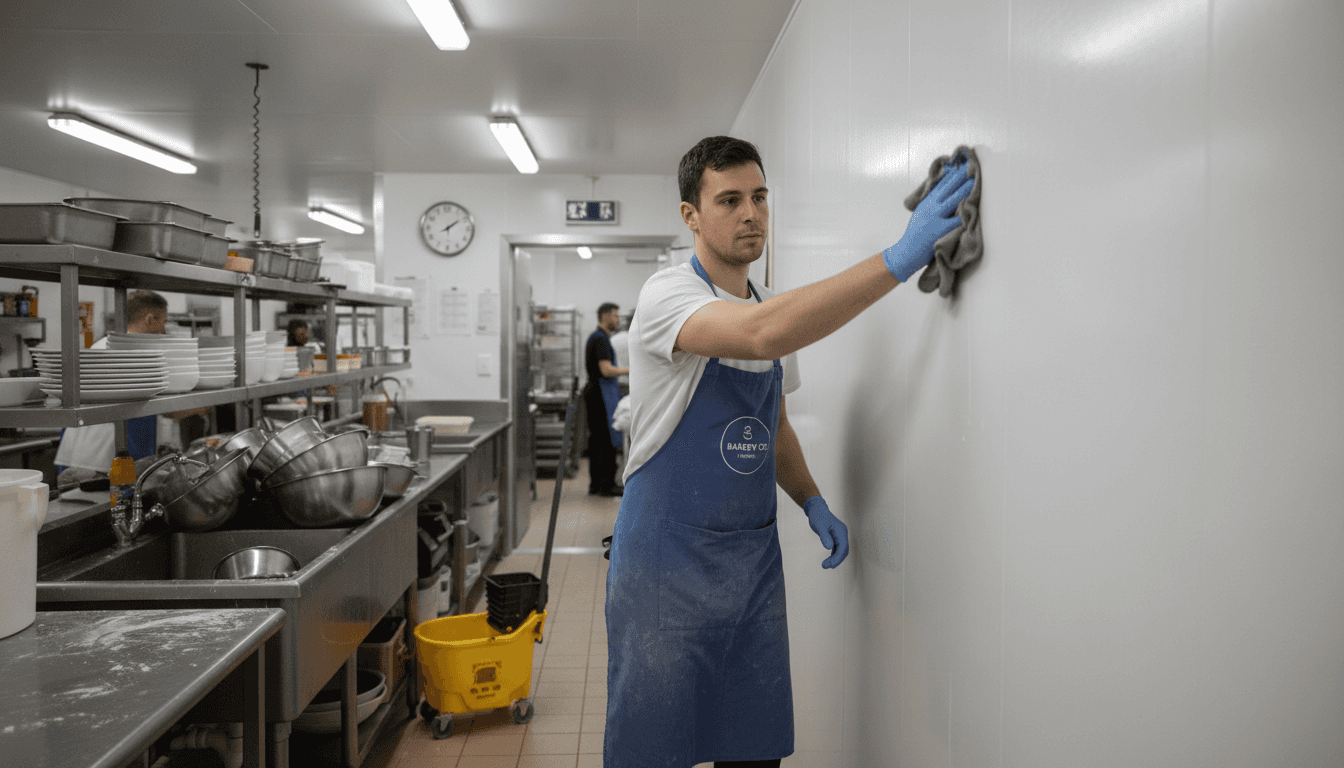
PVC cladding withstands damage from heat, moisture, chemical cleaning agents, and impact, extending wall lifespan compared to painted or tiled surfaces. Commercial kitchens generate extreme conditions that rapidly degrade conventional materials. Cladding handles these stressors without cracking, peeling, or deteriorating.
Installation delivers dramatic operational improvements. Cleaning time drops by up to 70% because smooth surfaces require only quick wipes rather than intensive scrubbing. This time savings translates directly to labour cost reductions and allows staff to focus on food preparation rather than wall maintenance.
The durability of hygienic cladding means longer intervals between refurbishments. Where tiled walls might need regrouting every few years and complete replacement within a decade, properly installed PVC cladding lasts decades with minimal maintenance. You avoid the disruption and expense of repeated wall renovations.
Practical durability features:
Impact resistance protecting against trolley collisions and equipment bumps
Chemical resistance allowing use of strong sanitisers without surface degradation
Heat tolerance for areas near cooking equipment and steam sources
Waterproof construction preventing moisture damage and structural issues
Colour stability maintaining professional appearance despite UV exposure and cleaning
Pro tip: Schedule quarterly inspections of cladding joints and seams to catch minor issues before they compromise hygiene. Early detection of damaged sections allows simple repairs rather than extensive replacement, protecting both your investment and operational continuity.
The research on cladding durability confirms these performance characteristics across thousands of commercial installations. Facilities report reduced maintenance costs, fewer emergency repairs, and improved staff efficiency when managing wall hygiene.
Compliance with UK hygiene and food safety regulations
PVC cladding meets Food Standards Agency requirements for smooth, washable, non-toxic surfaces in food preparation areas. UK regulations don’t specify exact materials but mandate performance standards that cladding fulfils comprehensively. Your walls must be cleanable, non-absorbent, and constructed from food-safe materials.
The system supports HACCP principles by reducing structural harborage points for biological, chemical, and physical hazards. Seamless walls eliminate cracks where pests might shelter or contaminants accumulate. This hazard reduction strengthens your critical control points and simplifies hazard analysis.
Compliance advantages with cladding extend to certification audits. BRCGS-certified facilities widely accept PVC cladding as compliant surface material because it demonstrably meets food safety construction standards. Auditors recognise the hygiene benefits during facility inspections.
Well-maintained cladding aids in achieving and maintaining high Food Hygiene Ratings. Damaged or dirty walls significantly impact ratings and kitchen reputation with both inspectors and customers. Inspectors specifically assess wall condition when evaluating structural compliance and cleanliness standards.
Regulatory compliance features:
Non-toxic composition safe for direct food contact zones
Smooth, impervious surfaces meeting cleanability requirements
Light colours improving visibility of contamination during cleaning
Fire-rated options satisfying building regulation requirements
Documentation and certifications simplifying compliance verification
Environmental health officers appreciate the verifiable cleanliness cladding provides. The UK hygiene compliance insights show that facilities with proper cladding receive fewer compliance notices and achieve higher ratings compared to those with traditional finishes.
Comparison of PVC cladding and traditional wall materials
Tiles contain grout lines that absorb moisture, harbour bacteria, and crack under thermal stress. Even with regular regrouting, these joints remain vulnerability points. PVC cladding provides seamless, waterproof surfaces with heat-welded joints that eliminate contamination entry points entirely.
Installation speed differs dramatically. PVC cladding installs up to five times faster than laying and grouting tiles because panels cover large areas quickly. You face minimal kitchen downtime during installation, protecting revenue and maintaining service continuity.
Feature | PVC Cladding | Ceramic Tiles | Painted Walls |
Surface continuity | Seamless with heat-welded joints | Grout lines every 10-30cm | Continuous but porous |
Cleaning time | 70% reduction vs tiles | High due to grout scrubbing | Moderate but frequent repainting |
Installation speed | 1-3 days typical kitchen | 5-10 days including grouting/curing | 2-4 days plus drying time |
Lifespan | 20-30 years with minimal maintenance | 10-15 years, frequent regrouting | 3-5 years before repainting |
Moisture resistance | Completely waterproof | Water penetrates grout | Paint degrades, allows moisture |
Repair difficulty | Simple panel replacement or rewelding | Matching tiles, extensive regrouting | Complete area repainting |
Cleaning effort and time drops significantly for PVC cladding due to non-porous, smooth surfaces. A quick wipe removes splatter and residue that would require intensive scrubbing on tiled or painted walls. This efficiency compounds over months into substantial labour savings.
Cost analysis favours PVC cladding long term:
Lower initial material costs than high-grade commercial tiles
Reduced installation labour due to speed and simplicity
Minimal ongoing maintenance compared to regrouting or repainting cycles
Longer replacement intervals spreading capital costs over decades
Energy savings from improved insulation properties in some cladding types
The cladding versus tiles comparison demonstrates clear advantages across hygiene, durability, and total cost of ownership. Facilities switching from tiles report immediate improvements in cleaning efficiency and long-term reductions in wall-related maintenance expenses.
Installation and practical considerations
Heat welding creates seamless joints producing continuous, gap-free surfaces vital for hygiene compliance. Professional installers use specialist equipment to fuse panel edges, creating joints as strong and waterproof as the cladding itself. This technique eliminates the bacterial harborage inherent in mechanical fixing or adhesive-only methods.
Compared to tiles, cladding installation causes minimal kitchen downtime. Most installations complete within days rather than weeks, allowing rapid return to full operation. The process generates less dust and debris than tile work, reducing contamination risks during installation.
Proper planning and surface preparation avoid moisture traps and incomplete sealing. Installers must address substrate irregularities, ensure adequate ventilation behind panels, and plan drainage for areas with heavy water exposure. Cutting corners during preparation undermines the hygiene benefits cladding should deliver.
Hygienic wall cladding installation follows a structured process:
Assess existing wall condition and address structural issues like dampness or damage
Remove old finishes and prepare substrate to manufacturer specifications
Install backing framework ensuring level surfaces and proper spacing
Cut cladding panels accurately using specialist tools for clean edges
Fix panels using approved adhesives and mechanical fixings per installation guidelines
Heat-weld all joints creating seamless, hygienic transitions between panels
Install trims, corners, and edge profiles sealing all penetrations and terminations
Conduct final inspection verifying joint integrity and surface cleanliness
Common pitfalls include improper joint sealing and use of non-certified materials. Substandard adhesives fail under heat and moisture, allowing panels to detach. Skipping heat welding leaves gaps where bacteria colonise, negating hygiene advantages. These installation benefits only materialise with proper technique.
Pro tip: Always hire certified installers with commercial kitchen experience to guarantee compliance and longevity. Experienced professionals understand the unique demands of food preparation environments and apply techniques that maximise cladding performance. Check installer credentials and request references from similar facilities before committing.
The installation technique guidance emphasises quality over speed. Rushing installation creates defects that compromise both hygiene and durability, requiring costly remediation later.
Common misconceptions about wall cladding effectiveness
Tiles are often wrongly assumed to be the most hygienic option. This belief persists despite clear evidence that grout lines harbour bacteria regardless of cleaning intensity. The perception stems from tiles’ long history in commercial kitchens, not from objective hygiene performance.
PVC cladding is easier and less costly to repair than many believe. Damaged sections can be cut out and replaced, with new panels heat-welded to existing cladding for seamless repairs. This repairability contrasts with tiles, where matching replacements become difficult as product lines change and extensive surrounding work is needed.
Contrary to assumptions, modern hygienic cladding offers varied finishes maintaining attractive, professional kitchen aesthetics. Available colours, textures, and profiles allow design flexibility whilst delivering hygiene performance. You need not sacrifice appearance for functionality.
Misconceptions about cladding often stem from experience with low-grade residential products:
Commercial-grade cladding vastly outperforms thin domestic panels in durability and hygiene
Proper installation eliminates concerns about panels detaching or moisture penetration
Food-safe PVC formulations address any toxicity concerns for direct food contact zones
Modern cladding resists staining and discolouration that affected earlier products
Professional systems include comprehensive accessory ranges solving edge and corner challenges
Choosing the correct grade and professional installation prevents common issues mistakenly blamed on cladding technology itself. Failures typically trace to inappropriate material selection or poor installation rather than inherent product limitations. Understanding these distinctions helps you make informed decisions and avoid costly errors.
The performance gap between quality cladding and budget alternatives is substantial. Investing in certified commercial-grade products and experienced installers delivers the hygiene, durability, and compliance benefits documented throughout this article.
Conclusion: maximising kitchen hygiene and efficiency with wall cladding
Wall cladding represents a foundational solution for commercial kitchen hygiene and regulatory compliance in 2026. The seamless, non-porous surfaces eliminate bacterial harborage whilst dramatically reducing cleaning time and labour costs. Facilities benefit from superior durability compared to traditional materials, with cladding outlasting tiles and paint by years whilst requiring minimal maintenance.
Proper material choice and professional installation ensure maximum benefits and regulation adherence. Cutting corners on product quality or installation expertise undermines the hygiene advantages and cost savings cladding should deliver. Investing appropriately protects both your immediate operational needs and long-term facility value.
Adopting hygienic wall cladding safeguards kitchen reputation and operational continuity. High Food Hygiene Ratings, successful audits, and efficient daily operations all depend on maintaining verifiably clean environments. The evidence clearly demonstrates that modern PVC cladding outperforms traditional wall finishes across every metric important to commercial kitchen managers.
Explore hygienic wall cladding solutions
Transform your commercial kitchen with proven hygienic wall cladding designed for UK food preparation environments. Our range of hygienic PVC wall cladding sheets delivers the seamless, durable surfaces detailed throughout this guide, offering immediate cleaning time reductions and long-term cost savings.
Complete your installation with our comprehensive selection of adhesives and accessories ensuring professional, compliant finishes. From corner trims to specialist adhesives formulated for commercial kitchen conditions, we supply everything needed for installations that meet UK hygiene standards and deliver decades of reliable performance.
Frequently asked questions
What is the main benefit of wall cladding for commercial kitchens?
Wall cladding provides seamless, hygienic surfaces that prevent bacterial growth in grout lines and porous joints. The smooth, non-porous finish reduces cleaning time by up to 70% compared to traditional tiles whilst eliminating contamination harborage points that compromise food safety.
How does PVC wall cladding compare to traditional tiles in maintenance?
PVC cladding requires dramatically less maintenance than tiles because the seamless surface wipes clean without scrubbing grout lines. Repairs are simpler through panel replacement and heat welding rather than extensive tile removal and regrouting. The durability means longer intervals between major refurbishments, reducing both costs and operational disruption.
Are there UK regulations that require hygienic wall cladding in commercial kitchens?
No specific regulation mandates wall cladding, but UK food safety law requires smooth, washable, non-toxic surfaces in food preparation areas. PVC wall cladding meets these Food Standards Agency requirements comprehensively, supporting compliance with HACCP principles and food hygiene rating criteria. Many facilities choose cladding specifically to satisfy these regulatory performance standards.
How long does hygienic wall cladding last in commercial kitchens?
Properly installed commercial-grade PVC cladding lasts 20 to 30 years with minimal maintenance in demanding kitchen environments. This lifespan significantly exceeds tiles, which typically require regrouting every few years and complete replacement within 10 to 15 years. The durability depends on choosing appropriate grades and professional installation with heat-welded joints.
Recommended


Comments